
What Is Min Jiang Kueh?
Min jiang kueh is a traditional Southeast Asian pancake popular in Singapore and Malaysia. It is also known as a peanut pancake or traditional folded pancake. This delicious snack features a soft, slightly chewy pancake filled with crushed peanuts, sugar, and sometimes other sweet ingredients. The pancake is usually folded in half before serving, making it easy to hold and eat. Min jiang kueh is commonly enjoyed as breakfast, an afternoon snack, or a quick treat between meals. Its simple ingredients, comforting flavor, and satisfying texture have made it a familiar favorite among many food lovers.
One reason people enjoy min jiang kueh is its balance of textures and flavors. The pancake is often soft inside, with a lightly crisp surface and a sweet, nutty filling. Depending on the recipe, the batter may contain flour, eggs, sugar, milk, and yeast or another raising agent. The filling can also vary according to personal taste and local traditions. Some versions feature generous peanut fillings, while others include coconut, red bean paste, or chocolate. These variations make the traditional pancake suitable for different preferences while preserving the comforting character that makes it special.
The History and Popularity of Min Jiang Kueh
Min jiang kueh has a long-standing place in the food culture of Singapore and Malaysia. It is commonly associated with traditional pancake stalls, neighborhood markets, and local snack shops. Its familiar preparation and affordable ingredients have helped it remain popular across generations. Although recipes differ between vendors and families, the basic idea remains simple: prepare a thick pancake, add a flavorful filling, and fold it before serving. The snack reflects the region’s diverse food traditions, where Chinese culinary influences have become part of everyday eating habits.
Today, min jiang kueh continues to attract people who enjoy traditional street food. Some vendors prepare pancakes using large, round pans, while others use modern equipment to maintain consistent results. Customers may choose classic peanut fillings or explore newer flavors offered by individual stalls. The snack is also popular among people looking for something more substantial than a small biscuit or sweet pastry. Its combination of carbohydrates, fats, and sweetness makes it satisfying, although its nutritional value depends on the portion size and ingredients. Traditional recipes remain popular because they offer familiar flavors and simple enjoyment.
Main Ingredients in Min Jiang Kueh
The ingredients used in min jiang kueh are generally easy to find. Flour forms the main structure of the pancake, while water or milk helps create a smooth batter. Eggs may add richness, and sugar provides sweetness. Some recipes include yeast or baking powder to create a softer, thicker texture. A little oil or butter can also improve the flavor and help prevent sticking during cooking. However, ingredients and proportions vary between recipes. Understanding their purpose makes it easier to prepare the pancake at home and adjust its texture according to personal preference.
The filling is equally important because it gives min jiang kueh its distinctive taste. Crushed roasted peanuts mixed with sugar are among the most familiar choices. Some versions include a little butter or margarine to help the filling hold together and add richness. Grated coconut, sesame seeds, and sweet bean pastes are other possible additions. Freshly roasted peanuts usually provide a stronger aroma than stale ones, while finely crushed nuts create a more even filling. For a balanced result, spread the filling across the pancake without using so much that it becomes difficult to fold neatly.
Popular Min Jiang Kueh Flavors
Traditional peanut min jiang kueh remains a favorite because it combines crunchy nuts with a sweet, soft pancake. The filling usually contains ground or crushed peanuts and sugar, creating a simple flavor that complements the mild batter. Some vendors use coarsely crushed nuts for extra crunch, while others prefer a finer mixture. Sesame seeds may also be added for a deeper, roasted taste. This version is a good starting point for anyone trying the snack for the first time because it highlights the ingredients most closely associated with the traditional pancake.
Other fillings offer different flavors and textures. Coconut min jiang kueh provides a fragrant, slightly chewy center, while red bean paste creates a smooth and sweet filling. Chocolate versions appeal to people who prefer a richer dessert-style snack. Some vendors also combine peanuts with coconut or sesame seeds for extra variety. These options show how a traditional recipe can change while keeping its familiar folded shape. If you enjoy exploring regional snacks, a related guide to popular Singaporean street foods can introduce you to other everyday dishes and treats found across the city.
How Min Jiang Kueh Is Made
Preparing min jiang kueh begins with mixing the batter until the ingredients are evenly combined. Depending on the recipe, the mixture may need time to rest or rise before cooking. This step helps develop the desired texture and allows the ingredients to blend properly. The batter should be thick enough to form a substantial pancake but loose enough to spread across the pan. Too much liquid may create a thin pancake, while an overly thick mixture can cook unevenly. Following a tested recipe is the easiest way to achieve consistent results, especially for beginners.
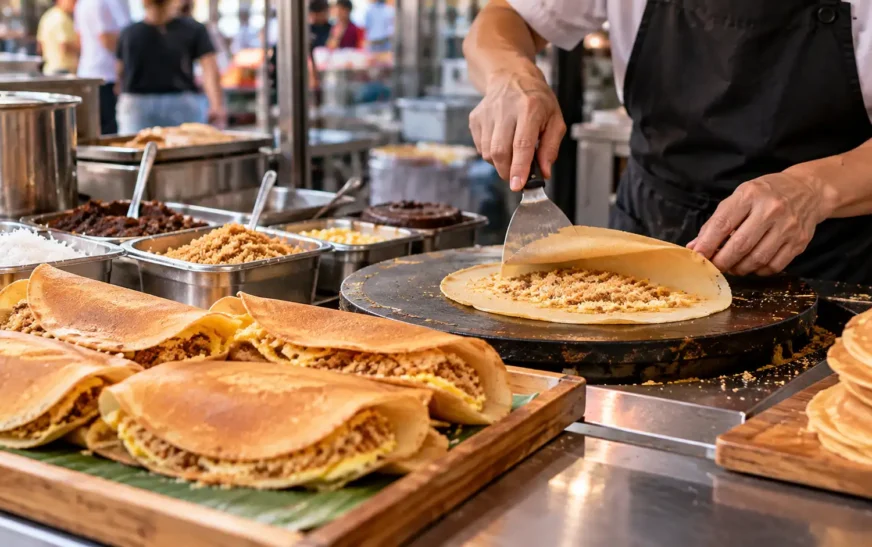
Once the batter is ready, it is poured into a lightly greased pan and cooked over controlled heat. The pancake gradually sets, and small bubbles may appear on its surface as it cooks. When the texture is nearly set, the filling is spread over one side. The pancake is then folded in half and cooked until the base is properly done. Cooking time depends on the batter’s thickness, pan temperature, and equipment. Moderate heat is important because it helps the inside cook without burning the outside. The finished pancake should be tender, fragrant, and easy to fold.
Min Jiang Kueh Texture and Taste
A well-made min jiang kueh usually has a soft, slightly chewy interior and a lightly browned surface. Some versions are thicker and fluffier, while others have a denser texture. The final result depends on the batter, raising agent, cooking temperature, and resting time. A properly prepared pancake should hold its shape without becoming dry or tough. The surface may have a gentle crispness, but the inside should remain soft enough to complement the filling. These contrasting textures are part of what makes the snack enjoyable.
The taste depends largely on the chosen filling and the sweetness of the batter. Peanut versions offer roasted, nutty flavors, while coconut fillings bring a fragrant sweetness. Chocolate and red bean variations create a more dessert-like experience. Freshly cooked pancakes often taste especially appealing because their warmth releases the aroma of the filling. However, texture can change as the pancake cools, particularly if moisture escapes or the filling becomes firm. For the best experience, min jiang kueh is usually enjoyed shortly after preparation, when its texture and flavors are still at their most inviting.
Is Min Jiang Kueh Healthy?
Min jiang kueh can fit into a balanced diet when enjoyed in suitable portions. Its nutritional content depends on the ingredients, size, and filling. Flour provides carbohydrates, while peanuts contribute fats, protein, and some dietary fiber. Sugar adds sweetness but also increases the snack’s energy content. Recipes containing extra butter, oil, or sweet spreads may have more calories. Because vendors often use different recipes, it is difficult to give one accurate calorie count for every pancake. Checking portion size and ingredients provides a more useful way to understand its nutritional value.
People who want a lighter version can make a few simple adjustments at home. Reducing added sugar, using a moderate amount of filling, and controlling the cooking oil may lower the overall energy content. However, these changes can affect the traditional flavor and texture. Peanut allergies also require careful attention because peanuts are a common filling. Anyone with an allergy should avoid peanut-containing versions and check for possible cross-contact during preparation. For more practical food information, a related article about traditional Asian snacks and their ingredients can help readers compare different treats and understand what goes into them.
Where to Find Min Jiang Kueh
Min jiang kueh is commonly sold at traditional snack stalls, neighborhood markets, food centers, and selected bakeries in Singapore and Malaysia. Availability depends on the location, vendor, and time of day. Some stalls prepare fresh pancakes in front of customers, allowing people to enjoy the aroma and warmth immediately after cooking. Other sellers offer several flavors, making it easy to try different fillings in one visit. Because recipes and serving sizes vary, checking the available options can help you choose a version that suits your taste.
When buying min jiang kueh, look for a freshly prepared pancake with an appealing aroma and a properly cooked surface. The filling should be distributed reasonably evenly, without making the pancake difficult to hold. If you prefer a softer texture, ask whether the vendor has a freshly cooked batch available. People who enjoy sweeter snacks may prefer chocolate or red bean varieties, while traditional peanut fillings suit those who appreciate roasted flavors. Comparing a few local stalls can help you discover your preferred version. You can also explore a guide to easy homemade Asian snacks for ideas to prepare similar treats in your kitchen.
Frequently Asked Questions About Min Jiang Kueh
1. What is min jiang kueh?
Min jiang kueh is a traditional folded pancake commonly filled with crushed peanuts and sugar.
2. Is min jiang kueh sweet or savory?
It is usually sweet, although the flavor depends on the filling and recipe.
3. What are the main ingredients in min jiang kueh?
The main ingredients are flour, liquid, sugar, and a filling such as peanuts or coconut.
4. Can I make min jiang kueh at home?
Yes, you can prepare it at home using pancake batter, a suitable pan, and your preferred filling.
5. Is min jiang kueh suitable for vegetarians?
Many versions are vegetarian-friendly, but check the ingredients because recipes can differ.
Conclusion
Min jiang kueh is a traditional pancake loved for its soft texture, sweet filling, and comforting flavor. Its classic peanut version remains popular, while coconut, red bean, and chocolate fillings offer delicious alternatives. Made with simple ingredients, this snack can be enjoyed at local food stalls or prepared at home. Its nutritional value depends on portion size, filling, and preparation method, so choosing ingredients thoughtfully can help you enjoy it as part of a balanced diet. Whether you are discovering this regional favorite for the first time or revisiting a familiar taste, min jiang kueh is worth exploring for its simplicity and variety.