
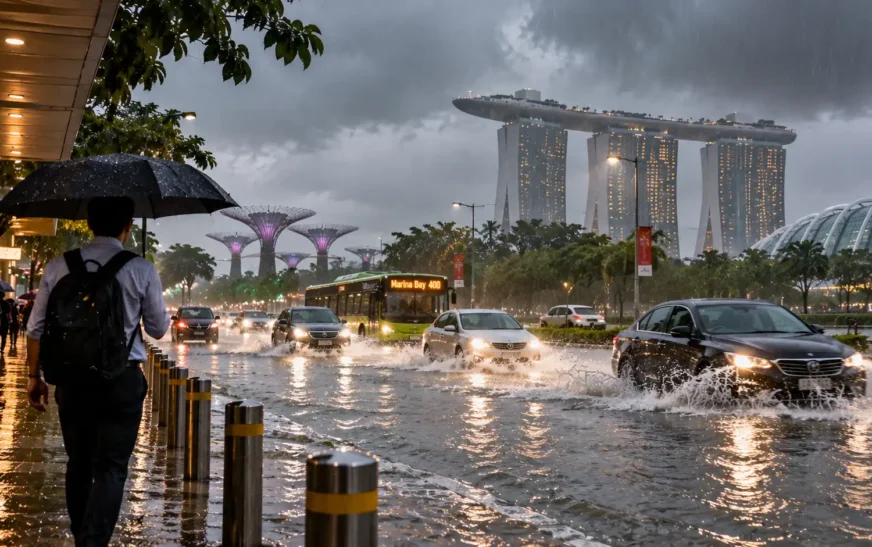
Heavy rain Singapore can affect daily travel, outdoor activities, and road conditions within a short time. Sudden downpours are common in Singapore’s tropical climate, especially during wetter periods. Rain may begin unexpectedly, making it important to check weather updates before leaving home. Heavy showers can also reduce visibility, cause temporary flooding, and delay public transport or road journeys. Understanding rainfall forecasts helps residents and visitors plan their day more confidently. This guide explains why heavy rain occurs, how to prepare for wet weather, and which safety precautions can help protect you during sudden downpours.
What Causes Heavy Rain in Singapore?
Singapore experiences a warm, humid climate throughout the year, creating suitable conditions for frequent rainfall. Warm air rises, cools, and forms clouds as water vapour condenses. When these clouds become sufficiently developed, they can produce heavy showers and thunderstorms. Sea breezes and changing wind patterns may also encourage cloud formation over the island. Because Singapore is relatively small, rainfall can vary between nearby neighbourhoods. One area may experience a strong downpour while another remains mostly dry. These local differences explain why checking current weather information is more useful than relying on general conditions alone.
Seasonal weather patterns also influence rainfall across Singapore. The Northeast Monsoon, usually occurring from December to early March, can bring prolonged rain during certain periods. The Southwest Monsoon generally occurs from June to September, although thunderstorms remain possible throughout the year. Inter-monsoon periods can bring frequent afternoon showers and thunderstorms. However, the timing and intensity of rainfall vary from year to year. Local thunderstorms may develop quickly, even when the morning begins with clear skies. Understanding these patterns helps residents recognise periods when rain may become more frequent and prepare suitable clothing, transport options, and indoor activities.
Heavy Rain Singapore Forecast and Weather Updates
Checking the heavy rain Singapore forecast helps you prepare before conditions become difficult. Weather forecasts provide information about expected rainfall, thunderstorms, and possible changes throughout the day. Pay attention to warnings about intense showers, lightning, and strong winds. These conditions may affect outdoor work, school activities, and travel plans. Because tropical weather can change rapidly, check updates again before important journeys. A forecast showing rain later in the day does not always mean every neighbourhood will experience the same conditions. Localised showers may develop or move away within a relatively short period.
Rainfall forecasts become more useful when combined with current observations and official weather warnings. Look at the expected timing, duration, and intensity of showers instead of focusing only on the chance of rain. For example, a short thunderstorm during your commute may require different preparation from several hours of continuous rainfall. Carrying an umbrella and wearing suitable footwear can make ordinary journeys easier. During severe weather, consider delaying outdoor activities until conditions improve. An internal guide about the Singapore weather forecast can help readers understand daily conditions and plan around changing tropical weather.
Flash Flood Risks During Heavy Rain
Heavy rainfall can sometimes overwhelm drains and waterways, causing temporary flooding in low-lying areas. Water may collect on roads, underpasses, construction sites, and other locations with limited drainage. The risk becomes greater when intense rain continues or drainage systems cannot remove water quickly enough. Flooding can develop with little warning, so residents should take official alerts seriously. Never assume that shallow-looking water is safe to cross. Floodwater can hide open drains, damaged road surfaces, and other hazards. Understanding these risks helps pedestrians, motorists, and residents respond more carefully when rainfall becomes intense.
Singapore has drainage infrastructure designed to manage rainfall, but extreme downpours can still cause localised flash floods. Construction, blocked drains, and the amount of rain falling within a short period may influence conditions in particular places. If a flood warning appears, avoid affected roads and seek a safer route. Do not walk, cycle, or drive through moving floodwater because its depth and force can be difficult to judge. Keep children away from flooded areas, drains, and canals. For additional preparation, an internal article about flash flood safety tips can provide useful advice for protecting your family and property.
How Heavy Rain Affects Travel in Singapore
Heavy rain can make travelling around Singapore more difficult, especially during morning and evening peak hours. Wet roads reduce tyre grip, while poor visibility makes it harder for drivers to notice pedestrians and other vehicles. Traffic may slow down, and journey times can increase unexpectedly. Bus services and other transport connections may also experience delays when severe weather affects roads or nearby infrastructure. If you have an important appointment, allow extra travel time during periods of intense rainfall. Checking transport updates before leaving home can help you choose a suitable route and avoid unnecessary stress.
Pedestrians should use covered walkways where possible and remain alert near busy roads. Umbrellas can provide protection from rain, but they should not block your view of approaching vehicles. Motorcyclists and cyclists should take extra care because wet surfaces can become slippery, particularly near road markings and metal covers. Drivers should reduce speed, maintain a safe distance, and avoid sudden braking. Never attempt to cross a flooded road simply because other vehicles are moving through it. When conditions become dangerous, stopping in a safe location may be better than continuing your journey through heavy rain.
Safety Tips During Heavy Rain Singapore
When heavy rain Singapore conditions develop, basic precautions can help reduce the risk of accidents. Keep an umbrella or lightweight raincoat ready, especially when thunderstorms are expected. Wear shoes with good grip and avoid running across wet pavements. If you are outdoors, move away from exposed locations when thunder and lightning occur. Avoid open fields, isolated trees, and exposed structures during thunderstorms. Seek shelter inside a substantial building or an enclosed vehicle. Do not shelter directly beneath trees because falling branches and lightning can create serious hazards. Always follow official weather warnings and local safety instructions.
At home, check windows, balconies, and outdoor areas before a storm arrives. Secure loose objects that strong winds could move, and make sure drains around your property are clear where it is safe to do so. Keep electronic devices charged if severe weather could interrupt your normal routine. If water begins entering your home, stay away from electrical equipment and avoid touching wet switches. Never enter a flooded electrical area. Families should also know how to contact one another if travel plans change. These simple steps can make it easier to manage sudden downpours without taking unnecessary risks.
What to Wear and Carry on Rainy Days
Choosing suitable clothing can make rainy days in Singapore more comfortable. Lightweight, quick-drying clothes are practical because the weather remains warm and humid, even during rainfall. A compact umbrella is useful for short walks, while a raincoat may offer better protection during windy conditions. Waterproof bags or protective covers can help keep phones, documents, and other belongings dry. Shoes with good traction are also helpful on wet pavements. Avoid wearing footwear that becomes slippery when soaked. If you expect to spend several hours outside, carrying a small towel and a spare shirt may improve comfort.
Planning ahead is particularly helpful for students, commuters, tourists, and outdoor workers. Check the expected weather before choosing your outfit, and consider whether your route includes exposed walkways or outdoor waiting areas. Keep a dry set of clothes available when travelling with young children. If thunderstorms are expected, choose indoor alternatives for sightseeing, exercise, or social activities. However, do not rely on an umbrella as protection against lightning. Move to proper shelter when thunderstorm conditions develop. An internal guide to what to pack for Singapore’s tropical weather can help visitors prepare for both warm sunshine and sudden rain.
Best Ways to Plan Outdoor Activities During Rainy Weather
Rain does not always mean you must cancel your entire day. Instead, organise activities around the forecast and keep a flexible backup plan. If rain is expected in the afternoon, consider completing outdoor tasks earlier, provided current conditions are safe. Choose indoor attractions, shopping areas, covered public spaces, or indoor exercise options when thunderstorms are likely. Families can prepare indoor games and activities for children, while visitors can rearrange sightseeing plans. However, forecasts are estimates rather than guarantees. Check for updated warnings before heading outside, especially when lightning or intense rainfall could affect your plans.
For outdoor events, organisers should monitor changing conditions and communicate clearly with participants. Sports sessions, walking tours, and community gatherings may need schedule changes when thunderstorms approach. Avoid continuing activities in exposed places during lightning, even if the rain appears light. If you are visiting a park, beach, or nature area, follow posted warnings and instructions from staff. Keep enough time available to reach suitable shelter safely. Travellers should also consider transport availability when planning their return journey. Flexible scheduling, practical clothing, and regular weather checks can help you enjoy Singapore while managing unexpected wet weather.
Frequently Asked Questions
When Is Heavy Rain Most Common in Singapore?
Heavy rain can occur throughout the year, but monsoon seasons and inter-monsoon periods often bring frequent showers or thunderstorms.
Does Heavy Rain Cause Flash Floods in Singapore?
Yes, intense rainfall can cause temporary flash floods, especially when water accumulates faster than drainage systems can remove it.
Is It Safe to Drive During Heavy Rain?
Drive slowly, increase your following distance, use appropriate lights, and avoid flooded roads or areas with poor visibility.
What Should I Carry During Heavy Rain in Singapore?
Carry an umbrella or raincoat, suitable footwear, a waterproof bag, and a charged phone for weather and travel updates.
How Can I Check Heavy Rain Warnings in Singapore?
Check current weather forecasts, thunderstorm alerts, rainfall updates, and official advisories before travelling or planning outdoor activities.
Conclusion
Heavy rain Singapore weather can affect travel, outdoor plans, and everyday comfort, but preparation makes a difference. Understanding rainfall patterns, checking forecasts, and following official warnings help you make better decisions. During intense showers, avoid flooded roads, take care on slippery surfaces, and seek proper shelter during thunderstorms. Keep practical rain gear ready and allow extra time for important journeys. If conditions become dangerous, postpone non-essential outdoor activities until the weather improves. Staying informed is one of the simplest ways to manage Singapore’s changing tropical weather. Check the forecast before your next journey and plan your day with confidence.