
An accident Singapore report can help residents and visitors understand road conditions, traffic risks, and public safety concerns. Road accidents may involve cars, motorcycles, buses, cyclists, or pedestrians. Even a minor collision can cause injuries, traffic delays, and unexpected expenses. Knowing what to do after an accident is important for drivers and passengers alike. Singapore has established traffic rules and emergency procedures designed to protect road users. However, every incident is different, and the right response depends on its severity. This guide explains common accident causes, immediate safety steps, reporting requirements, and practical ways to reduce road risks.
Understanding Accident Singapore Reports
Accident reports provide information about traffic collisions, injuries, road closures, and emergency responses across Singapore. They may describe where an incident occurred, which vehicles were involved, and whether traffic was affected. Such reports help readers understand local road conditions and recognise situations that may require extra caution. However, early details can be incomplete while authorities investigate. The number of vehicles involved does not always reveal how serious an incident was. Readers should check publication dates, confirmed details, and subsequent updates before drawing conclusions about a particular accident or its causes.
Following accident Singapore updates can be useful for commuters, motorists, pedestrians, and visitors unfamiliar with local roads. A collision on a major expressway may create delays beyond the immediate location, while an incident near a junction can affect nearby streets. If a report mentions road closures, consider an alternative route and allow extra travel time. Avoid sharing unconfirmed claims or graphic images online. Accurate information helps people make safer decisions without spreading unnecessary alarm. For wider context, an internal guide to Singapore traffic updates can help readers understand road disruptions and plan their journeys more effectively.
Common Causes of Road Accidents in Singapore
Road accidents can happen for several reasons, including distracted driving, speeding, unsafe lane changes, and failing to keep a safe distance. Heavy traffic can increase pressure on drivers, especially during busy commuting hours. Sudden braking, careless turning, and ignoring traffic signals can also lead to collisions. Motorcyclists and cyclists face additional risks because they are less protected than people inside cars. Rain can make roads slippery and reduce visibility, increasing the need for careful driving. Understanding these common causes helps road users recognise dangerous situations and make safer choices before an incident occurs.
Human behaviour is only one part of road safety. Poor visibility, roadworks, unexpected obstacles, and mechanical problems can also contribute to accidents. A driver may have limited time to react when another vehicle stops suddenly or a pedestrian enters the road. Therefore, maintaining a safe following distance and scanning the road ahead are important habits. Drivers should also check their tyres, brakes, lights, and mirrors regularly. However, vehicle maintenance alone cannot prevent every collision. Combining careful driving with awareness of changing road conditions provides better protection for drivers, passengers, cyclists, and pedestrians.
What to Do Immediately After an Accident in Singapore
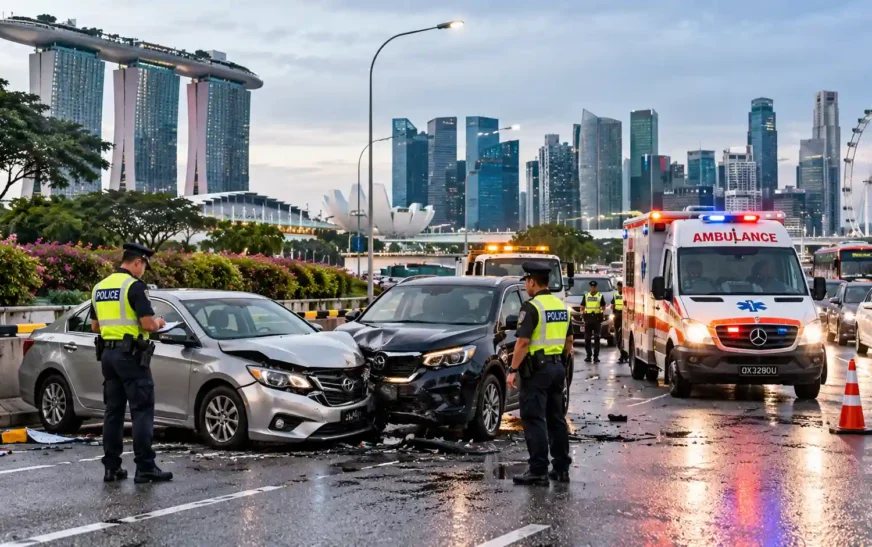
If you are involved in a road accident, first check whether anyone is injured and whether the scene presents an immediate danger. Call emergency services if someone needs urgent medical attention or there is a serious safety risk. In Singapore, call 995 for an ambulance or fire emergency and 999 for police assistance when required. Move to a safer location if you can do so without creating further danger. Switch on hazard lights when appropriate, and warn approaching traffic if it is safe. Do not put yourself at risk while trying to help others.
Once immediate dangers are managed, exchange relevant details with the other parties involved. Record vehicle registration numbers, names, contact information, and insurance details where appropriate. Take photographs of vehicle damage, road conditions, and the scene if it is safe to do so. Note the time, location, and circumstances while the details remain fresh. Avoid arguing about fault or making promises about payment at the roadside. If witnesses are present, ask for their contact information. These records may help with insurance claims and later inquiries. Seek medical assessment if you develop pain or other symptoms after the collision.
Accident Reporting and Insurance Claims in Singapore
After an accident, drivers should understand their reporting duties and insurance policy requirements. Singapore motor insurers generally require policyholders to report accidents promptly, often within 24 hours or by the next working day, even when damage appears minor. Specific requirements can vary, so check your policy and contact your insurer for instructions. Some incidents may also require a police report, particularly where there are injuries, hit-and-run concerns, or other circumstances covered by reporting rules. Do not assume that an agreement with the other driver removes every reporting obligation. Prompt, accurate reporting helps protect your position.
For an insurance claim, keep copies of photographs, repair estimates, correspondence, and any relevant reports. Describe what happened honestly and avoid guessing about details you cannot remember. Your insurer can explain the next steps, including vehicle inspection, approved repair arrangements, and any required documentation. If another party disputes the circumstances, preserve your records and follow the insurer’s guidance. Do not authorise repairs or accept a settlement without understanding the possible consequences for your claim. An internal guide to car insurance claims in Singapore can provide additional background on documents, timelines, and common questions after a collision.
How Traffic Accidents Affect Singapore’s Roads
A serious accident can disrupt traffic on expressways, major roads, and busy junctions. Emergency vehicles may need space to reach the scene, while damaged vehicles can block traffic lanes. These disruptions sometimes cause queues that extend well beyond the original incident. Public transport routes may also be affected if roads become inaccessible or traffic moves slowly. Commuters can reduce inconvenience by checking journey conditions before leaving and allowing extra time during peak hours. However, avoid stopping near an accident simply to watch or take photographs, as this can create additional hazards.
Traffic disruption can also affect deliveries, business appointments, school journeys, and emergency response times. When an incident occurs, follow directions from police officers and other authorised personnel. Do not enter closed lanes or attempt to bypass barriers. If you are approaching a traffic queue, reduce speed gradually and watch for vehicles stopping ahead. Motorists should also remain alert for emergency vehicles approaching from behind. Once traffic returns to normal, continue driving carefully because debris or temporary lane changes may remain. Patience and cooperation help reduce further risks while road users and emergency teams manage the incident.
Road Safety Tips for Drivers and Motorcyclists
Safe driving begins with attention, patience, and consistent observation. Keep your eyes on the road, avoid using a handheld phone while driving, and maintain enough distance to stop safely. Follow posted speed limits and adjust your speed to match traffic, visibility, and weather conditions. Always signal before turning or changing lanes, and check mirrors and blind spots carefully. Motorcyclists should wear a properly fitted, approved helmet and suitable protective clothing. Drivers should give motorcycles adequate space, particularly near junctions and when traffic slows. These habits can reduce preventable mistakes and make journeys safer for everyone.
Rainy weather requires additional care because wet surfaces can reduce tyre grip. Slow down when visibility falls, avoid sudden braking, and increase the distance between vehicles. Never drive when tired or affected by alcohol or impairing substances. Before a long journey, check tyres, brakes, lights, and mirrors. Motorcyclists should be especially cautious around painted road markings, metal covers, and standing water. Passengers can also support safer travel by avoiding distractions and wearing seat belts where provided. For more practical advice, an internal article about safe driving tips during heavy rain can help readers prepare for changing road conditions.
Pedestrian and Cyclist Safety After Road Accidents
Pedestrians and cyclists are particularly vulnerable when collisions occur because they have less physical protection than vehicle occupants. Use designated crossings, obey traffic signals, and check for turning vehicles before stepping onto the road. Avoid crossing between stationary vehicles because drivers may have limited visibility. Cyclists should use appropriate lights after dark, remain predictable, and signal their intentions clearly. Wearing a suitable helmet can reduce the risk of certain head injuries. These precautions are useful even on familiar streets, where people may become less alert because they travel along the same routes every day.
After witnessing an accident, prioritise personal safety before offering assistance. Do not walk into moving traffic or stand close to damaged vehicles in an unsafe location. Contact emergency services when urgent help is needed and provide the location as clearly as possible. If it is safe, follow instructions from responders and avoid disturbing the scene unnecessarily. Do not move an injured person unless there is an immediate danger, such as fire. Keep bystanders away from hazards and allow emergency teams room to work. Calm, careful actions can support an effective response without putting additional people at risk.
How to Stay Informed About Accident Updates
Reliable accident updates can help commuters understand disruptions and plan safer journeys. When reading a report, check the date, time, location, and whether authorities have confirmed the details. A headline may describe an incident as serious before complete information about injuries or causes becomes available. Later reports may correct or expand the original account. Avoid treating social media posts or forwarded messages as confirmed facts without supporting evidence. If an incident affects your route, look for current traffic information and consider another route when appropriate. This approach helps you make practical decisions without relying on speculation.
It is also important to respect the privacy of people involved in accidents. Avoid sharing injured people’s identities, private details, or distressing images without a legitimate reason and appropriate permission. Do not assume that a driver is responsible simply because a report identifies their vehicle. Investigations may take time, and the full circumstances may not be immediately clear. If you witness an incident, share factual information with the relevant authorities when requested. Responsible reporting helps protect affected families and prevents rumours from spreading. By checking updates carefully, readers can stay informed while treating everyone involved with fairness and respect.
Frequently Asked Questions
What Should I Do After an Accident in Singapore?
Check for injuries, move to safety if possible, contact emergency services when needed, exchange details, and notify your insurer promptly.
How Can I Check Accident Singapore Updates?
Look for recent, confirmed traffic reports and check current road conditions before starting your journey.
Do I Need to Report a Minor Car Accident in Singapore?
You should notify your insurer promptly, even after minor damage, and follow your policy’s reporting requirements.
Which Number Should I Call for an Emergency?
Call 995 for ambulance or fire emergencies and 999 for police assistance when required.
How Can I Avoid Road Accidents in Singapore?
Follow speed limits, maintain a safe distance, stay alert, avoid distractions, and adjust your driving to road conditions.
Conclusion
An accident Singapore report can provide useful information about road safety, traffic disruptions, and emergency responses. Understanding common accident causes and knowing what to do after a collision can help protect drivers, passengers, and pedestrians. Always prioritise safety, seek medical assistance when necessary, document relevant details, and follow your insurer’s reporting requirements. Checking reliable traffic updates can also help you plan journeys and avoid affected roads. Although accidents cannot always be prevented, careful driving and responsible road behaviour can reduce many risks. Stay alert, follow traffic rules, and make road safety a priority whenever you travel around Singapore.