
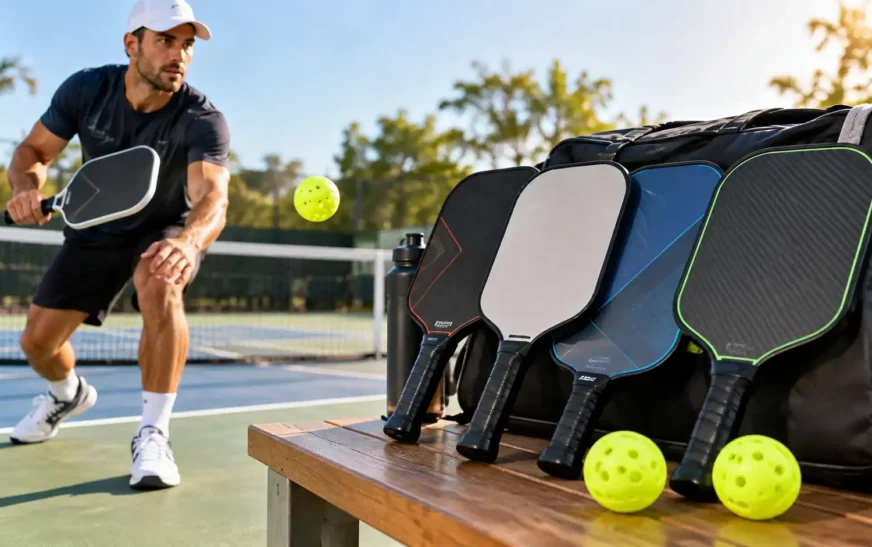
Choosing the right pickleball paddle can make a real difference in your game. Whether you are a beginner or an experienced player, the right equipment helps you control shots and play with confidence. However, finding a suitable paddle can feel confusing because so many options are available. Different materials, weights, shapes, and grip sizes offer different benefits. Therefore, understanding these features before buying is important. This guide explains how a pickleball paddle works, what to consider when shopping, and how to find one that suits your playing style, comfort level, and budget.
What Is a Pickleball Paddle?
A pickleball paddle is the main piece of equipment used to hit the ball during a pickleball game. It has a solid hitting surface, a handle, and a grip that helps players maintain control. Unlike traditional tennis rackets, pickleball paddles do not have strings. Their design makes them suitable for quick exchanges, controlled shots, and powerful hits across the court. Paddles come in different shapes, sizes, and materials. Each design affects how the paddle feels during play. Understanding these basic features helps you make a better buying decision and avoid spending money on equipment that does not suit your needs.
Pickleball paddles are designed for different experience levels and playing preferences. Beginners often benefit from models that offer a comfortable grip, a forgiving hitting surface, and balanced control. More experienced players may prefer equipment that supports stronger shots, spin, or precise placement. However, no single paddle works perfectly for everyone. Your strength, technique, and preferred style of play all matter. For example, a player who enjoys long rallies may value control, while an aggressive player might prioritize power. Before purchasing, consider how frequently you play and which skills you want to improve. These details help narrow your choices.
Types of Pickleball Paddle Materials
The material of a pickleball paddle affects its weight, durability, feel, and performance. Common surface materials include fiberglass, carbon fiber, and graphite, although construction varies between manufacturers. Fiberglass paddles can offer a lively feel and are often considered by players seeking accessible performance. Carbon fiber models are popular among players who value control and consistent ball placement. Graphite surfaces can also provide a lightweight feel and responsive handling. However, the surface material alone does not determine quality. The core, thickness, construction, and overall design influence performance too. Compare the complete paddle rather than choosing based on one material.
The paddle core also plays an important role in how equipment performs. Polymer honeycomb cores are widely used because they balance comfort, control, and practical durability. Other core materials may create different levels of stiffness, sound, and responsiveness. Thicker paddles often provide a more controlled feel, while thinner designs may appeal to players seeking a firmer response. Nevertheless, these differences depend on the complete construction. When comparing materials, think about your usual playing conditions and personal preferences. A recreational player may not need advanced construction, while a competitive player might appreciate testing several designs before making a final decision.
How to Choose the Right Pickleball Paddle Weight
Paddle weight affects how quickly you can react, how much power you generate, and how tired your arm feels during a match. Lightweight paddles are generally easier to maneuver, making them useful for quick exchanges near the net. They may also feel more comfortable during extended sessions. However, some lightweight models provide less natural power, depending on their design. Heavier paddles can deliver stronger shots with less swinging effort, but they may require more strength and control. Choosing the right weight means balancing speed, comfort, and power instead of automatically selecting the lightest or heaviest option.
Most paddles fall into lightweight, medium-weight, or heavyweight categories, although exact ranges differ between sellers. Lightweight models often weigh below approximately 7.5 ounces, medium models around 7.5 to 8.2 ounces, and heavier models above that range. These figures are general guidelines rather than strict standards. If possible, hold a few paddles before purchasing one. Practice short swings and notice whether your wrist and arm feel comfortable. Also, consider whether you prefer fast reactions or stronger drives. The best weight should feel manageable throughout a complete match, not just during your first few swings.
Finding the Best Pickleball Paddle Grip Size
Grip size influences comfort, wrist movement, and how securely you hold your paddle. A grip that feels too large may make quick adjustments difficult, while a grip that feels too small can encourage excessive squeezing. Both situations may affect control and cause discomfort during longer sessions. Therefore, measure your hand or test different handle sizes before buying. Many paddles offer circumference measurements in inches, allowing you to compare options. If you are between sizes, a slightly smaller grip can sometimes be adjusted with an overgrip. However, the final choice should feel secure without putting unnecessary pressure on your hand.
A simple way to check grip comfort is to hold the paddle naturally, as you would during a match. Your fingers should wrap around the handle comfortably without overlapping excessively or leaving too much space. You should also be able to adjust your wrist without feeling restricted. Players who frequently change their grip may prefer a smaller handle, while others might feel more secure with a thicker one. Remember that comfort matters more than following a general measurement alone. If you experience persistent hand or wrist discomfort, stop playing and reassess your equipment and technique before continuing.
Pickleball Paddle Shapes and Their Benefits
Paddle shape affects reach, maneuverability, and the amount of hitting surface available. Standard-shaped paddles often provide a balanced combination of control and handling. Elongated paddles offer extra reach, which can help players cover more distance and reach difficult shots. However, their narrower hitting areas may require more accurate contact. Widebody designs provide a broader hitting surface, making them appealing to beginners who want more room for error. Each shape involves trade-offs, so consider your playing habits before choosing one. The right design should support your strengths while helping you improve weaker areas of your game.
Players who frequently approach the net may appreciate a paddle that feels quick and easy to position. Meanwhile, players who rely on groundstrokes might prefer additional reach or a different balance. The paddle’s sweet spot is another important consideration because it affects how forgiving the surface feels when contact is slightly off-center. A larger effective sweet spot can make consistent hitting easier, particularly for developing players. Still, shape alone does not guarantee better performance. Core thickness, surface texture, and weight distribution also contribute. If possible, test different shapes during practice to discover which design feels natural.
Pickleball Paddle Features Worth Comparing
When shopping for a pickleball paddle, look beyond its appearance and price. Surface texture, edge protection, handle design, and overall balance can influence your experience. Some textured surfaces are designed to help players generate spin, although results depend on technique and the paddle’s construction. Edge guards help protect the paddle against accidental contact with the court, while edgeless designs may offer a different hitting-surface profile. Handle cushioning can improve comfort during extended games. However, extra features are useful only when they match your needs. Focus on practical benefits instead of assuming that more expensive equipment always performs better.
It is also worth checking the paddle’s listed dimensions, weight, warranty, and intended use. Competitive players should confirm that their equipment meets the applicable rules for their events. Recreational players can usually focus more on comfort, durability, and value. If you are comparing several models, write down their important features and evaluate them side by side. You can also explore a related guide to pickleball rules for beginners to understand how equipment fits into the game. Making a short comparison before buying can prevent unnecessary spending and help you select a paddle you will enjoy using regularly.
Best Pickleball Paddle for Beginners
A beginner-friendly paddle should feel comfortable, predictable, and easy to handle. You do not need the most expensive model to learn basic techniques. Instead, look for a balanced weight, a comfortable grip, and a reasonably forgiving hitting surface. These features can help you develop better timing and more consistent contact. A standard-shaped paddle is often a sensible starting point because it offers a useful balance of reach and control. Beginners should also consider their budget and playing frequency. If you only play occasionally, a reliable entry-level model may provide everything you need to enjoy the game.
As your skills improve, you can identify which features deserve more attention. For example, you might discover that you prefer softer control shots rather than powerful drives. Alternatively, you may enjoy generating spin or playing aggressively near the baseline. Keep track of what feels comfortable during practice and notice where your current paddle seems limiting. You can then compare more specialized options with a clearer understanding of your needs. Reading a guide to pickleball tips for beginners can also help you improve technique alongside equipment selection. Better skills and suitable equipment work together to build confidence.
How Much Does a Pickleball Paddle Cost?
The price of a pickleball paddle depends on its materials, construction, brand, and intended audience. Budget models can be suitable for casual games, while midrange options may provide improved materials or additional performance features. Premium paddles often include specialized construction designed for particular playing preferences. However, a higher price does not automatically mean a better match for your game. Beginners should avoid paying extra for advanced features they may not use. Instead, compare comfort, durability, warranty coverage, and overall value. A paddle that fits your playing style can be a better investment than an expensive model chosen without testing.
Before purchasing, decide how much you are comfortable spending and compare options within that budget. Check whether the price includes a protective cover or other useful accessories. You should also consider how often you expect to play, since frequent players may benefit from investing in a durable model. Buying a paddle that feels comfortable can help you enjoy regular practice without unnecessary strain. If possible, test equipment before committing to a premium option. You can also explore a related pickleball equipment guide to understand which additional items are useful. Spend according to your needs rather than marketing claims.
How to Maintain Your Pickleball Paddle
Proper care helps keep your pickleball paddle in good condition for longer. After playing, wipe the surface with a soft, slightly damp cloth when necessary. Avoid harsh chemicals, abrasive cleaners, or excessive water, which may damage certain finishes or construction materials. Check the edge guard and handle regularly for signs of wear. If the grip becomes slippery, damaged, or uncomfortable, replace it when appropriate. You should also avoid dropping the paddle repeatedly or striking hard surfaces with its edges. Small maintenance habits can help preserve its feel and make your equipment more enjoyable to use.
Storage is equally important, especially if you play outdoors in changing weather. Keep your paddle in a dry place away from excessive heat, direct sunlight, and freezing conditions. Avoid leaving it inside a hot vehicle for long periods because extreme temperatures may affect some materials or adhesives. A suitable protective cover can help prevent scratches during transport. After playing in dusty or damp conditions, clean and dry the paddle before storing it. Follow any care instructions supplied with your equipment, since materials differ. With sensible handling and regular checks, you can help protect your purchase and identify damage before it worsens.
Frequently Asked Questions
1. What is the best pickleball paddle for beginners?
A lightweight or medium-weight paddle with a comfortable grip and forgiving hitting surface is a sensible starting point.
2. How heavy should a pickleball paddle be?
Many players prefer medium-weight paddles, but the ideal weight depends on comfort, strength, and playing style.
3. Is carbon fiber better than fiberglass?
Neither is always better; the best choice depends on the paddle’s construction, feel, control, and your preferences.
4. How long does a pickleball paddle last?
Its lifespan depends on playing frequency, construction quality, storage conditions, and how carefully you maintain it.
5. How do I choose the correct grip size?
Choose a handle that feels secure and comfortable, allowing natural wrist movement without excessive squeezing.
Conclusion
Choosing the right pickleball paddle starts with understanding your skill level, comfort, and playing style. Weight, grip size, materials, and shape all influence how a paddle feels during a game. However, the most expensive option is not necessarily the best choice. Beginners should prioritize comfort and control, while experienced players can compare specialized features to match their techniques. Remember to check construction quality, follow care instructions, and test different designs whenever possible. A thoughtful purchase can make practice more enjoyable and support steady improvement. Compare your options carefully, choose a paddle that feels right, and enjoy developing your pickleball skills.