
A Japan earthquake can happen at almost any time because the country sits in one of the world’s most active seismic regions. Japan experiences thousands of earthquakes every year, ranging from small tremors to powerful events that cause serious damage. Its location near several moving tectonic plates makes the country particularly vulnerable to ground shaking. However, Japan has developed advanced warning systems, strong building standards, and emergency plans to reduce risks. Understanding Japan earthquakes helps residents, tourists, and international visitors stay informed. This guide explains why earthquakes happen, their effects, famous historical events, and essential safety measures.
Why Does Japan Experience So Many Earthquakes?
Japan experiences frequent earthquakes because it lies near the boundaries of several major tectonic plates. These include the Pacific Plate, Philippine Sea Plate, Eurasian Plate, and North American Plate. These enormous sections of Earth’s outer layer move slowly in different directions. Sometimes, one plate moves beneath another in a process called subduction. Pressure gradually builds inside the surrounding rocks until they suddenly shift. This movement releases energy that travels through the ground as seismic waves. Consequently, Japan earthquakes occur regularly across different parts of the country.
Another important reason involves Japan’s complicated geological structure. The country has several active fault lines, deep ocean trenches, and volcanic regions. These natural features create different conditions for earthquake activity. Some earthquakes happen beneath the ocean, while others occur underneath populated areas. Even relatively small earthquakes can sometimes cause noticeable damage when their epicentres are close to cities. Japan’s location makes earthquake preparation an important part of everyday life. Scientists continuously study underground movements to understand seismic activity better. However, predicting the exact date, location, and strength of future earthquakes remains impossible.
How Do Japan Earthquakes Happen?
Earthquakes begin when underground rocks experience pressure from moving tectonic plates. For many years, these rocks may remain locked together while stress gradually increases. Eventually, the pressure becomes stronger than the friction holding them in place. The rocks suddenly move along a fracture called a fault. This movement releases stored energy, creating vibrations that travel through the Earth. People experience these vibrations as shaking. The underground starting point is called the focus, while the location directly above it is known as the epicentre. Both help scientists understand an earthquake’s location and characteristics.
Japan experiences several different types of earthquakes because of its geological environment. Interplate earthquakes happen where two tectonic plates meet, while intraplate earthquakes occur inside a plate. Shallow inland earthquakes develop along faults beneath the land. These events can be particularly dangerous when they occur near populated communities. Underwater earthquakes also deserve attention because certain movements can disturb the ocean floor. Depending on their strength and location, they may generate dangerous tsunami waves. Understanding these differences helps explain why earthquake risks vary between Japanese regions and coastal communities.
Major Historical Japan Earthquakes
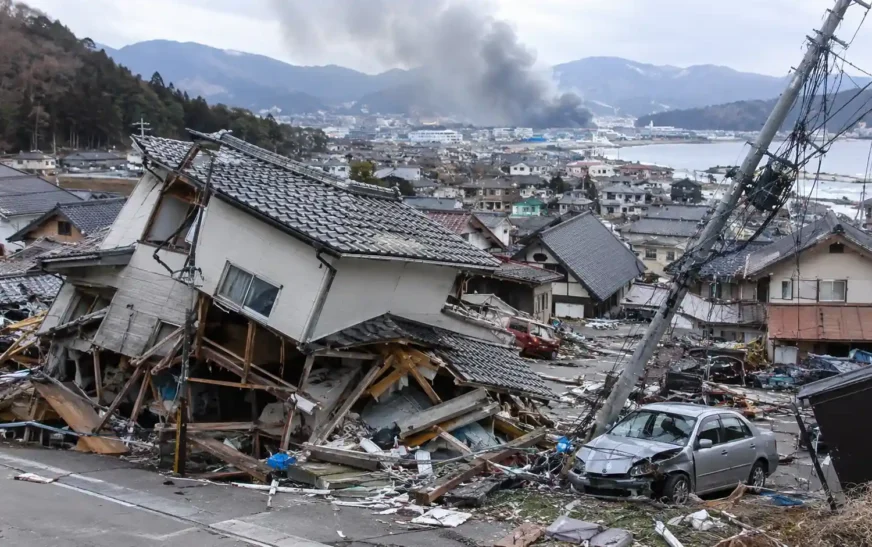
Japan has experienced several devastating earthquakes throughout its history. One of the most significant events occurred on March 11, 2011, when a magnitude 9.0 earthquake struck off the northeastern coast. Known as the Great East Japan Earthquake, it triggered enormous tsunami waves. Coastal communities suffered widespread destruction, and thousands of people lost their lives. The disaster also caused a serious nuclear accident at Fukushima Daiichi. Its impact extended beyond Japan, attracting worldwide attention. This event demonstrated how powerful earthquakes and secondary disasters can affect entire communities and national infrastructure.
Another major disaster was the Great Hanshin-Awaji Earthquake on January 17, 1995. It struck near Kobe, causing widespread building collapses, fires, and serious transport disruptions. Thousands of people died, while many others lost their homes. Earlier, the Great Kanto Earthquake of September 1, 1923, devastated Tokyo and surrounding areas. Large fires caused extensive destruction following the initial shaking. These historical events influenced Japan’s approach to disaster prevention. They also encouraged improvements in construction methods, emergency services, public awareness, and earthquake response planning across the country.
Which Areas of Japan Face Earthquake Risks?
Earthquake activity occurs throughout Japan, but some regions face particular risks because of nearby faults and offshore plate boundaries. Northeastern Japan has experienced major earthquakes along the Pacific coast. Areas around Tohoku and Hokkaido are influenced by active offshore seismic zones. The Kanto region, including Tokyo, also faces earthquake hazards because of its complex geological setting. Southern and central Japan have additional risks associated with the Nankai Trough. However, earthquake danger is not limited to these locations. Smaller inland earthquakes can also affect communities across the country.
Tokyo receives considerable attention because it is Japan’s largest metropolitan area. A powerful earthquake could disrupt transportation, electricity, communication, and other essential services. Osaka, Kyoto, Kobe, and surrounding communities also face different seismic hazards. Coastal locations may experience additional tsunami risks after certain underwater earthquakes. Meanwhile, mountainous regions can experience landslides and falling rocks during strong shaking. Local risks depend on ground conditions, building quality, distance from active faults, and earthquake depth. Checking regional hazard maps is therefore important for understanding the specific dangers around homes, workplaces, and holiday destinations.
What Is Japan’s Earthquake Early Warning System?
Japan operates an advanced Earthquake Early Warning System designed to provide information before strong shaking reaches certain locations. The Japan Meteorological Agency monitors seismic activity using a network of observation stations. When an earthquake begins, instruments detect its initial waves and estimate the possible shaking in surrounding areas. If dangerous shaking is expected, warnings can reach televisions, smartphones, and other communication systems. This information may provide several seconds of preparation. Although the warning cannot prevent an earthquake, it can help people protect themselves before stronger vibrations arrive.
However, the warning system has important limitations that everyone should understand. People living very close to an earthquake’s starting point may receive little warning because strong shaking can arrive almost immediately. Estimates can also change as more information becomes available. Therefore, residents should never depend entirely on smartphone notifications. Knowing how to respond before receiving an alert is equally important. Japan combines early warning technology with earthquake drills, public education, and emergency planning. Together, these measures help communities respond more effectively when unexpected ground movements occur.
How Do Japan Earthquakes Cause Tsunamis?
Some powerful Japan earthquakes can trigger tsunamis when they cause sudden movement of the ocean floor. This movement pushes a large volume of seawater, creating waves that travel across the ocean. In deep water, tsunami waves may move extremely quickly while remaining difficult to notice from ships. However, they can become much taller as they approach shallow coastal areas. Their powerful movement can flood streets, damage buildings, destroy roads, and carry debris inland. Not every underwater earthquake produces a tsunami, because the direction and amount of seafloor movement matter.
The 2011 Tohoku disaster showed how destructive earthquake-related tsunamis can become. Entire coastal communities experienced severe flooding, and many residents had very little time to escape. Therefore, people near the Japanese coastline should understand local evacuation procedures. If strong or prolonged shaking occurs near the coast, moving immediately towards higher ground is essential. People should never wait to see a tsunami approaching before evacuating. Multiple waves may arrive over an extended period. Returning to coastal areas is dangerous until authorities officially lift the relevant warnings and evacuation instructions.
How to Stay Safe During a Japan Earthquake
Knowing what to do during an earthquake can reduce the risk of injuries. If you are indoors, stay away from windows, glass, and heavy furniture. Take cover beneath a sturdy table and protect your head and neck. Avoid rushing outside while buildings and objects are shaking. If you are outside, move away from buildings, streetlights, power lines, and other structures that could fall. People using public transport should follow staff instructions and remain calm. These simple actions can help protect you during dangerous shaking. Always remember that personal safety comes before belongings.
Preparation before an earthquake is equally important for residents and visitors. Keep drinking water, packaged food, medicines, a flashlight, and essential documents somewhere accessible. Secure heavy furniture and identify safe places inside your accommodation. Tourists should learn their hotel’s evacuation procedures and locate nearby emergency shelters. Save important emergency contacts and understand local warning announcements. If you are travelling with children or older family members, agree on a meeting point beforehand. Regular preparation makes unexpected situations easier to manage. These practical habits are useful because earthquakes can interrupt normal services without much warning.
How Japan Prepares Buildings for Earthquakes
Japan has developed strict building standards to reduce damage from earthquakes. Modern construction often includes structural features designed to absorb or manage ground movement. Some buildings use flexible structural systems, while others incorporate special devices that reduce vibrations. These technologies help structures withstand different levels of shaking. However, no building can be considered completely earthquake-proof. The actual performance depends on construction quality, maintenance, soil conditions, and earthquake characteristics. Older buildings may have different safety standards from recently constructed properties. Regular inspections and improvements remain important for maintaining structural safety.
Another important part of Japan’s earthquake preparation involves public education and emergency planning. Schools, workplaces, and communities regularly conduct disaster drills. These exercises teach people how to respond to warnings, evacuate safely, and help others. Local authorities also prepare emergency shelters and publish hazard maps showing areas vulnerable to flooding, landslides, and tsunamis. Emergency supplies are maintained to support people during service disruptions. Public awareness helps communities respond quickly when disasters occur. Japan’s experience demonstrates that technology, strong construction, and practical preparation must work together to reduce earthquake-related damage.
Frequently Asked Questions About Japan Earthquakes
1. Why does Japan have so many earthquakes?
Japan sits near four major tectonic plates, whose movements create frequent underground pressure and earthquakes.
2. How many earthquakes happen in Japan each year?
Japan experiences thousands of earthquakes annually, although most are too small to cause serious damage.
3. Can a Japan earthquake cause a tsunami?
Yes, powerful underwater earthquakes can displace the ocean floor and generate destructive tsunami waves.
4. Is Tokyo at risk of earthquakes?
Yes, Tokyo faces significant seismic hazards because of its location and complex geological surroundings.
5. Can scientists predict the next Japan earthquake?
No, scientists cannot accurately predict the exact date, location, and magnitude of an earthquake.
Conclusion
Japan earthquakes are a natural consequence of the country’s location near several active tectonic plates. Although earthquakes cannot be prevented, their effects can be reduced through preparation, technology, and public awareness. Historical disasters have helped Japan improve building standards, warning systems, and emergency response plans. However, every resident and visitor still needs to understand basic safety measures. Knowing evacuation routes, preparing emergency supplies, and following official warnings can make an important difference. Whether you live in Japan or plan to visit, learning about earthquake risks is essential. Stay informed, prepare early, and always put personal safety first.