
Chongqing is one of China’s most fascinating cities, known for its dramatic landscapes and modern skyline. Located in southwestern China, this large municipality sits where the Yangtze and Jialing rivers meet. It is famous for steep hills, impressive bridges, glowing night views, and traditional streets. Unlike many flat cities, Chongqing has roads and buildings arranged across different levels. This unusual landscape creates a memorable urban experience for visitors. The city also attracts travelers with its spicy hotpot, historic neighborhoods, and famous monorail system. Whether you enjoy food, history, or modern architecture, Chongqing offers plenty to explore.
Where Is Chongqing Located?
Chongqing is located in southwestern China, within the upper Yangtze River region. It is a centrally administered municipality, meaning it has a status similar to major provincial-level administrative areas. The city serves as an important connection between western China and other parts of the country. Its location near the Yangtze River has supported trade, transportation, and economic development for many years. Chongqing also covers a large administrative area containing urban districts, towns, and rural communities. This makes it much larger geographically than the central city visitors usually experience during a short holiday.
The city’s landscape is shaped by mountains, rivers, valleys, and steep slopes. These natural features influence how people travel and how buildings are designed. Instead of following a simple street grid, many neighborhoods have roads at different heights. Some residential buildings connect directly to elevated walkways, while others sit beside riverbanks or hillsides. This unusual arrangement has earned Chongqing a reputation as a mountain city. Visitors often notice that a location appearing nearby on a map can involve several staircases or elevation changes. Understanding the geography makes exploring the city easier and more enjoyable.
Why Is Chongqing Famous?
Chongqing is famous for its unusual urban design, dramatic mountain scenery, and lively atmosphere. The city combines modern skyscrapers with traditional neighborhoods and historic landmarks. Its bridges, tunnels, elevated roads, and public transportation systems create a distinctive cityscape. Many visitors are surprised by the different levels of streets and buildings. A person may enter a building from one floor and discover another entrance several levels above. This unusual feature makes Chongqing especially interesting for photography and sightseeing. Its nighttime skyline is another major attraction, with illuminated buildings reflecting across the surrounding rivers.
Food is another major reason travelers visit Chongqing. The city is especially famous for its hotpot, a meal prepared by cooking ingredients in a shared pot of seasoned broth. Its traditional version is known for strong chili and Sichuan pepper flavors. Beyond food, Chongqing has an important industrial and commercial history. It has developed into a major center for automobile manufacturing, electronics, logistics, and technology. The combination of business activity, cultural traditions, and modern tourism gives the city a distinctive identity. Visitors can enjoy traditional experiences while also discovering contemporary shopping areas and entertainment districts.
Top Tourist Attractions in Chongqing
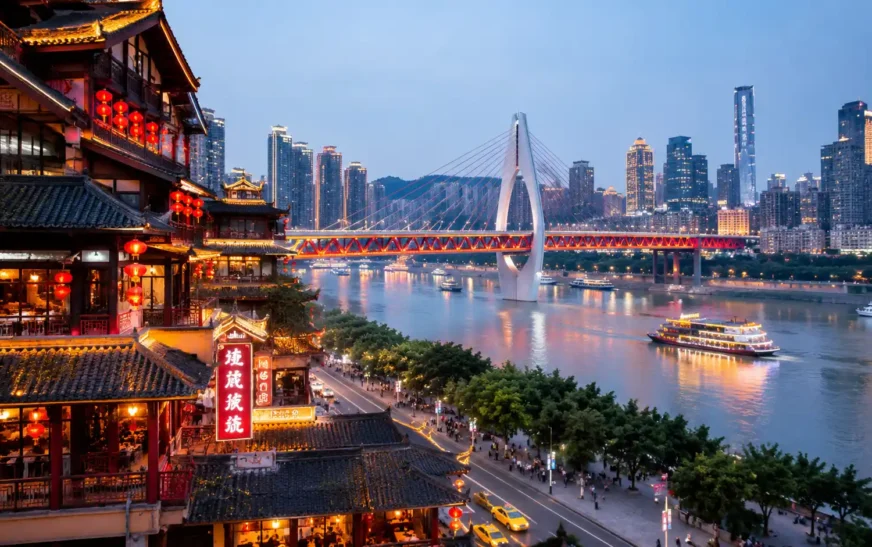
Chongqing offers several attractions that showcase its history, architecture, and natural beauty. Hongyadong is among its most recognizable landmarks, featuring traditional-style buildings built along a steep riverside slope. The complex becomes especially attractive after sunset when its lights illuminate the surrounding area. Jiefangbei is another popular destination, known for shopping streets, restaurants, and the city’s central business district. Visitors can also explore Ciqikou Ancient Town, where narrow streets, traditional architecture, and local food stalls create a different atmosphere from modern downtown areas.
Nature lovers can explore locations outside the busiest urban districts. Dazu Rock Carvings are famous for their detailed religious sculptures and historical importance. Wulong Karst National Geology Park offers impressive natural formations, including limestone bridges and deep valleys. These destinations show that Chongqing is more than a modern city with skyscrapers. It also provides access to remarkable cultural and natural landscapes. Travelers should consider their available time before planning day trips because some attractions require longer journeys. Exploring a mixture of urban landmarks and natural destinations creates a more complete Chongqing travel experience.
Hongyadong: Chongqing’s Famous Night Attraction
Hongyadong is one of the most photographed places in Chongqing. This impressive riverside complex features traditional architectural designs inspired by historic stilt houses. Its buildings rise along a steep hillside, creating multiple levels of restaurants, shops, and entertainment spaces. During the evening, colorful lights make the structure especially attractive. The location also offers views of nearby bridges and the surrounding riverfront. Many tourists visit Hongyadong after sunset to enjoy the atmosphere and take photographs. Its unusual architecture provides an excellent example of how Chongqing combines traditional visual styles with modern commercial spaces.
Visitors should allow enough time to explore the different levels of Hongyadong. The complex can become crowded during weekends and public holidays, particularly around popular photography locations. Comfortable shoes are helpful because the surrounding area includes slopes, stairs, and busy pedestrian routes. Restaurants and small shops provide opportunities to enjoy local snacks and purchase souvenirs. However, travelers should compare restaurant menus before ordering because prices can vary. Hongyadong is especially enjoyable when combined with an evening walk near the river. It offers a memorable introduction to Chongqing’s architecture, nightlife, and famous illuminated skyline.
Liziba Monorail: A Unique Chongqing Experience
The Liziba Monorail Station is one of Chongqing’s most unusual attractions. It became famous because a train on the city’s monorail system passes through a purpose-built opening in a residential and commercial building. This design helps the railway operate within a crowded urban environment. Instead of treating the building and railway as separate structures, engineers integrated them into one development. The result attracts visitors interested in transportation and architecture. Tourists often gather at nearby viewing platforms to photograph trains passing through the building. The attraction represents Chongqing’s creative approach to managing limited space and difficult terrain.
The Liziba experience is relatively simple for visitors to enjoy. Travelers can reach the station using the city’s public transportation network and observe the train from designated viewing areas. It is worth checking transport information before traveling because station conditions and schedules may change. Visitors should avoid standing in restricted areas or blocking pedestrian pathways while taking photographs. The surrounding neighborhood also provides opportunities to explore local restaurants and everyday city life. Although the passing train is the main attraction, the engineering behind it makes the location particularly interesting. It demonstrates how transportation systems can adapt to challenging urban landscapes.
Chongqing Hotpot and Local Food
Chongqing is widely recognized for its bold and spicy food culture. Its most famous dish is Chongqing hotpot, which features a rich broth prepared with chili peppers, Sichuan peppercorns, oil, and various seasonings. Diners cook ingredients such as thinly sliced meat, vegetables, mushrooms, tofu, and seafood directly in the bubbling pot. The meal is usually shared with friends or family, making it a social dining experience. The strong flavors create a distinctive taste that many visitors associate with the city. However, travelers who dislike spicy food can request milder broth options at suitable restaurants.
Another popular local dish is Chongqing xiaomian, a noodle meal served with flavorful seasonings, chili oil, vegetables, and other toppings. It is commonly enjoyed as breakfast or a quick everyday meal. Other local favorites include spicy chicken dishes, grilled fish, and traditional snacks sold in neighborhood markets. Food markets provide opportunities to discover regional ingredients and cooking styles. Visitors should ask about spice levels before ordering because some dishes can be extremely hot. Exploring local cuisine is an important part of visiting Chongqing. It offers a closer understanding of the city’s traditions and everyday lifestyle.
Chongqing’s Weather and Best Time to Visit
Chongqing has a humid subtropical climate with hot summers, relatively mild winters, and considerable humidity. Summer temperatures can become uncomfortable, especially during July and August. The city is also known for frequent cloudy conditions and periods of fog, which influence its nickname as one of China’s famous foggy cities. Winter is generally cooler than summer but does not usually bring the same extreme cold found in northern China. Rainfall occurs throughout the year, although its distribution changes with the seasons. Travelers should consider these weather conditions when planning sightseeing and outdoor activities.
Spring and autumn are generally comfortable seasons for exploring Chongqing. March to May brings gradually warmer weather, while September to November often offers pleasant conditions for walking and visiting attractions. Summer travelers should prepare for heat, humidity, and possible rain. Light clothing, comfortable walking shoes, and drinking water can make sightseeing easier. Winter visitors may prefer layered clothing, especially during cloudy and damp days. Weather conditions can change, so checking the forecast before departure is helpful. Choosing suitable travel dates allows visitors to enjoy the city’s riverside attractions, mountain scenery, and historic neighborhoods more comfortably.
Chongqing’s Culture and Local Lifestyle
Chongqing has a rich cultural identity influenced by its history, geography, and position along the Yangtze River. The city is associated with the Bayu cultural tradition, which has deep historical roots in the region. Local speech, food, traditional performances, and community celebrations contribute to its distinctive character. Chongqing residents are also known for enjoying lively social gatherings, particularly around food. Hotpot restaurants often become meeting places for families, friends, and colleagues. Traditional neighborhoods preserve older architectural styles, while modern shopping areas reflect the city’s changing lifestyle. This combination creates an interesting cultural experience for visitors.
The city’s lifestyle is also shaped by its mountainous environment. Walking routes often include staircases, steep roads, and elevated pedestrian bridges. Public transportation helps residents move between neighborhoods with different elevations. Markets, teahouses, restaurants, and riverside spaces provide places for everyday social activities. Visitors can experience local culture by exploring traditional streets, trying regional dishes, and observing daily routines. Respecting local customs and keeping public spaces clean are simple ways to enjoy the city responsibly. Learning a few basic Chinese phrases can also make communication easier, especially when visiting smaller neighborhood businesses.
Transportation in Chongqing
Chongqing has an extensive public transportation network that includes metro lines, monorail services, buses, taxis, and river transport. Its rail system is particularly important because it connects many neighborhoods across challenging terrain. Some stations are built into hillsides, while others connect with shopping centers and residential buildings. The Liziba station is a famous example of the city’s unusual transport design. Public transportation is often a convenient option for tourists visiting major attractions. However, travelers should allow extra time because walking routes between stations and destinations can involve stairs, slopes, and busy streets.
Taxis and ride-hailing services offer additional ways to travel around the city. They can be useful when carrying luggage or visiting places that are difficult to reach by public transportation. However, road journeys may take longer during busy traffic periods. Visitors should keep attraction names and addresses available in Chinese when possible, as this can make communication easier with local drivers. For longer journeys outside the central districts, checking train and bus options in advance is recommended. Planning transportation carefully helps visitors save time and enjoy more of Chongqing’s famous attractions.
Frequently Asked Questions About Chongqing
1. Where is Chongqing located?
Chongqing is located in southwestern China, near the meeting point of the Yangtze and Jialing rivers.
2. What is Chongqing famous for?
Chongqing is famous for spicy hotpot, mountain landscapes, Hongyadong, its unique monorail, and beautiful nighttime city views.
3. Is Chongqing worth visiting?
Yes, Chongqing is worth visiting for its food, unusual architecture, cultural attractions, river views, and surrounding natural landscapes.
4. What is the best time to visit Chongqing?
Spring and autumn are generally the most comfortable seasons, especially from March to May and September to November.
5. What food should tourists try in Chongqing?
Visitors should try Chongqing hotpot, xiaomian noodles, spicy chicken, grilled fish, and traditional local snacks.
Conclusion
Chongqing is a remarkable destination that combines natural beauty, modern architecture, traditional culture, and exciting food experiences. Its mountain landscape creates a city unlike many other major destinations in China. From the illuminated buildings of Hongyadong to the unusual Liziba monorail, every neighborhood offers something interesting. Visitors can also enjoy famous hotpot, explore historic streets, and discover impressive natural attractions nearby. Spring and autumn generally provide comfortable conditions for sightseeing. Whether you are interested in photography, food, history, or urban exploration, Chongqing offers many reasons to plan a visit and discover its unique character.