
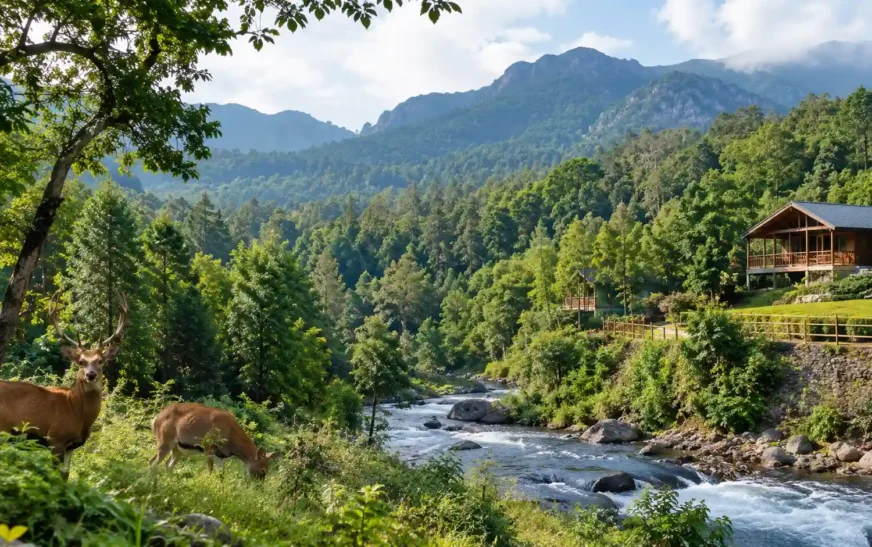
Maju Forest is a mature secondary forest located near Sunset Way in Clementi, Singapore. It has attracted growing public attention because of its rich biodiversity and proposed housing development. The forest provides habitat for wildlife and helps connect several green spaces across western Singapore. Although it is not a gazetted nature reserve, its natural environment has developed over decades. Maju Forest also contains historical railway remnants that connect the landscape with Singapore’s transport history. Today, it represents an important discussion about balancing housing needs, environmental protection, and the preservation of natural spaces in a rapidly developing city.
The interest in Maju Forest extends beyond its trees and walking paths. Researchers and nature enthusiasts have documented a variety of plants and animals living in the area. Its connections with nearby forests also help support wildlife movement across the landscape. However, plans for residential development have raised questions about habitat loss and environmental change. The challenge is finding a practical balance between providing homes and protecting valuable ecosystems. Understanding the forest’s location, history, biodiversity, and development plans helps readers appreciate why this green space has become an important environmental topic in Singapore.
Where Is Maju Forest Located?
Maju Forest is situated around Sunset Way in Clementi, in western Singapore. The forest lies between Clementi Road and Brookvale Drive, within an urban area containing residential neighbourhoods and other green spaces. Its location makes it an interesting example of nature surviving alongside modern city development. Although buildings and roads surround parts of the landscape, the forest retains a natural character shaped by decades of plant growth. People researching Maju Forest often want to understand where it sits within Singapore and how it connects with the surrounding environment.
The forest is also associated with Clementi Forest and the former Jurong Railway Line corridor. These neighbouring landscapes contribute to a broader network of greenery in western Singapore. Such connections can help animals move between habitats rather than remaining isolated in small patches of vegetation. The surrounding area includes established housing, roads, and other urban features, making ecological connectivity especially important. However, visitors should not assume that every part of Maju Forest is an established public walking trail. Before planning a visit, check current access arrangements and respect any restrictions intended to protect wildlife or support ongoing site management.
History and Natural Development of Maju Forest
Maju Forest has developed through changes in land use over many decades. Historical accounts suggest that parts of the area were used as plantations in the early twentieth century. By around 1950, much of the landscape was described as grassland rather than dense forest. Later, railway development and changing land use influenced the surrounding environment. Over time, vegetation gradually returned, creating a secondary forest with a mixture of trees, shrubs, and other plants. This history shows that forests can regenerate naturally even after substantial human disturbance, although their ecological value differs from untouched primary forests.
The nearby railway corridor is another important part of the area’s history. Railway infrastructure once served transport needs and left physical traces across the landscape. As railway operations changed, some sections became associated with vegetation and natural regeneration. These remnants now contribute to the area’s combined ecological and historical interest. Maju Forest therefore represents more than a collection of trees; it reflects how former human-use landscapes can develop new environmental value. Its story also highlights the importance of studying land history when planning future development, because existing habitats may support wildlife even when the land was previously used for other purposes.
Wildlife and Biodiversity in Maju Forest
Maju Forest supports a variety of plant and animal life, making it significant within Singapore’s urban landscape. Ecological records associated with the area describe diverse vegetation, including native plant species and regenerating forest growth. The habitat also supports animals that depend on trees, shrubs, water, and ground cover for food and shelter. Biodiversity is important because different species contribute to ecological processes such as pollination, seed dispersal, and natural pest control. The presence of varied habitats can also provide opportunities for researchers to study how wildlife survives within a heavily developed urban environment.
The forest’s ecological value is not measured only by the number of large or easily visible animals. Insects, birds, reptiles, small mammals, fungi, and less noticeable plants can all play important roles. A fallen branch, damp patch, or flowering shrub may provide food or shelter for several species. However, species records can change as surveys improve and habitats shift. It is therefore important to rely on documented ecological assessments rather than assume that every reported species is always present. Protecting biodiversity requires attention to the wider habitat, including water sources, vegetation layers, and connections with neighbouring green spaces.
Why Maju Forest Matters to Singapore’s Environment
Maju Forest contributes to the natural environment by providing vegetation, habitat, and ecological connections within an urban setting. Trees absorb carbon dioxide as they grow, while leaves and branches provide shade that can help reduce local heat. Vegetated ground can also absorb some rainfall, reducing surface runoff compared with hard, paved surfaces. These functions are particularly relevant in cities where buildings, roads, and other infrastructure create warmer conditions. Although the exact benefits depend on local conditions, retaining mature vegetation can support climate resilience and improve the environmental quality of nearby neighbourhoods.
Another important benefit is the forest’s role as part of a larger green network. Wildlife needs connected habitats to move, find food, reproduce, and disperse into new areas. When forests become separated by roads or buildings, some species may struggle to move safely between them. Maju Forest’s relationship with nearby green spaces makes the wider landscape important, not just the individual site. Conservation planning should therefore consider both the forest itself and its ecological links. Preserving connected habitats can help maintain biodiversity more effectively than protecting small, isolated patches without considering how animals and plants interact across the region.
Maju Forest Housing Development Plans
Maju Forest became the focus of a major public discussion after a housing proposal was announced in July 2026. The initial plan proposed developing about 15 hectares of the approximately 23-hectare forest area for public housing, while retaining around eight hectares. The proposal reflected Singapore’s continuing need to provide homes in established, well-connected neighbourhoods. However, it also raised concerns about the potential loss of mature vegetation and wildlife habitat. The discussion highlights a difficult planning question: how can a growing city meet housing demand while retaining natural areas that provide environmental benefits?
In August 2026, the government indicated that more greenery would be retained at the Sunset Way site following public feedback, with fewer homes planned than initially proposed. This represented a change in the development approach, although the exact final layout and implementation details should be checked against the latest official announcements. The proposal has prompted discussion among residents, conservation advocates, and people concerned about future housing needs. Both sides of the debate involve practical considerations, including access to homes, ecological impacts, and long-term land use. Understanding the timeline helps readers distinguish the original proposal from subsequent adjustments.
Conservation Concerns and the Future of Maju Forest
One major concern about development in Maju Forest is the possible loss of habitat. Clearing mature vegetation can remove nesting sites, food sources, shelter, and breeding areas for wildlife. It may also change drainage patterns and reduce shade in nearby surroundings. Even when part of a forest is retained, the remaining area can experience changes caused by noise, light, human activity, and the loss of connections with neighbouring habitats. These effects depend on the final development design and mitigation measures. Environmental planning therefore needs to consider both direct habitat loss and changes affecting the forest that remains.
Conservation does not necessarily mean ignoring the need for new homes. Instead, it involves assessing different options, identifying areas of high ecological value, and reducing avoidable environmental damage. Measures may include retaining important vegetation, protecting water features, creating buffers, and planning construction carefully. Wildlife surveys and long-term monitoring can also help identify whether mitigation measures are effective. For Maju Forest, the central question is how much of its ecological function can be maintained as surrounding land use changes. Clear information about development boundaries, retained habitats, and environmental safeguards will help the public understand the likely consequences of the final plan.
Visiting Maju Forest and Respecting Nature
Anyone interested in Maju Forest should first confirm which areas are currently accessible to the public. Unlike a fully developed nature park, a forested site may contain uneven ground, dense vegetation, and areas without maintained paths. Conditions can change after heavy rain or during construction and land-management work. Visitors should avoid entering restricted areas and should never assume that a visible trail is an officially designated route. Checking access information before travelling helps prevent unnecessary risks and reduces disturbance to the natural environment.
Responsible behaviour is especially important in habitats where wildlife may be sensitive to noise and human activity. Visitors should avoid littering, feeding animals, damaging plants, or removing natural objects. Keeping a respectful distance from wildlife also helps prevent stress and unsafe encounters. If access is permitted, sturdy footwear and drinking water are sensible precautions for uneven or humid conditions. People who prefer established facilities can consider Singapore’s managed nature parks and reserves instead. These alternatives can offer designated trails and visitor information while still providing opportunities to learn about local plants, animals, and forest ecosystems.
Frequently Asked Questions About Maju Forest
Where is Maju Forest located?
Maju Forest is located around Sunset Way in Clementi, western Singapore.
How large is Maju Forest?
The forest area is commonly described as approximately 23 hectares.
Why is Maju Forest important?
It provides wildlife habitat, supports biodiversity, stores carbon, and connects neighbouring green spaces.
Is Maju Forest being developed?
Housing development has been proposed for part of the area, with more greenery set to be retained following public feedback.
Can visitors enter Maju Forest?
Access may vary by area and current conditions, so check local restrictions before visiting.
Conclusion
Maju Forest is an important example of nature surviving within Singapore’s expanding urban landscape. Its mature vegetation, wildlife, railway history, and connections with nearby green spaces give it ecological and historical value. At the same time, proposed housing development highlights the challenge of meeting residential needs while protecting natural habitats. Changes announced after public feedback indicate that the balance between development and conservation remains an active issue. The future of Maju Forest will depend on final planning decisions, environmental safeguards, and the treatment of the habitats that remain. Learning about the forest helps readers better understand Singapore’s wider conservation challenges.