

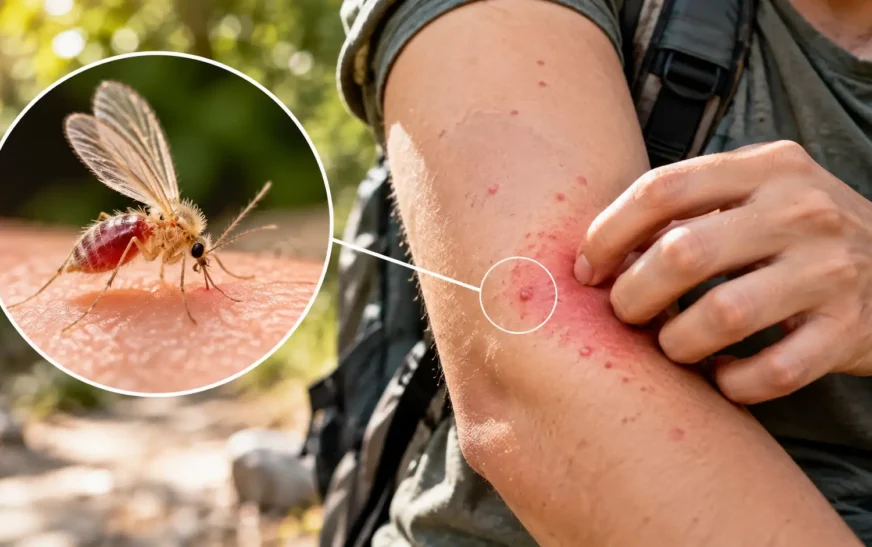
Sandfly bites can cause itchy, red bumps that make your skin uncomfortable for several days. These tiny insects often bite exposed skin, especially during outdoor activities in warm regions. Although many sandfly bites cause only mild irritation, some may lead to allergic reactions or transmit infections in certain parts of the world. Knowing how to identify a bite, reduce itching, and protect yourself can help prevent further discomfort. This guide explains common symptoms, effective home care, warning signs, and practical prevention methods. It also helps you understand when a skin reaction needs medical attention.
What Are Sandfly Bites?
Sandfly bites happen when tiny, blood-feeding insects pierce the skin to obtain blood. Sandflies are much smaller than ordinary houseflies, so people may not notice them approaching. Depending on the species and location, these insects may be active around dusk, nighttime, or other suitable periods. They often live in warm environments where moisture, organic material, and sheltered spaces support their life cycle. Not every small biting insect is a sandfly, however. Mosquitoes, fleas, and biting midges can produce similar skin reactions, making identification difficult without seeing the insect.
The reaction to sandfly bites varies from person to person. Some people develop only small red marks, while others experience intense itching, swelling, or clusters of bumps. The body’s immune response plays an important role in determining the severity of these symptoms. A person who reacts strongly to insect saliva may experience greater discomfort than someone with a mild response. Most uncomplicated bites improve with basic skin care. However, the risk is not identical everywhere because certain sandfly species can transmit parasites that cause leishmaniasis. Understanding local risks is therefore important when travelling or living in affected areas.
Common Symptoms of Sandfly Bites
The most common symptoms of sandfly bites include itching, redness, small raised bumps, and mild swelling around the affected skin. These marks may appear individually or in groups, particularly on exposed areas such as the ankles, arms, legs, and face. Itching can become more noticeable after the initial bite, especially when the skin becomes irritated by scratching. Some people also develop a burning sensation or tenderness around the bumps. Symptoms vary according to individual sensitivity and the number of bites. Because several insects cause similar marks, the appearance alone cannot always confirm that sandflies are responsible.
In sensitive individuals, sandfly bites may cause larger welts, blisters, or a more widespread itchy rash. Scratching can break the skin, increasing the chance of a secondary bacterial infection. Signs of infection include increasing pain, warmth, spreading redness, pus, or worsening swelling. These symptoms should not automatically be blamed on an ordinary insect reaction. In regions where sandflies carry disease, a persistent skin sore may also require medical assessment. Pay attention to changes rather than judging the bite only by its first appearance. If symptoms worsen or fail to improve, seek advice from a healthcare professional.
How Long Do Sandfly Bites Last?
For many people, sandfly bites begin improving within several days, although itching may continue for one or two weeks. The exact recovery time depends on the person’s immune response, the number of bites, and whether the skin becomes irritated. Small bumps often settle sooner than larger, inflamed reactions. However, some people develop lingering marks that take longer to fade, particularly after repeated scratching. Keeping the affected area clean and avoiding further bites can support recovery. If the skin becomes increasingly painful, develops pus, or shows unusual changes, medical advice is more appropriate than simply waiting.
Recovery may take longer when someone has a strong allergic response or repeatedly scratches the affected areas. In addition, certain infections associated with sandflies can produce symptoms that do not follow the usual pattern of a simple bite. Leishmaniasis, for example, may cause a skin lesion that persists or gradually enlarges rather than healing normally. Such a lesion does not mean every sandfly bite is dangerous, but it should not be ignored. If a sore remains unhealed, develops an unusual appearance, or follows travel to an affected region, arrange a medical assessment. Early evaluation helps identify the cause and appropriate treatment.
How to Treat Sandfly Bites at Home
Simple home care can help relieve the itching and swelling caused by uncomplicated sandfly bites. First, gently wash the affected area with soap and clean water. Next, apply a cold compress wrapped in a clean cloth for about ten minutes to soothe irritation. Avoid placing ice directly on the skin because this can cause injury. Try not to scratch, even when the itching feels intense. Keeping your fingernails short may reduce skin damage if you scratch unconsciously. These measures can improve comfort while your body gradually settles the reaction to the insect’s saliva.
For persistent itching, a pharmacist may recommend a suitable antihistamine or anti-itch cream, depending on your age, symptoms, and medical history. Follow the product instructions carefully, and ask before using medication on young children, during pregnancy, or alongside other treatments. Avoid applying harsh chemicals, household cleaners, or unverified remedies to broken skin. If blisters appear, do not deliberately burst them. People with worsening symptoms, significant swelling, or signs of infection should seek medical advice. For additional everyday skin-care advice, you can explore our internal guide to relieving itchy skin safely and learn which common habits may increase irritation.
When Should You Seek Medical Help?
Most sandfly bites cause temporary discomfort, but certain symptoms need prompt attention. Seek emergency care if you develop difficulty breathing, swelling of the tongue or throat, faintness, or a rapidly developing severe allergic reaction. These symptoms can indicate anaphylaxis, which requires urgent treatment. Medical advice is also important if redness spreads, the affected area becomes increasingly painful, or pus develops. A fever accompanying worsening skin symptoms should not be dismissed as a normal bite reaction. People with weakened immune systems may need earlier assessment because infections can sometimes become more serious in these circumstances.
You should also consult a healthcare professional if a bite develops into a persistent ulcer, particularly after visiting an area where leishmaniasis occurs. This infection can affect the skin and, in some forms, internal organs. Symptoms and risks depend on the parasite involved and the region where exposure happened. Tell your clinician about recent travel, outdoor exposure, and when the skin changes first appeared. Do not assume that every long-lasting sore is caused by sandflies, since several conditions can look similar. A proper examination helps determine whether testing or specific treatment is necessary and reduces the risk of delayed diagnosis.
How to Prevent Sandfly Bites
Preventing sandfly bites starts with reducing exposed skin and using effective insect protection. Wear long-sleeved shirts, long trousers, socks, and closed footwear when sandflies are active. Choose tightly woven clothing where practical because some sandflies are small enough to pass through loose fabrics. Apply an approved insect repellent according to its label, paying attention to age restrictions and application instructions. Products containing DEET or picaridin can help repel various biting insects when used correctly. However, no repellent provides complete protection. Combining clothing, repellents, and sensible outdoor habits generally offers better protection than relying on one measure alone.
Your surroundings can also influence exposure to sandflies. Use fine-mesh screens and suitable bed nets where these insects are common, ensuring that gaps are properly covered. Standard mosquito nets may not always stop smaller sandflies unless their mesh is sufficiently fine. Limit outdoor activities during local peak biting periods when possible, especially in known high-risk areas. Follow regional health advice when travelling because sandfly activity and disease risks vary by location. If you regularly experience insect bites, our internal guide to choosing an effective insect repellent can help you compare protection options and understand safer application practices.
Sandfly Bites vs. Mosquito and Flea Bites
Sandfly bites can resemble mosquito and flea bites, but some patterns may offer clues. Mosquito bites often appear as isolated, itchy bumps on exposed skin. Flea bites commonly cluster around the ankles and lower legs, especially where pets or infested carpets are present. Sandfly bites may also occur in clusters on exposed skin, making appearance alone unreliable. The size and intensity of each reaction depend on the insect species and the person’s sensitivity. Because these signs overlap, it is usually impossible to identify the responsible insect with certainty just by looking at the rash.
Other details can help narrow down the possibilities. Consider where you were when the bites appeared, whether pets have been scratching, and whether several people developed similar symptoms. Tiny insects noticed around dusk in a warm outdoor setting may suggest sandflies, but they do not prove the cause. Check your sleeping area and clothing if bites continue appearing indoors. Avoid using insecticides on your skin or treating pets with products not intended for them. If the rash persists, spreads, or develops unusual sores, professional assessment is safer than repeatedly guessing which insect caused the reaction.
Can Sandfly Bites Cause Diseases?
Most sandfly bites do not lead to serious illness, but certain species can transmit parasites responsible for leishmaniasis. This disease occurs in specific regions and has different forms. Cutaneous leishmaniasis can cause skin sores, while visceral leishmaniasis affects internal organs and can become life-threatening without treatment. Infection is not inevitable after a bite, and ordinary itching does not confirm that transmission has occurred. Risk depends on the insect species, the local presence of the parasite, and the circumstances of exposure. Travellers should understand the health risks associated with their destination before spending time outdoors.
Warning signs of leishmaniasis depend on the form of infection. A skin lesion may develop gradually and remain unhealed, while visceral disease can cause prolonged fever, weight loss, weakness, and enlargement of the spleen or liver. These symptoms can have other causes, so diagnosis requires medical evaluation and sometimes laboratory testing. There is no need to panic after an ordinary insect bite. Instead, pay attention to persistent or unusual symptoms and mention any travel to affected regions when seeking care. Our internal guide to recognizing insect-borne illnesses can provide further general information about symptoms that deserve attention.
Frequently Asked Questions About Sandfly Bites
1. What do sandfly bites look like?
Sandfly bites often appear as small, red, itchy bumps or clusters on exposed skin.
2. How long do sandfly bites last?
Most improve within several days, although itching and skin marks can last one or two weeks.
3. What is the best treatment for sandfly bites?
Wash the area, apply a cold compress, avoid scratching, and ask a pharmacist about suitable anti-itch treatments.
4. Are sandfly bites dangerous?
Most cause mild irritation, but certain sandflies can transmit leishmaniasis in affected regions.
5. How can I prevent sandfly bites?
Wear protective clothing, apply an approved insect repellent, and use appropriately fine-mesh screens or bed nets.
Conclusion
Sandfly bites commonly cause itching, redness, and swelling, but most uncomplicated reactions improve with simple home care. Washing the skin, using cold compresses, and avoiding scratching can reduce discomfort and help prevent infection. However, worsening symptoms, severe allergic reactions, or persistent skin sores require appropriate medical attention. Prevention is equally important, especially when travelling through regions where sandflies may transmit disease. Protective clothing, suitable repellents, and fine-mesh barriers can lower your exposure. By understanding the symptoms and taking practical precautions, you can manage ordinary bites more confidently. Explore our related skin-care and insect-prevention guides for more helpful advice.