
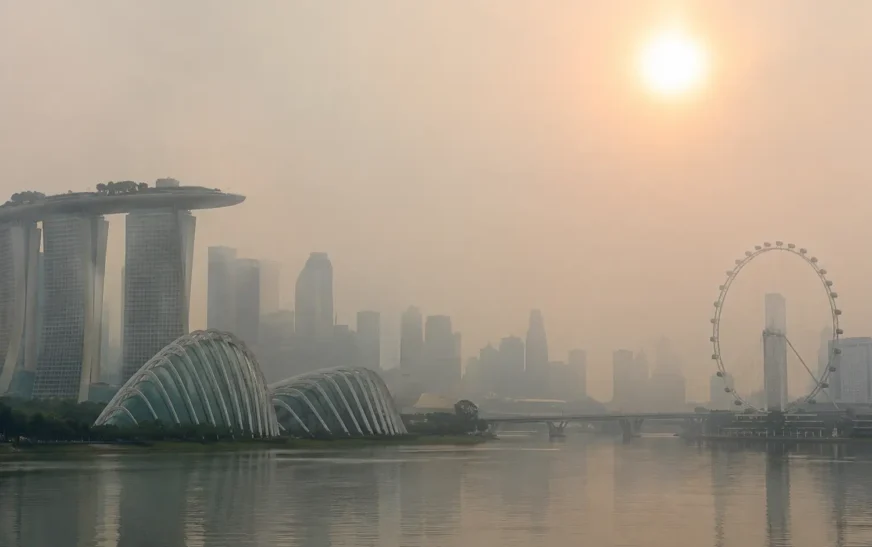
Why is there haze in Singapore, and where does it come from? This is a common question when the city experiences cloudy skies and poor air quality. Singapore sometimes experiences haze caused by smoke from forest and vegetation fires in neighbouring countries. Weather conditions, wind direction, and dry seasons can make the situation worse. The smoke contains tiny particles that reduce visibility and affect breathing. Although Singapore has its own pollution sources, regional fires are a major cause of serious haze episodes. Understanding these causes helps residents prepare and protect their health.
What Causes Haze in Singapore?
Haze in Singapore is mainly associated with smoke from vegetation and peatland fires in Southeast Asia. These fires can occur when forests, plantations, and other land areas burn for agricultural or land-clearing purposes. Some fires spread over large areas and release smoke into the atmosphere. Strong winds can then carry these pollutants across national borders. When the smoke reaches Singapore, it mixes with the surrounding air and creates hazy conditions. The amount of haze depends on fire activity, wind direction, and weather conditions. This is why haze levels can change significantly.
Another important factor is the burning of peatland. Peatlands contain layers of partially decomposed organic material that can store large amounts of carbon. When these areas catch fire, the burning can continue underground for extended periods. Peat fires are particularly difficult to control because they may produce smoke even when visible flames are limited. The resulting pollution can travel over long distances and affect nearby countries. During severe regional fire events, Singapore may experience reduced visibility and unhealthy air quality. Therefore, understanding peatland fires helps explain the causes of recurring haze across Southeast Asia.
How Do Indonesian Forest Fires Affect Singapore?
Indonesia is an important source of regional smoke during major haze episodes affecting Singapore. Forest and plantation fires in parts of Sumatra and Kalimantan can release large amounts of smoke into the atmosphere. When prevailing winds carry this smoke towards Singapore, air quality can deteriorate. The distance between these areas and Singapore means that weather conditions play an important role. Not every fire affects Singapore, and smoke does not always travel towards the island. However, large fires combined with favourable wind conditions can create serious regional pollution problems.
Land clearing and agricultural activities have contributed to some major fire events in Indonesia. During dry periods, vegetation becomes easier to ignite and fires can spread quickly. Peatland areas are especially vulnerable because underground burning can continue for long periods. When these fires produce thick smoke, nearby countries may experience cross-border air pollution. Singapore has experienced several serious haze episodes linked to regional fires. These events demonstrate how environmental problems in one country can affect air quality across international borders. Regional cooperation is therefore important for reducing future haze risks.
Why Does Haze Become Worse During Certain Months?
Singapore experiences haze risks throughout the year, but conditions can become worse during particular seasons. The Southwest Monsoon generally occurs between June and September. During this period, winds can carry smoke from parts of Sumatra towards Singapore. However, the exact direction and strength of winds change over time. Dry weather can also increase the risk of vegetation fires in the region. When several environmental conditions occur together, smoke may remain in the atmosphere and affect Singapore’s air quality for longer periods.
The El Niño climate pattern can sometimes increase the risk of dry conditions across parts of Southeast Asia. During stronger El Niño events, some areas may experience reduced rainfall and longer dry periods. These conditions can make forests and peatlands more vulnerable to fires. However, El Niño does not automatically mean Singapore will experience severe haze. Fire activity, rainfall, wind direction, and atmospheric conditions must also be considered. This explains why some dry seasons bring noticeable haze while others have relatively better air quality. Seasonal weather patterns are important, but they cannot predict every haze event.
How Does Wind Direction Affect Haze in Singapore?
Wind direction is one of the most important factors affecting haze movement. Smoke produced by fires does not remain in the same location. Instead, air currents can carry tiny pollution particles across large distances. When winds move from fire-affected areas towards Singapore, haze may become more noticeable. However, winds moving in other directions can carry smoke away from the island. This means that the number of fires alone cannot explain Singapore’s daily air quality. Meteorological conditions help determine whether regional smoke reaches the country.
Wind speed also affects how smoke spreads through the atmosphere. Stronger winds can move pollution over greater distances, while changing atmospheric conditions influence how pollutants disperse. Rainfall can help remove some particles from the air, although its effect depends on the amount and location of precipitation. During calm weather, pollutants may remain concentrated in certain areas for longer periods. These different conditions explain why haze levels can rise or fall within a short time. Understanding wind movement helps people make sense of changing air quality reports.
What Is the Difference Between Haze and Normal Air Pollution?
Haze and everyday air pollution are related, but they are not exactly the same. Haze usually refers to visible air pollution that reduces visibility and makes the atmosphere appear cloudy or smoky. It can contain fine particles from forest fires, industrial activities, and other pollution sources. Normal air pollution can also exist when the sky looks clear. Some harmful particles are too small to see without special monitoring equipment. Therefore, clear skies do not always mean that the air is completely clean or safe to breathe.
Singapore experiences several local sources of air pollution throughout the year. These include vehicle emissions, industrial activities, construction dust, and other urban sources. However, severe haze episodes are often connected to smoke travelling from regional fires. The difference matters because local pollution controls alone cannot completely prevent cross-border haze. Addressing the wider problem requires cooperation between countries and better management of forests and peatlands. Understanding the difference also helps residents recognise why air quality can deteriorate even when local traffic and industrial activity remain relatively normal.
How Does Haze Affect Health in Singapore?
Haze can affect human health because polluted air contains fine particles that enter the respiratory system. Some particles are small enough to travel deep into the lungs. People may experience coughing, throat irritation, sneezing, and breathing discomfort. Those with asthma or existing respiratory conditions may notice stronger symptoms. Eye irritation and headaches can also occur during periods of poor air quality. The level of risk depends on pollution concentration, exposure duration, and individual health. Therefore, even short outdoor activities may need adjustment when air quality becomes unhealthy.
Some groups require extra protection during haze episodes. Children, older adults, pregnant women, and people with heart or lung conditions may be more sensitive to polluted air. Prolonged exposure to fine particles can increase health risks, especially during severe pollution events. People who work outdoors may also experience greater exposure than those staying indoors. It is important to follow official health advice when pollution levels increase. Reducing outdoor activity, keeping indoor spaces comfortable, and using suitable protective equipment can help limit exposure. Taking precautions early is better than waiting for symptoms.
How Can You Check Haze and Air Quality in Singapore?
Checking air quality information is one of the easiest ways to understand haze conditions. Singapore uses the Pollutant Standards Index, commonly called PSI, to communicate air pollution levels. The index considers several pollutants, including fine particulate matter. Its readings help people understand whether outdoor conditions are good, moderate, or unhealthy. During haze episodes, the 24-hour PSI and one-hour PM2.5 readings provide useful information. These measurements serve different purposes, so understanding which reading is being reported is important when making daily decisions.
The one-hour PM2.5 concentration provides information about recent fine particle pollution. Meanwhile, the 24-hour PSI represents air quality over a longer period. Both measurements can help residents understand changing conditions. It is useful to check updated readings before exercising, travelling, or arranging outdoor events. Air quality can vary throughout the day, especially when regional smoke moves across the island. However, a single reading does not describe every neighbourhood perfectly. Regularly checking updated information provides a better understanding of conditions and helps people make informed choices.
How Can Singapore Reduce the Haze Problem?
Reducing haze requires action beyond Singapore’s national borders because regional fires contribute to major pollution episodes. Countries across Southeast Asia need to work together to prevent illegal burning and improve land management. Better monitoring can help authorities identify fires before they spread over large areas. Stronger enforcement can also discourage activities that cause environmental damage. Protecting peatlands and restoring damaged forests are important long-term measures. These efforts can reduce the amount of smoke entering the atmosphere and help protect public health across the region.
Businesses and communities also have a role in reducing environmental damage. Responsible agricultural practices can reduce dependence on burning for land preparation. Companies can improve supply chain monitoring and avoid sourcing materials connected with destructive land-clearing practices. Individuals can support responsible consumption and better environmental awareness. Governments can strengthen fire prevention programmes and share information during dangerous dry periods. However, lasting improvements require consistent action rather than temporary responses during major haze events. Regional cooperation, responsible land use, and stronger environmental protection are essential for cleaner air.
Frequently Asked Questions About Haze in Singapore
1. Why is there haze in Singapore?
Singapore often experiences haze because smoke from forest and peatland fires in neighbouring countries travels across borders.
2. Which country causes haze in Singapore?
Indonesia is a major regional source of smoke during severe haze episodes, particularly from fires in Sumatra and Kalimantan.
3. When is haze season in Singapore?
Haze risks can increase during the Southwest Monsoon, generally between June and September.
4. Is haze dangerous for people in Singapore?
Yes, haze can cause breathing difficulties, coughing, eye irritation, and other health problems, especially among sensitive groups.
5. How can I protect myself from haze in Singapore?
Reduce outdoor activities, check air quality readings, keep windows closed when necessary, and use a suitable N95 mask when advised.
Conclusion
Understanding why is there haze in Singapore helps explain the country’s regional environmental challenges. Smoke from forest and peatland fires, changing wind directions, and dry weather conditions can contribute to poor air quality. Although Singapore manages its local pollution sources, serious haze episodes often require cooperation between neighbouring countries. Residents can protect themselves by checking PSI readings, limiting outdoor exposure, and following health advice. Long-term solutions depend on preventing fires, protecting forests, and improving land management across Southeast Asia. Staying informed about weather and air quality conditions is an important step towards making safer daily decisions.