
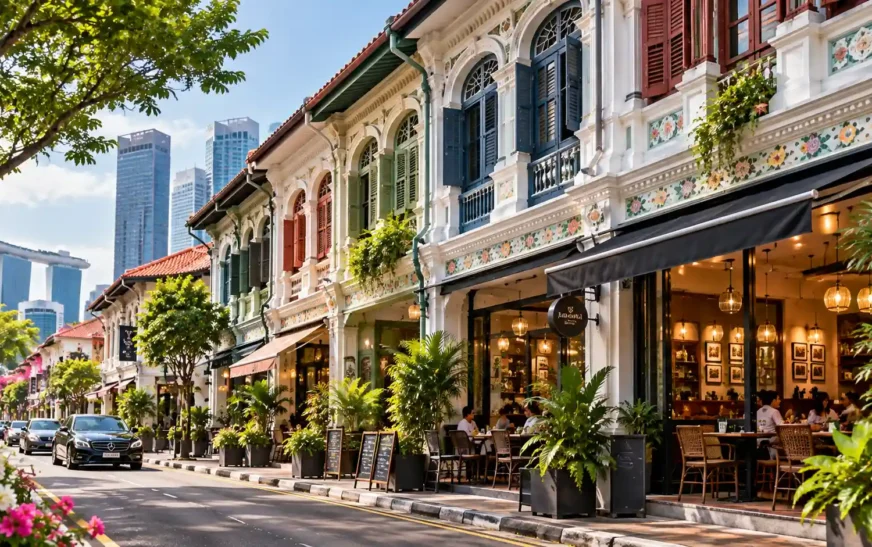
Temasek Shophouse is a well-known heritage and community destination in Singapore. Located at 28 Orchard Road, it brings together history, social impact, business, and community activities. The building dates back to 1928 and has been carefully restored while keeping important heritage features. Today, Temasek Shophouse serves as a social impact hub where changemakers can meet, collaborate, and develop ideas for the common good. Its location near Dhoby Ghaut also makes it easy to reach. Rather than being only a historic building, it connects Singapore’s past with modern community needs. Visitors can explore spaces designed for events, collaboration, learning, and meaningful social activities.
What Is Temasek Shophouse?
Temasek Shophouse is a heritage building that has been transformed into a social impact hub. The original building at 28 Orchard Road was constructed in 1928 and represents an important part of Singapore’s architectural history. It was originally designed for mixed use, with commercial activity and residential spaces. After careful conservation, the building gained a new purpose while retaining important historical elements. Temasek Shophouse now provides spaces for organisations, communities, and individuals working toward positive social change. Its design shows how an older building can remain useful without losing its historical character. This balance between conservation and modern use is one of its defining qualities.
The purpose of Temasek Shophouse goes beyond preserving an attractive historic structure. It was created as a place where different groups can meet and work together. The hub supports collaboration across social enterprises, charities, community groups, and other purpose-driven organisations. It also provides spaces for events, workshops, discussions, and community activities. This makes the building relevant to both local visitors and people involved in social impact work. The idea is simple: bring people together in one accessible place and encourage useful connections. As a result, the shophouse combines heritage, community engagement, sustainability, and collaboration under one roof.
Temasek Shophouse History and Heritage
The history of Temasek Shophouse is closely connected with Singapore’s changing urban landscape. The original building at 28 Orchard Road was completed in 1928. Its architecture reflected a period when traditional design and modern ideas were beginning to meet. The building included commercial space on the ground floor and apartments above. Over time, the structure experienced different uses and changes. Eventually, it became an important conservation project. Restoration work focused on recovering architectural features that had been covered or altered through previous renovations. This careful approach helped reveal the building’s original character while preparing it for a modern community-focused role.
The building also has notable architectural features that make it different from ordinary modern properties. During restoration, enclosed areas were removed, helping bring natural light and ventilation back into the interior. The process also revealed spiral staircases that had historical importance. A central atrium became another important feature, creating an open environment for gatherings and community activities. The Urban Redevelopment Authority recognised Temasek Shophouse as an example of how heritage buildings can be thoughtfully reused. Its conservation demonstrates that preserving history does not necessarily mean keeping a building frozen in time. Instead, historic spaces can gain new purposes while respecting their original identity.
Where Is Temasek Shophouse Located?
Temasek Shophouse is located at 28 Orchard Road, Singapore 238832, in the Dhoby Ghaut area. Its position places it close to one of Singapore’s best-known shopping and cultural districts. The location is convenient for visitors because several major transport connections are nearby. Dhoby Ghaut MRT Station is within walking distance, making public transport a practical option. The official visitor information says the station is about 180 metres away through Orchard Road. This central location also makes the building easy to combine with other activities around Orchard Road. Visitors can therefore experience the heritage site while exploring nearby attractions, shops, restaurants, and public spaces.
Location is one reason Temasek Shophouse can function effectively as a community hub. A centrally positioned building can attract people from different parts of Singapore and provide an accessible meeting point. The surrounding Orchard Road area is busy, modern, and commercially focused, while the shophouse offers a different atmosphere based on heritage and social purpose. This contrast gives the site a distinctive identity. Visitors should still check the official visitor information before travelling because opening hours and access arrangements can change. The current official information lists weekday access from 8 AM to 9:30 PM and weekend and public holiday access from 10 AM to 9:30 PM.
Temasek Shophouse as a Social Impact Hub
The main role of Temasek Shophouse today is connected to social impact. The hub brings together people and organisations that want to address social and environmental challenges. Its approach focuses on collaboration rather than simply providing office space. Different groups can meet, exchange knowledge, organise activities, and develop partnerships. This creates an environment where ideas can move from discussion toward practical action. The building also supports community events and programmes that encourage public participation. In this way, the shophouse provides a physical meeting point for Singapore’s wider impact ecosystem. Its purpose reflects the idea that positive change can become stronger when people work together.
Another important part of its role is connecting different types of organisations. Social enterprises, charities, community groups, and purpose-driven businesses can benefit from shared networks and spaces. Temasek Shophouse describes its role through three broad ideas: convening communities, collaborating on solutions, and acting as a catalyst for positive change. These functions help explain why the building is more than a conventional commercial property. Its activities can include workshops, conferences, exhibitions, discussions, and networking opportunities. For visitors, this means there may be opportunities to learn about social issues while also experiencing the building itself. The focus remains on creating useful connections and supporting meaningful community work.
Spaces and Facilities at Temasek Shophouse
The redesigned Temasek Shophouse provides several spaces for different types of activities. Current facilities include event areas designed for community gatherings, exhibitions, workshops, conferences, and networking. The Living Room can accommodate up to 60 people, while Banyan Cove and Tembusu Canopy can accommodate larger groups. Tembusu Canopy can also support conferences, networking sessions, and gala dinners. These spaces allow the building to serve different needs without losing its community-focused character. The variety is useful because social impact activities can range from small conversations to larger public events. Each space is designed around practical use while remaining part of the wider heritage setting.
The wider redevelopment also expanded the site beyond the original building. The project now connects four adjoining heritage buildings and creates a larger shared environment. The redesigned complex includes event halls, coworking spaces, a media studio, food and beverage options, and retail activity. A connecting corridor works as a common spine through the different buildings, helping create a sense of community. This approach is especially interesting because the buildings were originally constructed at different times and were not designed as one complex. The renovation therefore had to connect different structures while respecting their individual historical identities and creating practical modern spaces.
Architecture and Sustainable Design
The architecture of Temasek Shophouse shows how heritage conservation can work alongside modern design. The building retains important historical characteristics while introducing updated interiors and facilities. Restoration work helped recover features such as the central atrium, spiral staircases, windows, and open areas. Natural ventilation and daylight were also considered during the redesign. This approach creates a more comfortable environment without ignoring the building’s historical value. The result is not simply an old building with new furniture. Instead, the project aims to make the heritage structure functional for present-day community needs while maintaining a visible connection with its architectural past.
Sustainability is another important part of the renewed Temasek Shophouse. The redevelopment incorporates sustainable design principles while working within the limits of conserved buildings. Project information highlights efforts involving energy efficiency, construction waste reduction, and environmental performance. The design also uses the building’s structure and open spaces to support natural light and ventilation. These choices show why adaptive reuse can be valuable in urban areas. Instead of replacing a historic structure completely, designers can improve an existing building and give it a new purpose. Temasek Shophouse therefore provides an example of how heritage conservation and environmental thinking can support each other in modern city development.
Why Temasek Shophouse Matters Today
Temasek Shophouse matters because it gives a historic building a practical role in modern Singapore. Heritage properties can sometimes become difficult to use when their original purposes disappear. This project takes a different approach by adapting the space for community activities, social enterprises, events, and collaboration. It demonstrates that conservation can support active public life instead of simply protecting a building as a monument. The location also makes the idea especially visible because the shophouse sits in a busy central area. For anyone interested in Singapore’s architecture, sustainability, or community development, the building offers a useful example of heritage being connected with contemporary needs.
The project also shows how physical spaces can influence collaboration. A well-designed meeting place can make it easier for people to share knowledge, discover common interests, and develop partnerships. Temasek Shophouse provides different environments for these interactions, from smaller meeting spaces to larger event halls. Its community focus also makes the site relevant beyond traditional business activities. Visitors looking for more information can explore related content about Singapore heritage buildings, Orchard Road attractions, and sustainable architecture in Singapore. These topics can provide additional context about the environment surrounding the shophouse and explain why adaptive reuse has become increasingly important in a growing city.
Visiting Temasek Shophouse
A visit to Temasek Shophouse can be useful for people interested in heritage, architecture, community programmes, or social impact. Because the building is an active hub, the experience may differ depending on the events and activities taking place. Visitors can explore public areas, attend suitable programmes, or learn more about the building’s role in the community. The central location also makes it convenient to include the shophouse within a wider Orchard Road visit. However, access to specific rooms or event spaces may depend on bookings and scheduled activities. Checking the official visitor information before travelling is therefore a sensible step, especially for visitors planning a specific activity.
The building can appeal to different types of visitors for different reasons. Architecture enthusiasts may appreciate the conserved details, while community-minded visitors may be more interested in its social programmes. People attending events can also experience the combination of historic surroundings and modern facilities. The shophouse is particularly interesting because its purpose has evolved over time. What was once a mixed-use heritage building now supports meetings, events, collaboration, and public engagement. This transformation shows how old urban spaces can remain useful when their design and purpose are carefully reconsidered. For current opening hours, event information, and access details, visitors should rely on the official Temasek Shophouse information.
FAQ About Temasek Shophouse
What is Temasek Shophouse?
Temasek Shophouse is a heritage building and social impact hub on Orchard Road in Singapore. It provides spaces for community activities, collaboration, events, and social impact programmes.
Where is Temasek Shophouse located?
It is located at 28 Orchard Road, Singapore 238832, near Dhoby Ghaut MRT Station.
When was Temasek Shophouse built?
The original building at 28 Orchard Road was completed in 1928 and is recognised for its heritage value.
What can you do at Temasek Shophouse?
Visitors can attend selected events, explore public spaces, and experience activities connected with community and social impact.
Is Temasek Shophouse open to the public?
Yes, parts of the hub are accessible to visitors, although access can vary by event and space. Check current visitor information before going.
Conclusion
Temasek Shophouse is more than a historic building in central Singapore. It is a modern social impact hub that combines heritage, community, sustainability, and collaboration. Its origins date back to 1928, while its renewed purpose reflects present-day needs. Careful conservation has preserved important architectural features while creating useful spaces for events, meetings, community programmes, and social enterprises. Its location near Dhoby Ghaut also makes it easy to visit. Most importantly, the project demonstrates how historic buildings can remain active and meaningful in a changing city. Whether you are interested in architecture, heritage, sustainability, or community development, Temasek Shophouse offers a valuable example worth exploring.