
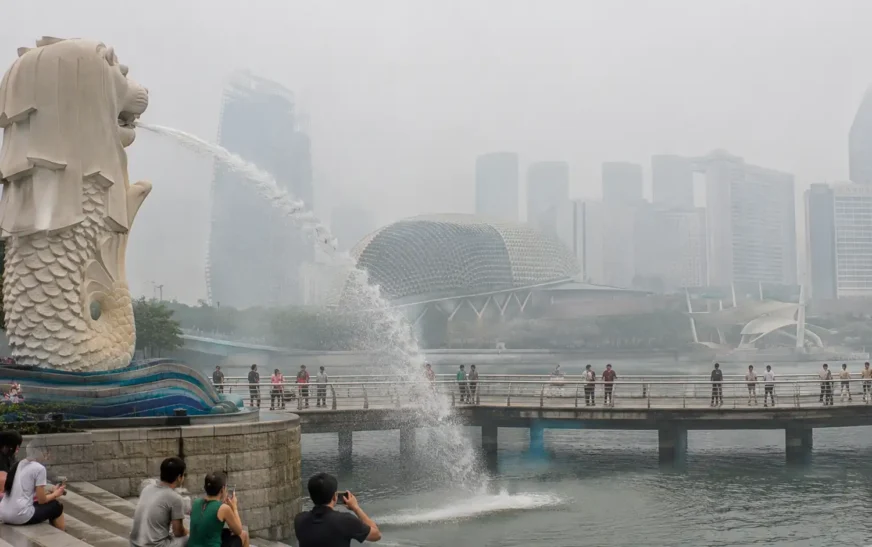
The Singapore haze situation is an important environmental concern for residents, visitors, and businesses. Haze can reduce visibility, affect outdoor activities, and create health problems. It usually occurs when smoke from forest and land fires travels across Southeast Asia. Weather conditions and wind direction influence how much smoke reaches Singapore. In 2026, the country experienced several periods of poor air quality, particularly during October. However, conditions improved in early November following increased rainfall and changing winds. Understanding the latest developments helps people make informed decisions about outdoor activities and personal health.
Latest Singapore Haze Situation in November 2026
The Singapore haze situation improved significantly during early November 2026. Increased rainfall and changing wind conditions helped reduce the amount of smoke reaching the island. On November 5, the 24-hour Pollutant Standards Index forecast was between 51 and 80, indicating moderate air quality. The one-hour PM2.5 readings were also within the normal range. These improvements followed several weeks of regional smoke pollution. Conditions became more favourable as the inter-monsoon period developed, bringing more showers and lighter, variable winds across Singapore and nearby regions.
On November 7, authorities issued their final haze update for the 2026 haze season. The following day’s PSI forecast ranged between 40 and 60, covering good to moderate conditions. Smoke plumes remained visible in parts of southern Kalimantan but were no longer significantly affecting Singapore. Government agencies also began ending several temporary haze-related measures. These developments indicated a substantial improvement compared with October. However, regional fires can still create future pollution risks. Therefore, monitoring air quality remains important, especially during warmer and drier weather conditions.
What Causes the Singapore Haze Situation?
The main cause of regional haze is smoke released by forest, peatland, and agricultural fires. Some fires occur naturally, while others result from human activities such as land clearing. Burning vegetation releases fine particles and harmful gases into the atmosphere. These pollutants can travel long distances when strong winds carry smoke across national borders. Singapore may experience hazy conditions even when there are no major fires within its own territory. The problem becomes more serious when large fires continue burning across neighbouring parts of Southeast Asia.
Weather conditions play an important role in determining the severity of air pollution. During dry periods, fires can spread more easily and remain active for longer. Winds blowing from affected areas may transport smoke towards Singapore. Rainfall can help reduce fire activity and improve local air conditions. However, changing wind directions may bring smoke towards the island again. The combination of regional fires, dry weather, and atmospheric movement explains why the Singapore haze situation can change quickly. Understanding these factors helps explain the importance of regional environmental cooperation.
Impact of the 2026 Haze Season on Singapore
The 2026 haze season created several challenges for Singapore during September and October. Air quality conditions became more concerning as smoke from regional fires reached the island. Between October 16 and October 28, air quality reached unhealthy levels on seven days and very unhealthy levels on three days. These conditions raised concerns about public health and outdoor activities. People with existing respiratory problems faced greater risks. Families, schools, outdoor workers, and businesses also needed to consider changing environmental conditions when planning their daily activities.
The situation gradually improved towards the end of October and early November. Increased rainfall helped reduce smoke pollution, while changing winds lowered the risk of additional smoke reaching Singapore. Government agencies introduced temporary support measures during the difficult period. These included mask distribution and designated air-conditioned haze shelters. Authorities also provided health advice for different population groups. As conditions improved, several temporary arrangements were withdrawn. The experience highlighted the importance of emergency planning, environmental protection, and public awareness during periods of serious regional air pollution.
Understanding Singapore’s PSI and PM2.5 Readings
The Pollutant Standards Index, commonly called PSI, measures air pollution levels in Singapore. It helps residents understand whether outdoor air conditions are suitable for different activities. Lower readings generally indicate cleaner air, while higher readings suggest increasing pollution and possible health risks. The index considers several pollutants, including fine particles. Authorities use the 24-hour PSI forecast to provide guidance for planning outdoor activities. Understanding these readings can help families, workers, and visitors make safer decisions when pollution levels begin increasing.
PM2.5 is another important measurement used to assess air quality. It refers to tiny airborne particles measuring 2.5 micrometres or less. These particles are small enough to enter deep into the respiratory system. The one-hour PM2.5 reading provides useful information about immediate air conditions. This makes it particularly helpful when deciding whether to exercise or spend time outdoors. The PSI forecast and PM2.5 readings serve different purposes. Checking both measurements provides a clearer understanding of pollution levels and possible health concerns.
Health Effects of Haze and Air Pollution
Haze can affect people differently depending on their health, age, and exposure time. Common symptoms include coughing, throat irritation, sneezing, and eye discomfort. Some people may also experience breathing difficulties or chest tightness. Fine particles can enter the respiratory system and increase irritation. People with asthma or existing heart and lung conditions may experience more serious problems. Prolonged exposure to polluted air can also increase health concerns. Therefore, understanding air quality conditions is important for protecting personal health during periods of regional haze.
Children, older adults, pregnant women, and people with chronic medical conditions may require additional precautions. Children spend time playing and exercising outdoors, which can increase their exposure. Older adults may also be more sensitive to changes in air quality. People with asthma should follow their existing medical advice and keep prescribed medication accessible. Anyone experiencing serious breathing difficulties or chest pain should seek medical attention promptly. Reducing unnecessary exposure, following health recommendations, and monitoring pollution levels can help lower potential risks during unhealthy air quality conditions.
How Singapore Residents Can Protect Themselves During Haze
Taking practical precautions can reduce exposure to polluted outdoor air. Residents should check air quality readings before planning exercise, outdoor work, or family activities. When pollution levels become unhealthy, reducing prolonged outdoor exertion is generally recommended. People can also choose indoor activities instead of running, cycling, or playing sports outside. Keeping windows closed during particularly hazy periods may help limit outdoor smoke entering indoor spaces. However, proper ventilation and suitable indoor air filtration are also important considerations for maintaining comfortable indoor conditions.
N95 masks can provide protection against fine airborne particles when used correctly. Ordinary cloth masks and loose-fitting surgical masks may not provide the same level of particle protection. People should select suitable masks and ensure they fit properly. Drinking enough water and avoiding unnecessary outdoor exposure can also support general wellbeing. Residents with existing respiratory conditions should follow their healthcare provider’s advice. For additional information, readers can explore related topics such as air pollution health effects and practical ways to improve indoor air quality.
Weather Conditions and Future Haze Risks
Weather conditions strongly influence the Singapore haze situation throughout the year. The southwest monsoon period can bring winds that transport smoke from neighbouring regions towards Singapore. During dry weather, vegetation and peatland fires may become more difficult to control. This can increase the amount of smoke released into the atmosphere. However, rainfall and changing wind patterns can reduce the likelihood of smoke reaching the island. These weather patterns explain why air quality may improve during certain months and become worse during extended dry periods.
The inter-monsoon period usually brings lighter and more variable winds, along with increased rainfall and thunderstorms. These conditions helped improve Singapore’s air quality during early November 2026. However, future haze risks cannot be completely eliminated because regional fire activity may continue. Changes in rainfall, temperature, and wind direction can influence pollution levels. Residents should avoid assuming that improved conditions will remain permanent. Following weather developments and air quality forecasts helps people prepare for possible changes. Long-term environmental protection is equally important for reducing future haze problems.
Singapore’s Efforts to Control Regional Haze
Singapore has introduced different measures to reduce the impact of transboundary haze. These efforts include air quality monitoring, public health advisories, regional cooperation, and environmental policies. Authorities also work with neighbouring countries to address activities linked to illegal land clearing and forest fires. International cooperation is important because smoke pollution does not respect national borders. Countries need to share information, strengthen environmental enforcement, and improve fire prevention practices. These efforts can help reduce the environmental and economic damage caused by repeated haze episodes.
During the 2026 haze season, Singapore also strengthened its approach to investigating activities connected with regional pollution. Changes to its transboundary haze legislation in November expanded investigative powers relating to businesses potentially linked to haze-causing activities. Such measures aim to improve accountability and discourage harmful environmental practices. However, legal action alone cannot solve the entire problem. Better land management, responsible agricultural practices, fire prevention, and regional cooperation are also necessary. Long-term progress depends on governments, businesses, and communities working together to protect the environment.
Frequently Asked Questions
1. What is the latest Singapore haze situation in November 2026?
The situation improved significantly by early November, with mostly good to moderate air quality conditions.
2. What causes haze in Singapore?
Regional forest, peatland, and agricultural fires release smoke that can travel towards Singapore.
3. Is Singapore air quality safe now?
Conditions improved in November, but residents should check current PSI and PM2.5 readings.
4. Does haze affect children’s health?
Yes, polluted air can irritate children’s respiratory systems and increase breathing-related problems.
5. When does haze usually affect Singapore?
Haze risk often increases during dry periods, particularly during the southwest monsoon season.
Conclusion
The Singapore haze situation improved considerably during November 2026 after several challenging weeks. Increased rainfall and changing wind conditions helped reduce regional smoke pollution. However, the risk of future haze remains because forest and land fires continue to threaten Southeast Asian air quality. Understanding PSI readings, monitoring PM2.5 levels, and following health recommendations can help residents stay prepared. Long-term solutions also require stronger environmental protection and regional cooperation. Singapore’s experience highlights the importance of responsible land management and public awareness. Staying informed about air quality helps everyone make safer everyday decisions.