
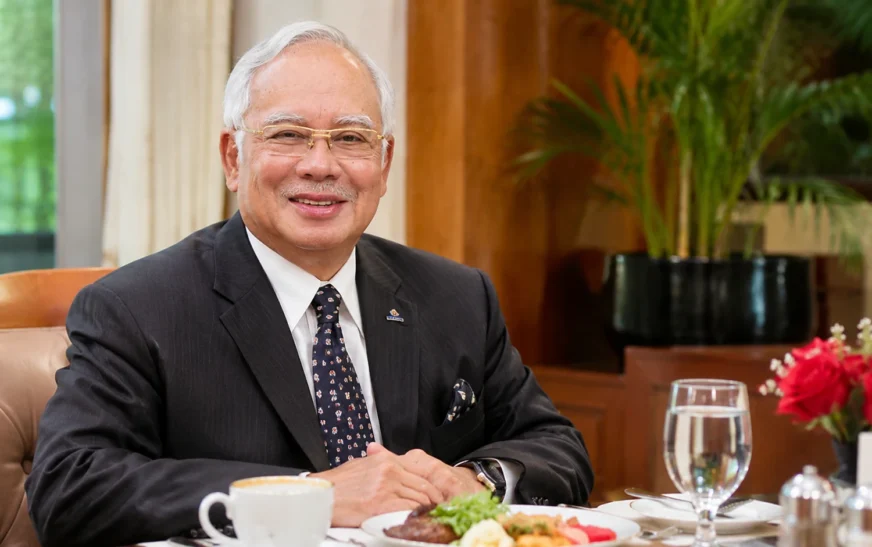
Najib Razak is a Malaysian politician who served as the country’s sixth Prime Minister from 2009 to 2018. He became one of Malaysia’s most recognised political figures through his leadership, government policies, and involvement in major national developments. Born into a prominent political family, Najib entered public service at a young age. His political journey included important leadership positions and several challenging moments. Today, Najib Razak remains a widely discussed figure in Malaysian politics because of his achievements, controversies, and legal battles. His life story offers an interesting look at Malaysia’s political history and changing leadership.
Who is Najib Razak?A brief biography
| Category | Details |
|---|---|
| Full Name | Mohammad Najib bin Abdul Razak |
| Popular Name | Najib Razak |
| Date of Birth | July 23, 1953 |
| Age | 73 years (as of 2026) |
| Birthplace | Kuala Lipis, Pahang, Malaysia |
| Nationality | Malaysian |
| Profession | Politician |
| Political Party | United Malays National Organisation (UMNO) |
| Religion | Islam |
| Zodiac Sign | Leo |
| Father | Abdul Razak Hussein |
| Mother | Rahah Noah |
| Wife | Rosmah Mansor |
| Previous Wife | Tengku Puteri Zainah Eskandar |
| Children | Five |
| Education | University of Nottingham |
| Qualification | Bachelor’s Degree in Industrial Economics |
| Famous For | Sixth Prime Minister of Malaysia |
| Prime Ministerial Tenure | 2009–2018 |
| Previous Position | Deputy Prime Minister of Malaysia |
| Political Career | Started in 1976 |
Who Is Najib Razak?
Najib Razak, whose full name is Dato’ Sri Mohd Najib bin Tun Abdul Razak, is a former Malaysian Prime Minister. He was born on July 23, 1953, in Kuala Lipis, Pahang, Malaysia. He belongs to a well-known political family with a long history of public service. His father, Abdul Razak Hussein, also served as Malaysia’s Prime Minister. Growing up in this environment gave Najib early exposure to politics, leadership, and government responsibilities. Over time, he developed an interest in public affairs and decided to follow his family’s political path.
Najib Razak became Prime Minister on April 3, 2009, after succeeding Abdullah Ahmad Badawi. During his leadership, he introduced economic programmes and several government reforms. His administration focused on national development, investment, and improving public services. However, his time in office also faced serious criticism and political challenges. The 1Malaysia Development Berhad scandal became a major issue during his leadership. He lost the 2018 general election and later faced criminal proceedings. His political career remains an important subject when discussing modern Malaysian history and government accountability. Read more : Chen Zihan
Najib Razak Early Life and Family Background
Najib Razak was born into a family closely connected with Malaysian politics. His father, Tun Abdul Razak Hussein, became Malaysia’s second Prime Minister in 1970. His family background influenced his childhood and provided an early understanding of national leadership. Najib spent his early years in Malaysia before travelling abroad for further education. His upbringing included strong expectations about education, discipline, and public responsibility. These experiences helped shape his interests and future ambitions. His father’s political position also made the family an important part of Malaysia’s national history.
Najib is the eldest son in his immediate family and has several siblings. His father’s political legacy remained an important part of his public identity throughout his career. His uncle, Hussein Onn, also served as Malaysia’s third Prime Minister. This family connection placed Najib within a powerful political tradition. However, his career involved more than simply carrying a famous surname. He held several government positions and worked within the country’s political system for decades. Understanding his family background helps explain his early entry into politics and his influence within Malaysian public life.
Education and Academic Qualifications
Education played an important role in Najib Razak’s early development. He attended primary and secondary schools in Malaysia before continuing his studies abroad. For higher education, he travelled to the United Kingdom and enrolled at the University of Nottingham. He studied industrial economics and graduated in 1974. His academic background provided knowledge about economic systems, business activities, and national development. These subjects later became relevant to his government responsibilities. His education also gave him international exposure and opportunities to understand different political and economic environments.
After completing his degree, Najib returned to Malaysia and began developing his professional career. He initially worked in the corporate sector before entering full-time politics. His early professional experience helped him understand business operations and economic challenges. However, public service soon became his main focus. His educational background remained an important part of his professional profile throughout his political journey. For readers interested in his personal history, exploring his education alongside his early political career provides a clearer understanding of how he prepared for national leadership.
Najib Razak Political Career
Najib Razak entered Malaysian politics in 1976 following the death of his father. At just 23 years old, he won a parliamentary by-election in Pekan, Pahang. This victory marked the beginning of a long political journey. He became one of the youngest members of Parliament in Malaysia at that time. During the following years, he held several government responsibilities and gained political experience. His early career included positions connected with education, culture, youth affairs, and defence. These opportunities helped him develop leadership skills and understand different areas of government administration.
Throughout his political career, Najib became an influential member of the United Malays National Organisation. The organisation played a major role in Malaysian politics for many decades. He eventually became its president and led the party during an important period. His government experience included serving as Deputy Prime Minister from 2004 to 2009. After Abdullah Ahmad Badawi stepped down, Najib became the country’s sixth Prime Minister. His leadership brought new economic plans and political challenges. His rise from a young parliamentarian to national leader remains a significant part of his biography.
Najib Razak as Malaysia’s Prime Minister
Najib Razak became Malaysia’s sixth Prime Minister on April 3, 2009. His government introduced several programmes designed to strengthen economic growth and improve public services. One important initiative was the Government Transformation Programme, which aimed to improve government performance. His administration also focused on investment, infrastructure, education, and employment opportunities. These policies were intended to support Malaysia’s development and strengthen its international economic position. During his leadership, the country continued expanding its industrial, financial, and tourism sectors while facing changing regional and global economic conditions.
Another major initiative was the introduction of the 1Malaysia concept. It promoted national unity and encouraged cooperation among Malaysia’s different ethnic communities. Najib also introduced economic policies intended to attract investment and support businesses. However, his administration faced criticism over political decisions, public spending, and governance issues. The 1MDB scandal eventually became a major challenge for his government. Public trust declined as investigations and allegations received increasing attention. His time as Prime Minister ended after the 2018 general election, when his political coalition lost power.
What Was the 1MDB Scandal?
The 1Malaysia Development Berhad, commonly known as 1MDB, was established in 2009 as a government-owned investment and development company. Its purpose was to attract international investment and support Malaysia’s economic growth. The organisation became involved in major financial transactions and international business projects. However, serious questions later emerged about its financial management. Investigations revealed that billions of dollars had been misappropriated through complex financial arrangements. The scandal attracted international attention and became one of the most significant financial controversies in Malaysia’s modern history.
Najib Razak faced several legal proceedings connected with the scandal. He denied wrongdoing and maintained that he had been misled by other individuals involved in the financial activities. In December 2025, he was convicted in a separate major 1MDB case involving abuse of power and money laundering charges. He received a 15-year prison sentence and a substantial fine, and he appealed the decision. The case remains important because it raised serious questions about political accountability, public money, and financial transparency. It also changed public discussions about leadership and government responsibility.
Najib Razak Legal Cases and Current Status
One of the most important legal cases involving Najib Razak concerned RM42 million from SRC International, a former subsidiary of 1MDB. In 2020, he was convicted of abuse of power, criminal breach of trust, and money laundering. Malaysia’s Federal Court upheld the conviction in August 2022. He originally received a 12-year prison sentence and a RM210 million fine. In 2024, the Pardons Board reduced his sentence to six years and his fine to RM50 million. This decision changed the expected timeline of his imprisonment but did not cancel his conviction.
In September 2026, Najib received a conditional royal pardon allowing him to serve the remaining portion of his reduced SRC sentence under house arrest. After payment of the RM50 million fine, a High Court order on November 10, 2026, cleared the way for him to serve that sentence at his Kuala Lumpur residence until August 23, 2028. However, this arrangement does not cancel his separate 15-year sentence in the 1MDB case. He is appealing that conviction. His legal situation remains complicated, with important questions about the implementation of his sentences and future proceedings.
Najib Razak Wife and Children
Najib Razak’s family has attracted public attention throughout his political career. He is married to Rosmah Mansor, who has frequently appeared alongside him at public and official events. Their marriage became part of his public profile during his years in government. Rosmah also attracted media attention because of her public activities, lifestyle, and involvement in various controversies. However, Najib’s family life is separate from his political responsibilities and legal proceedings. Their family story remains a frequently discussed subject among people interested in his personal biography.
Najib has five children from his two marriages. His children are Mohd Nizar, Mohd Nazifuddin, Nooryana Najwa, Mohd Norashman, and Puteri Norlisa. Some of his children have maintained public profiles through business activities and other professional interests. His daughter, Nooryana Najwa, has occasionally appeared in public discussions concerning her father. Despite the family’s public attention, Najib’s children generally maintain their own lives and careers. Understanding his family background adds another dimension to his biography beyond political achievements, government leadership, and legal controversies.
Najib Razak Net Worth and Lifestyle
Najib Razak’s financial position has received considerable attention because of his political career and the investigations involving 1MDB. However, determining his exact personal net worth is difficult without reliable, complete financial information. Public discussions about his wealth have included reported assets, luxury items, financial transactions, and legal proceedings. It is important to distinguish verified court findings from allegations or media speculation. A responsible biography should avoid presenting unconfirmed figures as established facts. His financial history remains closely connected with the wider questions raised during investigations into public funds.
During his years as Prime Minister, Najib attended international meetings, official ceremonies, and major political events. His lifestyle and public appearances attracted attention both inside and outside Malaysia. However, his reputation changed significantly following the financial scandal and criminal convictions. His legal troubles also affected his political influence and public image. Today, discussions about Najib Razak often focus on his government record, personal finances, and the consequences of the 1MDB scandal. His story demonstrates why transparency and accountability are important responsibilities for people holding senior public positions.
Najib Razak’s Political Legacy and Public Image
Najib Razak’s political legacy remains a subject of debate in Malaysia. Supporters often highlight his economic development programmes, infrastructure projects, and efforts to attract foreign investment. They also point to initiatives intended to improve public services and strengthen national unity. Critics, however, focus on the 1MDB scandal, corruption convictions, and concerns about government accountability. These different opinions show how political leaders can leave complicated legacies. His years in office included both important national programmes and serious controversies that continue influencing Malaysian political discussions.
His political journey also provides lessons about leadership and public responsibility. Holding a senior government position requires transparency, careful financial management, and public trust. The controversies surrounding Najib Razak demonstrate how financial misconduct allegations can affect a country’s reputation. His court cases also highlight the importance of independent legal institutions. Although his time as Prime Minister ended in 2018, his influence on political discussions has continued. His biography remains relevant to anyone interested in Malaysian government, modern Southeast Asian politics, and the relationship between political power and accountability.
Frequently Asked Questions About Najib Razak
1. Who is Najib Razak?
Najib Razak is a Malaysian politician who served as the country’s sixth Prime Minister from 2009 to 2018. He is also known for his involvement in the 1MDB financial scandal.
2. When was Najib Razak born?
Najib Razak was born on July 23, 1953, in Kuala Lipis, Pahang, Malaysia. He comes from a prominent Malaysian political family.
3. Who is Najib Razak’s father?
His father was Tun Abdul Razak Hussein, Malaysia’s second Prime Minister. His father’s political legacy influenced Najib’s early interest in public service.
4. Who is Najib Razak’s wife?
Najib Razak is married to Rosmah Mansor. She became a widely recognised public figure during his years as Malaysia’s Prime Minister.
5. Where is Najib Razak now?
As of November 16, 2026, he is serving his reduced SRC International sentence under house arrest in Kuala Lumpur. He is also appealing a separate 15-year sentence connected to 1MDB.
Conclusion
Najib Razak has experienced one of the most significant and controversial political journeys in modern Malaysian history. From his early life in a political family to becoming Prime Minister, his career included decades of public service. His government introduced economic programmes and national development initiatives. However, the 1MDB scandal and subsequent criminal convictions changed his public reputation. His current legal situation continues to attract national attention, particularly following the conditional pardon and house arrest arrangement. Understanding Najib Razak requires looking at both his political achievements and controversies. His story highlights the importance of leadership, transparency, and accountability.