
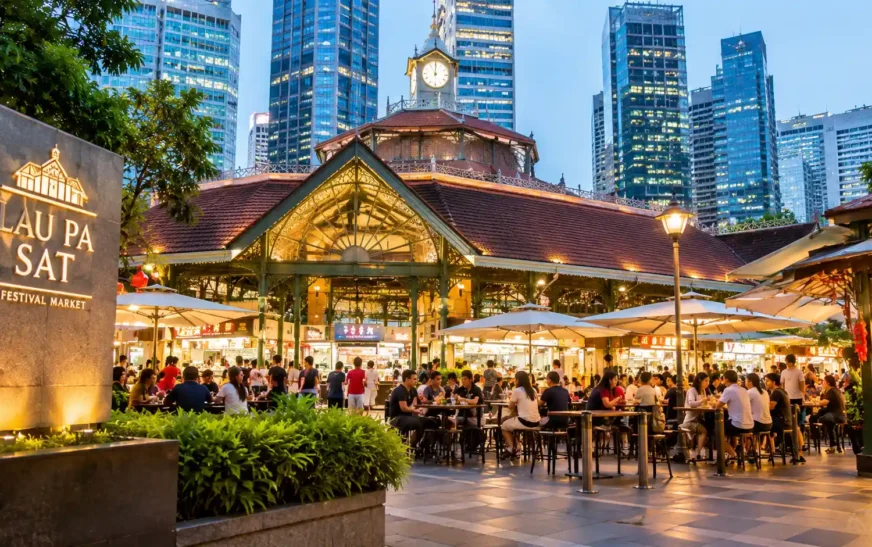
Lau Pa Sat is one of Singapore’s most famous places for local food and heritage. Located at 18 Raffles Quay, this historic market sits in the heart of the Central Business District. It is known for its large selection of hawker dishes, distinctive cast-iron architecture, and lively evening Satay Street. The market is also officially presented as a 24-hour destination, although individual stalls may follow different schedules. Today, visitors can enjoy Singaporean favourites alongside international dishes from more than 80 stalls. For tourists, Lau Pa Sat offers an easy way to experience food, history, and modern city life in one convenient location.
The appeal of Lau Pa Sat goes beyond its food. The building has a long history connected with Singapore’s development, while its location places it among modern office towers and busy city streets. During the day, it attracts office workers and visitors looking for convenient meals. At night, Boon Tat Street becomes the setting for its popular outdoor satay experience. This creates a different atmosphere after sunset. If you are planning a Singapore food trip, Lau Pa Sat can easily fit into your itinerary. You can also explore our Singapore food guide and Singapore travel guide for more ideas.
What Is Lau Pa Sat Famous For?
Lau Pa Sat is best known for its hawker food and Satay Street. The market brings many Singaporean favourites together, including chicken rice, laksa, nasi lemak, mee rebus, char kway teow, carrot cake, wanton noodles, and fishball noodles. It also offers dishes from different culinary traditions, including Chinese, Malay, Indian, and international food. This variety makes it suitable for groups because everyone can choose something different. The official website currently highlights more than 80 stalls and several Michelin-mentioned brands. Visitors can therefore explore different flavours without travelling across the city for every dish.
Another major attraction is the market’s atmosphere. The historic structure creates a strong contrast with the modern skyscrapers surrounding it. Inside, visitors can enjoy a casual hawker-centre environment, while outside, Satay Street becomes especially lively in the evening. This combination makes the experience different from a typical shopping mall food court. You can visit for a quick lunch, spend time trying several dishes, or return at night for satay. Because the market serves different types of visitors, it works well for tourists, office workers, families, and food lovers looking for authentic local flavours in Singapore. Read more : Woodleigh Mall
The History of Lau Pa Sat
The history of Lau Pa Sat goes back to Singapore’s early market culture. The first Telok Ayer Market was built in 1824 using timber and attap. Its location near the sea was important because fishermen could bring their daily catch directly to the market. Later, the market was replaced by stronger structures as the city developed. The name Lau Pa Sat means “Old Market” and became associated with the historic Telok Ayer Market. This long connection with trade and food helps explain why the building remains an important part of Singapore’s cultural landscape today.
The cast-iron market building seen today was completed in 1894 at the edge of reclaimed land around Raffles Quay. Its distinctive structure has survived major changes in the surrounding city. As Singapore developed, the market eventually became part of the modern hawker-centre system. Today, it stands among high-rise office buildings while continuing to serve food to the public. The market’s history gives visitors more than an ordinary dining experience. You can eat inside a structure that has witnessed major changes in Singapore’s urban development. This combination of heritage and everyday food culture is one reason Lau Pa Sat remains distinctive.
Popular Food at Lau Pa Sat
Food is naturally the main reason many visitors come to Lau Pa Sat. The official market website highlights dishes such as chicken rice, laksa, satay, nasi lemak, mee rebus, kaya toast, bak kut teh, carrot cake, char kway teow, roti prata, and chicken biryani. This broad selection makes it easy to create your own food tour. You can choose one familiar dish or share several dishes with friends. For first-time visitors, trying one classic Singaporean meal followed by a snack can be a simple way to explore the market without ordering too much.
The variety also makes Lau Pa Sat useful for groups with different preferences. Someone may want noodles, another person may prefer rice, while someone else may choose a vegetarian or international option. Before ordering, look at the available stalls and compare menus. Prices, portions, and operating hours can vary between vendors. If you have a particular dish in mind, checking the current stall directory before visiting can save time. Food availability may also change as businesses update their menus. The best approach is to treat the market as a place to explore rather than expecting every visit to look exactly the same.
Satay Street at Lau Pa Sat
Satay Street is one of the biggest reasons visitors choose to visit Lau Pa Sat at night. It takes place along Boon Tat Street beside the market, creating an open-air dining area surrounded by Singapore’s Central Business District. The official website currently lists operating hours of 7 pm to 3 am on weekdays and 3 pm to 3 am on weekends. Lau Pa Sat describes the area as Singapore’s largest open-air Satay Street. Visitors can enjoy grilled skewers outdoors while taking in the lively atmosphere of the surrounding city.
The satay experience is especially appealing after sunset. Grilled meat is cooked over charcoal, while diners sit outside along the street. The combination of food smells, city lights, and busy tables creates a lively evening setting. The official site currently states that Lau Pa Sat is home to nine satay carts. Because vendor arrangements can change, visitors should check current information if they want a particular stall. If you are visiting Singapore for the first time, Satay Street can be a memorable way to experience a traditional grilled-food style in a modern city environment.
When Is the Best Time to Visit?
The best time to visit Lau Pa Sat depends on your main reason for going. Daytime works well if you want to explore the market and enjoy a quieter meal. Weekday lunch can be busy because the market is located in the Central Business District and attracts nearby office workers. If you prefer fewer crowds, visiting outside the busiest lunch period may be more comfortable. Daytime also gives you more time to look around the historic building and explore different food stalls without focusing only on the evening satay experience.
Evening is a better choice if Satay Street is your priority. Weekday Satay Street service begins at 7 pm, while weekend service starts at 3 pm according to the official website. The atmosphere usually becomes more energetic as more diners arrive. Visitors should allow extra time during busy periods because popular food areas can become crowded. You can also plan your visit around dinner and then explore nearby parts of the CBD. Checking current operating information before travelling is useful because stall schedules and special events can change throughout the year.
How to Get to Lau Pa Sat
Lau Pa Sat is conveniently located for visitors using Singapore’s public transport system. The official website lists several nearby MRT stations, including Downtown, Raffles Place, Shenton Way, and Telok Ayer. This gives travellers flexibility when planning their route. Raffles Place is particularly useful for visitors coming through the city’s central transport network, while Downtown and Telok Ayer provide other convenient options. Once you leave the MRT station, the market is within walking distance. Visitors should use a current map or transport app for the exact walking route from their selected station.
Driving is another option, although visitors should consider traffic and parking availability in the busy CBD. Lau Pa Sat’s official website lists nearby car parks at Hong Leong Building, IOI Central Boulevard Towers, One Raffles Quay, One Shenton Way, and SGX Carpark. Parking charges and availability may vary, especially during busy periods. For tourists staying elsewhere in Singapore, MRT travel is often a straightforward way to reach the market. If you plan to visit during lunch or evening peak periods, allowing extra travel time can make the journey more comfortable and less stressful.
Lau Pa Sat and Singapore Hawker Culture
Lau Pa Sat is closely connected with Singapore’s hawker culture. The market brings together different culinary traditions that developed through Singapore’s multicultural population. Chinese, Malay, Indian, and other food influences can be seen across the stalls. The official site describes Singapore’s hawker culture as an important part of the country’s food heritage and community life. Visiting a hawker centre like Lau Pa Sat therefore offers more than a meal. It gives visitors an opportunity to see how affordable food, local traditions, and different cultural influences have become part of everyday Singaporean life.
The market also provides a useful connection between Singapore’s past and present. Its historic building remains part of a modern business district, while its food stalls continue serving people every day. This contrast shows how traditional places can remain relevant as cities change. Visitors who are interested in the history behind the market can also explore the Lau Pa Sat Heritage Trail. The trail uses AR and VR experiences to present earlier views of the area, including its former waterfront setting and historic market life. This can add more context to a food-focused visit.
Food Folks and Other Experiences
Lau Pa Sat offers more than traditional hawker stalls. Food Folks @ Lau Pa Sat is a food-focused concept within the historic building that combines food retail products with F&B businesses. Its official website describes it as a locally focused “Everything Food” concept, with more than 80 percent of its brands being local food brands. This provides visitors with another way to explore Singapore’s food culture. Instead of only eating a prepared meal, visitors can browse local food products, discover brands, and look for gifts or souvenirs connected with Singapore’s culinary scene.
Food Folks currently lists operating hours from 10 am to 10 pm. However, visitors should remember that different areas and businesses may have separate schedules. If you want to buy a specific product, checking its availability before visiting is sensible. The concept also adds a modern retail element to the historic market. This creates a useful balance between traditional hawker dining and newer food businesses. Visitors can therefore spend more time at Lau Pa Sat without relying only on a single meal. For food enthusiasts, it can be a convenient place to discover both familiar favourites and newer local products.
Useful Tips for Visiting Lau Pa Sat
A little planning can make your visit to Lau Pa Sat easier. First, decide whether you mainly want hawker food, heritage sightseeing, or Satay Street. If you want satay, check the current evening schedule before travelling. Second, consider sharing several dishes with friends so you can sample more flavours. Third, expect crowds during busy lunch and dinner periods. Finally, carry a payment method that is convenient for your chosen stalls and keep your belongings secure in crowded areas. These simple steps can help you enjoy the market without spending too much time deciding what to do next.
It is also worth checking the latest information before your trip. Individual stalls can have different operating hours, and menus or vendor arrangements may change. If you are visiting with children or older family members, consider the time of day and expected crowd levels. Singapore’s weather can also be hot and humid, so comfortable clothing and water are useful. Public transport can be convenient because several MRT stations are nearby. For a relaxed visit, give yourself enough time to eat, explore the building, and experience the atmosphere instead of treating Lau Pa Sat as a quick stop.
Frequently Asked Questions About Lau Pa Sat
What is Lau Pa Sat famous for?
Lau Pa Sat is famous for Singaporean hawker food, its historic market building, and the popular Satay Street on Boon Tat Street.
Is Lau Pa Sat open 24 hours?
The official website lists Lau Pa Sat as a 24-hour destination, although individual food stalls may have different operating hours.
Where is Lau Pa Sat located?
Lau Pa Sat is located at 18 Raffles Quay in Singapore’s Central Business District.
What time does Satay Street open?
Satay Street currently starts at 7 pm on weekdays and 3 pm on weekends.
Which MRT stations are near Lau Pa Sat?
Nearby MRT stations include Downtown, Raffles Place, Shenton Way, and Telok Ayer.
Conclusion
Lau Pa Sat brings together Singapore’s food culture, history, architecture, and modern city atmosphere. Its large selection of hawker dishes makes it a convenient destination for trying different local flavours in one place. The historic cast-iron structure adds cultural interest, while Satay Street creates a lively evening experience beside the market. Its central location also makes it easy to reach using several nearby MRT stations. Whether you are visiting Singapore for the first time or looking for another local food experience, Lau Pa Sat offers plenty to explore. Check current stall schedules and Satay Street timings before visiting, then take your time enjoying the food and atmosphere.