
Joo Chiat is one of Singapore’s most charming neighbourhoods, known for its colourful shophouses, rich heritage, and delicious local food. Located in the eastern part of Singapore, this lively area offers a wonderful mix of traditional culture and modern city life. Visitors can explore historic streets, discover independent shops, enjoy local dishes, and admire beautiful architectural details. Joo Chiat is especially popular with people who want to experience a different side of Singapore beyond its famous shopping malls and major attractions. Whether you are visiting for a few hours or planning a longer trip, this neighbourhood offers plenty to discover.
Where Is Joo Chiat in Singapore?
Joo Chiat is a historic neighbourhood in Singapore’s eastern region, associated with the wider Katong area. It is known for its residential streets, traditional businesses, cafes, and distinctive architecture. The neighbourhood developed as a community with strong Peranakan cultural influences, which remain visible in its buildings, food, and local traditions. Its location makes it an appealing stop for visitors exploring Singapore beyond the central shopping and business districts. People can spend time walking along its streets, discovering small businesses, and enjoying the relaxed atmosphere that makes this part of the city feel different.
Getting to Joo Chiat is relatively straightforward because Singapore has a well-connected public transport system. Visitors can travel by bus, taxi, or ride-hailing service, depending on their starting point and preferred route. Nearby MRT stations can also provide access to the surrounding Katong and Marine Parade areas, although some destinations require a short walk or connecting bus ride. Before travelling, check the route and service timings for your chosen destination. Comfortable shoes are useful because many of the neighbourhood’s most interesting details are found along ordinary streets rather than inside large attractions.
What Makes Joo Chiat Special?
Joo Chiat stands out for its combination of cultural heritage, everyday community life, and independent businesses. Unlike areas designed mainly for tourists, it has a lived-in character, with homes, neighbourhood shops, restaurants, and small cafes sharing the same streets. Visitors can notice traditional building designs alongside modern businesses and renovated properties. This blend gives the neighbourhood a distinctive identity and makes it interesting for people who enjoy exploring places at a slower pace. Every street can offer something different, from colourful architectural details to a family-run food shop serving familiar local favourites.
The area’s cultural identity is closely connected to the Peranakan community, whose traditions combine Chinese and Malay influences. This heritage can be seen in decorative tiles, colourful facades, traditional crafts, and regional food. However, Joo Chiat is not limited to its past. Contemporary cafes, creative businesses, and modern restaurants contribute to its changing character. The result is a neighbourhood where tradition and modern living exist side by side. Travellers interested in Singapore’s cultural history may also enjoy reading an internal guide to Peranakan culture in Singapore, which can provide more context before exploring the area’s historic streets.
Explore the Colourful Shophouses of Joo Chiat
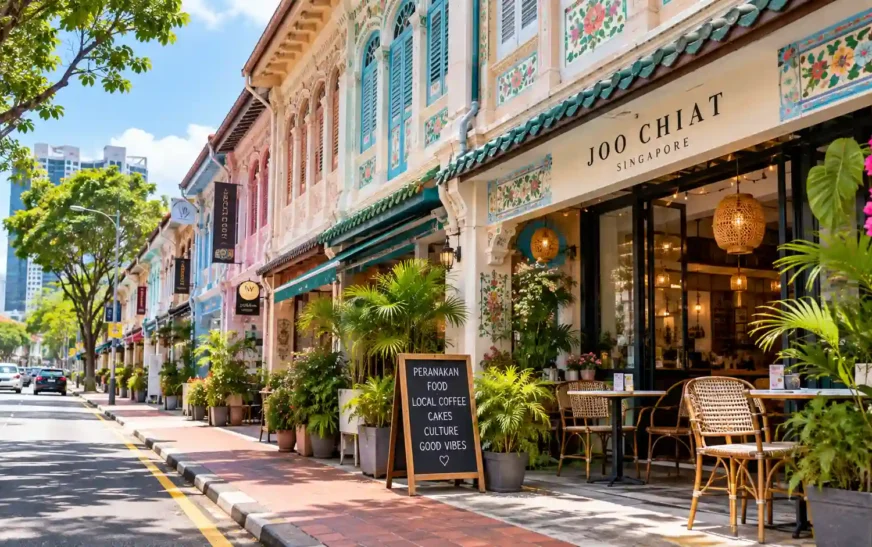
The colourful shophouses are among the most recognisable sights in Joo Chiat. Their pastel walls, decorative tiles, carved details, and traditional designs make the streets visually appealing. Many buildings reflect architectural styles associated with Singapore’s Peranakan heritage. Koon Seng Road is particularly well known for its colourful traditional houses and is a favourite location for photography. Walking through this area allows visitors to appreciate details that might be missed when travelling by car. These buildings also offer a glimpse into the neighbourhood’s history and the architectural styles that have shaped its identity over time.
When visiting the shophouses, remember that many attractive buildings are private homes or occupied properties. Photographing the exterior from a public area is generally more respectful than approaching doorways or entering private spaces. Avoid blocking residents, leaving litter, or making excessive noise while taking pictures. Morning visits can provide softer natural light and a quieter atmosphere, although conditions vary throughout the day. If photography is your main goal, allow enough time to explore nearby streets rather than concentrating on one building. The neighbourhood’s architectural charm often becomes clearer when you notice the different colours, tiles, windows, and decorative patterns.
Best Things to Do in Joo Chiat
Joo Chiat offers several enjoyable activities for visitors with different interests. You can walk through historic streets, photograph traditional architecture, browse independent shops, or stop at a cafe for a relaxed break. Food lovers can explore restaurants and bakeries serving Singaporean favourites, while culture enthusiasts can look for traditional crafts and heritage details. The area is also suitable for travellers who prefer discovering places without following a packed sightseeing schedule. Instead of rushing between attractions, spend time observing local life and exploring smaller streets. This approach helps reveal the everyday character that makes Joo Chiat worth visiting.
Another enjoyable activity is combining Joo Chiat with nearby Katong, which shares many historical and culinary connections with the neighbourhood. Depending on your interests, you could plan a short walking route around colourful houses, local food spots, and independent stores. Families may enjoy a relaxed outing, while photographers can focus on architectural details and street scenes. Remember that walking distances, weather, and opening hours can affect your plans. Singapore’s heat and humidity can also make outdoor exploration tiring, so bring water and take breaks when needed. A flexible itinerary allows you to enjoy the area without feeling rushed.
Food to Try in Joo Chiat
Food is one of the main reasons visitors explore Joo Chiat. The neighbourhood and nearby Katong are associated with Peranakan cooking and popular Singaporean dishes. Katong laksa is a well-known local favourite, featuring noodles in a rich, spicy coconut-based broth. Depending on the restaurant, you may also find nasi lemak, traditional pastries, and other regional specialities. Exploring the food scene is a good way to understand how different culinary traditions have influenced Singapore. Rather than choosing only one restaurant, consider sampling smaller dishes or sharing food with travel companions to experience more flavours.
Traditional sweets are another reason to explore the neighbourhood’s bakeries and food shops. Peranakan kueh comes in many colours, shapes, and flavours, often using ingredients such as coconut, rice flour, pandan, and palm sugar. You may also find kaya toast, local coffee, and other familiar breakfast choices. Individual shops have different menus, prices, and opening hours, so check current details before making a special trip. If you have dietary restrictions, ask about ingredients because traditional recipes may contain allergens or animal-derived products. For more food ideas, explore an internal guide to famous Singaporean dishes before planning your visit.
Shopping and Independent Stores in Joo Chiat
Shopping in Joo Chiat offers a different experience from visiting Singapore’s large shopping centres. The neighbourhood has independent boutiques, small lifestyle stores, traditional businesses, and shops selling items connected to local culture. Visitors may discover home accessories, handmade products, clothing, gifts, and specialty food while walking between streets. The selection varies by business, so it is best to explore without expecting every shop to sell the same products. This slower shopping experience can be especially appealing to travellers who enjoy finding distinctive items and supporting smaller businesses rather than visiting familiar international retail chains.
Before shopping, consider what you want to take home and how much luggage space you have available. Food products, small crafts, and locally inspired gifts can make practical souvenirs, but check packaging and travel restrictions when buying items to carry overseas. Independent shops may have different opening hours, and some close on particular days. Therefore, check business details before travelling specifically to visit a store. Even if you do not plan to purchase anything, browsing shopfronts can be enjoyable because it reveals another side of the neighbourhood’s character. Keep your visit relaxed and allow time for unexpected discoveries.
Best Time to Visit Joo Chiat
Joo Chiat can be explored throughout the year, but the best time depends on your preferred activities. Morning is often a comfortable choice for walking and photographing colourful buildings before the day becomes hotter. Cafes and food businesses may become busier around popular breakfast and lunch periods. Late afternoon can also be pleasant, particularly if you want to combine sightseeing with dinner. Singapore has a tropical climate, so heat, humidity, and rain are possible in every season. Checking the weather forecast before leaving can help you choose suitable clothing and plan outdoor activities more comfortably.
Weekdays may offer a quieter atmosphere on some streets, while weekends can bring more visitors to popular food spots and shopping areas. However, crowds vary depending on local events, holidays, and individual business hours. Wear lightweight clothing, comfortable walking shoes, and sun protection when exploring outdoors. Carry a small umbrella or rain jacket because tropical showers can develop quickly. If you plan to visit specific restaurants or shops, confirm their opening times rather than assuming they operate throughout the day. A little preparation helps you enjoy Joo Chiat without spending unnecessary time waiting or travelling between closed businesses.
How to Reach Joo Chiat
Public transport is a convenient way to reach Joo Chiat from other parts of Singapore. Depending on your starting location, you can use the MRT network and continue by bus or on foot. Marine Parade and Eunos are among the stations that may be useful for reaching different parts of the wider area. The most suitable station depends on which street, restaurant, or attraction you want to visit. Check your route before travelling because the neighbourhood covers several streets, and the nearest transport stop may differ for each destination.
Taxis and ride-hailing services are alternatives if you prefer direct transport or are travelling with children and shopping bags. However, road traffic and pickup locations can affect journey times. Once you arrive, walking is often the best way to explore nearby streets and notice the architectural details. Plan your route around a few main stops instead of trying to cover every street in one visit. Keep drinking water with you, especially on warm days, and take breaks in shaded areas or cafes. These simple steps can make your journey through Joo Chiat more comfortable and enjoyable.
Practical Tips for Visiting Joo Chiat
A little preparation can make your visit to Joo Chiat smoother. Start by choosing a few places you genuinely want to see, such as colourful shophouses, local food businesses, or independent shops. Check opening hours and transport connections before setting out. Keep your phone charged if you plan to use maps or take photographs, and carry a payment method accepted by the businesses you visit. Some small shops may have different payment options from larger establishments. Planning the basics in advance gives you more freedom to enjoy the neighbourhood instead of worrying about practical details.
It is also important to respect residents and local customs while exploring. Keep noise levels reasonable, avoid entering private properties, and never block entrances for photographs. Dispose of rubbish properly and follow signs around buildings and public spaces. If you visit during a busy period, be patient when waiting for food or taking pictures. Travellers with limited time can focus on one walking route and a meal, while visitors with more time can explore additional streets at a relaxed pace. For more planning ideas, read an internal article about places to visit in eastern Singapore and build an itinerary that matches your interests.
Frequently Asked Questions About Joo Chiat
1. What is Joo Chiat famous for?
Joo Chiat is famous for colourful Peranakan shophouses, traditional food, heritage streets, and independent shops.
2. Is Joo Chiat worth visiting?
Yes, it is ideal for exploring local culture, enjoying Singaporean food, and photographing historic architecture.
3. How long should I spend in Joo Chiat?
Allow two to four hours for a relaxed visit, including food stops and walking.
4. What food should I try in Joo Chiat?
Try Katong laksa, Peranakan kueh, nasi lemak, and other local favourites.
5. What is the best time to visit Joo Chiat?
Morning or late afternoon is often comfortable for walking, photography, and exploring local businesses.
Conclusion
Joo Chiat is a wonderful neighbourhood for discovering Singapore’s cultural heritage, colourful architecture, and local food traditions. Its historic shophouses, independent businesses, and relaxed streets offer a different experience from the city’s busy shopping districts. Visitors can spend a few hours photographing traditional buildings, tasting local dishes, and exploring the nearby Katong area. With comfortable shoes, a flexible itinerary, and some preparation, you can enjoy the neighbourhood at your own pace. Whether you are visiting Singapore for the first time or returning for another trip, consider adding Joo Chiat to your travel plans and discovering its unique charm for yourself.