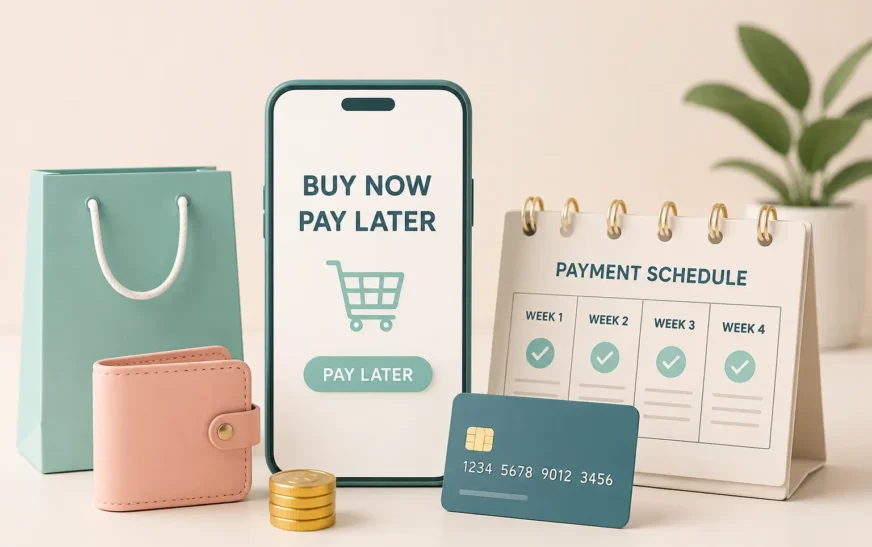

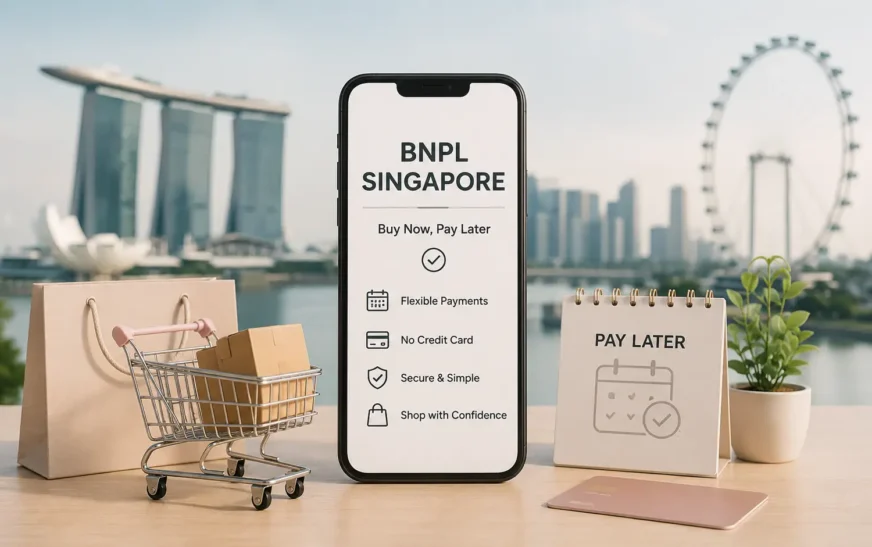
Buy now, pay later (BNPL) lets shoppers split the cost of a purchase into several payments instead of paying the full amount immediately. In Singapore, BNPL services are widely available for online and in-store purchases, but they are not regulated by the Monetary Authority of Singapore (MAS) as loans or credit facilities. Instead, participating providers operate under an industry-led BNPL Code of Conduct administered by the Singapore FinTech Association (SFA).
The model can be useful when you need to spread a planned purchase over time, particularly when the payment schedule is genuinely affordable. However, BNPL is still a financial commitment. Fees can apply to some instalment plans, and missed payments can result in administrative charges or suspension of the account.
What Is BNPL in Singapore?
BNPL stands for Buy Now, Pay Later. It is a payment arrangement that allows a customer to receive a product or service immediately while paying the merchant through a deferred or instalment-based payment plan.
The Singapore BNPL Code describes two common forms: splitting a purchase into several regular payments or making one full payment at a later date.
For example, a shopper could purchase an eligible item for S$300 and, depending on the provider and merchant, pay the amount in several instalments rather than paying S$300 upfront. The exact number of instalments, fees and eligibility requirements depend on the provider.
BNPL should not automatically be treated as “free money.” Even where a plan advertises 0% interest, you are committing part of your future income to scheduled payments. Read more : Buy Now Pay Later Singapore: Best Options, Rules & Tips
How Does BNPL Singapore Work?
The basic process is straightforward:
- Choose a participating merchant. Look for a BNPL option at online checkout or ask whether the service is available in-store.
- Select the BNPL provider. Options vary by merchant.
- Apply or log in. The provider may assess your eligibility before approving the transaction.
- Review the payment schedule. Check the instalment amount, dates, processing fees and late-payment charges.
- Confirm the purchase. The first payment may be taken immediately, depending on the plan.
- Make future payments on time. Payments are normally collected according to the schedule shown by the provider.
For example, Atome says customers can select Atome at checkout and generally pay the first portion at purchase, followed by subsequent monthly payments. It offers three interest-free payments and also provides longer payment options with a processing fee at participating brands.
Grab PayLater similarly offers options that can include paying the following month or spreading a purchase across 4, 8 or 12 monthly payments, with processing fees applying to certain longer instalment options.
Major BNPL Providers in Singapore
The market changes over time, so consumers should check the provider’s current terms and the SFA’s accreditation registry before signing up.
As of August 2026, the SFA’s public registry lists these accredited BNPL service providers:
| Provider | Business name shown by SFA | Accreditation period |
|---|---|---|
| ABNK | ABNK | 1 May 2024 – 30 April 2027 |
| Atome | Apaylater Financials Pte. Ltd. | 1 May 2024 – 30 April 2027 |
| Grab | GFin Services (S) Pte Ltd | 1 May 2024 – 30 April 2027 |
| Singapore SPayLater | Monee (Credit) Singapore Private Limited | 1 May 2024 – 30 April 2027 |
This list should not be confused with every company that may offer a deferred-payment product or payment service. Accreditation status can change, so the SFA registry is the better place to check the current status.
Atome
Atome is a prominent BNPL option in Singapore. Its current Singapore website says customers can split purchases into three interest-free payments, while some longer payment options may involve a small processing fee. It supports online and in-store shopping across participating merchants.
Atome also states that it is compliant with the BNPL standards and that its Singapore company is licensed as a Major Payment Institution for specified payment services under the Payment Services Act 2019. This does not mean the BNPL service itself is regulated by MAS as a credit facility.
Grab PayLater
Grab PayLater can be used for eligible Grab services and participating online and offline merchants. Current options include paying the following month or using instalments, with the exact available choices depending on the account and transaction.
Grab says eligible users must generally be at least 18 years old, have used Grab for at least six months and have a fully verified account, although approval remains subject to its internal review.
Singapore SPayLater and Other Options
Singapore’s BNPL market also includes Singapore SPayLater and ABNK, both of which appear in the SFA’s current accredited-provider registry.
Because eligibility, merchant coverage, instalment periods and fees can change, comparing the actual checkout terms is more useful than choosing a provider based only on its headline promotion.
Is BNPL Regulated in Singapore?
This is one of the most important points to understand.
BNPL services themselves are not regulated by MAS as credit facilities. Singapore instead introduced an industry-led BNPL Code of Conduct, developed under the guidance of MAS and administered by the SFA.
The Code was introduced in 2022 and existing BNPL providers were expected to comply from 1 November 2023. The framework includes accreditation, independent assessment and credit-information sharing arrangements designed to reduce the risk of consumers accumulating excessive BNPL obligations.
In February 2025, Singapore’s Ministry of Trade and Industry and MAS Board member Alvin Tan said BNPL transactions represented about 1% of the value of total credit-card and debit-card payments in the first half of 2024. He also said MAS did not regulate BNPL firms at that time and continued to monitor developments in the sector.
What Consumer Protections Apply?
The BNPL Code contains several important safeguards.
S$2,000 Outstanding-Balance Safeguard
A provider generally permits a customer to accumulate no more than S$2,000 in outstanding BNPL payments at one provider, unless the customer completes an additional credit assessment. That additional assessment can consider income and credit information shared across BNPL providers.
This is an important distinction: the S$2,000 figure is not a universal maximum amount that every person can borrow through all BNPL services combined. Additional assessment may allow a higher limit, subject to the provider’s requirements.
Missed Payments Can Restrict Further Spending
Under the Code, providers suspend a consumer’s access to BNPL services when payment obligations are not met. This is designed to reduce the possibility of a customer continuing to make new BNPL purchases while existing payments are overdue.
Individual providers can also impose their own administrative charges. For example, Grab currently states that a S$15 administration fee applies when a payment is missed, and the account is temporarily suspended until the outstanding payment is made.
Fees Should Be Clearly Disclosed
The BNPL Code calls for fair and transparent fees, including caps on fees and clear communication of the fee structure. It also says fees and interest, where applicable, should not be compounded.
This makes it important to look beyond a “0% interest” headline. A plan can still have processing or administrative fees depending on the payment option and circumstances.
Credit Information Sharing
The Singapore BNPL framework includes credit-information sharing through a private credit bureau. SFA announced that Experian was established to facilitate the sharing of outstanding BNPL information between providers.
This matters because BNPL commitments do not necessarily exist in isolation. Information about outstanding obligations can help providers assess a customer’s overall BNPL exposure.
BNPL vs Credit Cards in Singapore
BNPL and credit cards can both allow you to delay payment, but they are structured differently.
| Factor | BNPL | Credit card |
| Main purpose | Split or defer a specific purchase | General revolving payment facility |
| MAS-regulated credit facility | No, BNPL itself is not regulated as such | Credit cards are regulated under Singapore’s financial framework |
| Interest | Often 0% for selected plans, but fees may apply | Interest may apply when balances are not fully paid |
| Payment structure | Usually fixed instalments or a deferred payment | Full payment or revolving balance, depending on card terms |
| Spending controls | Provider-specific limits and safeguards | Card issuer sets credit limit |
| Missed payment | Can lead to fees and account suspension | Can lead to interest, fees and other consequences |
| Merchant availability | Depends on participating merchants | Broad card acceptance |
The comparison is not about which product is automatically better. A person who can comfortably pay in full may not need BNPL at all. For someone using BNPL to manage timing of a planned expense, a transparent 0% instalment plan can be useful if every future payment fits comfortably within the budget.
Advantages of BNPL
Used carefully, BNPL can offer several practical benefits.
Easier Cash-Flow Management
Breaking a purchase into scheduled payments can reduce the size of one immediate expense. This can be helpful when the purchase is already planned and the future payments are affordable.
Simple Checkout Experience
Many BNPL services are integrated directly into merchant checkout pages or mobile apps. That can make applying an available payment plan relatively quick.
Interest-Free Options
Some Singapore BNPL plans advertise 0% interest. Atome, for example, currently offers three interest-free payments, while Grab advertises interest-free PayLater options but charges processing fees for certain longer instalment choices.
The exact cost still needs to be checked before confirming the transaction.
Access Across Different Merchant Categories
BNPL can be available for more than electronics or fashion. Depending on the provider and merchant, consumers may encounter BNPL options for areas such as beauty, travel, food, home products and other services. Atome’s current merchant categories, for example, include these types of purchases.
Risks and Disadvantages of BNPL
The convenience of BNPL is also its main risk: it can make an expensive purchase feel smaller than it really is.
Multiple Instalments Can Add Up
A S$50 instalment may seem manageable by itself. Five or six simultaneous instalment plans can create a much larger monthly commitment.
Before using BNPL, add all upcoming instalments together. The relevant question is not “Can I afford this instalment?” but “Can I afford all my existing and new commitments at the same time?”
Late Fees and Account Suspension
Missing a payment can result in an administrative charge and loss of access to the service. Grab, for example, currently states that missed payments can result in a S$15 administration fee and temporary suspension.
Promotions Can Encourage Unplanned Purchases
Discounts and cashback can make BNPL look especially attractive. But saving S$20 on something you did not need is not the same as saving money.
BNPL Is Not the Same as Having More Income
An instalment plan changes when you pay. It does not reduce the underlying price unless a genuine discount is applied.
That distinction is easy to overlook when the checkout screen emphasizes a small monthly amount rather than the total purchase price.
How to Use BNPL Responsibly in Singapore
A simple approach can help keep BNPL manageable:
- Check the total cost, not only the instalment amount.
- Read the payment schedule before confirming the purchase.
- Check processing and late-payment fees.
- Add up all existing BNPL commitments.
- Keep enough money available for every scheduled payment.
- Avoid using BNPL to cover routine spending you cannot otherwise afford.
- Do not open multiple plans simply because each provider offers a separate limit.
- Check whether the provider is accredited under the SFA BNPL framework.
- Keep notifications enabled so payment dates are not missed.
- Pay early or in full where practical, especially if you are trying to reduce financial commitments.
The SFA specifically recommends dealing with accredited BNPL providers, which can be identified through its public registry and accreditation framework.
What Should You Check Before Choosing a BNPL Plan?
Use this quick comparison before clicking “confirm”:
| Question | Why it matters |
| What is the total amount I will pay? | Reveals the real cost |
| How many payments are required? | Shows how long the commitment lasts |
| When is the first payment due? | Helps avoid an immediate cash-flow problem |
| Are there processing fees? | Affects the final cost |
| What happens if I miss a payment? | Reveals potential penalties |
| Can I repay early without a fee? | Gives you more flexibility |
| Is the provider SFA-accredited? | Provides an additional consumer-protection reference |
| Do I already have other BNPL plans? | Prevents excessive monthly commitments |
Who Is BNPL Suitable For?
BNPL can make sense for someone who:
- has a stable budget;
- already knows how the purchase will be paid for;
- understands the instalment schedule;
- has enough cash flow for every payment;
- is using the service for convenience rather than to finance unaffordable spending.
It may be a poor choice when someone is using instalments because they cannot otherwise afford essentials or because several existing bills are already difficult to manage.
The most useful rule is simple: if you would struggle to make the future payments without taking on another form of debt, the purchase is probably not affordable through BNPL.
Frequently Asked Questions
Is BNPL legal in Singapore?
Yes. BNPL services operate in Singapore, and the sector has an industry-led Code of Conduct administered by the Singapore FinTech Association. BNPL itself is not regulated by MAS as a loan or credit-card facility.
Is BNPL interest-free in Singapore?
Some plans are interest-free, but that does not mean every BNPL option is completely free. Atome offers three interest-free payments, while some longer Atome options carry processing fees. Grab also states that processing fees apply to certain longer instalment options. Always check the exact transaction terms before paying.
What is the S$2,000 BNPL limit?
Under the BNPL Code, providers generally allow customers to accumulate up to S$2,000 in outstanding BNPL payments unless an additional credit assessment is completed. It is not a blanket S$2,000 limit across every provider and every customer.
Does BNPL affect credit information in Singapore?
The BNPL framework includes credit-information sharing between providers through a private credit bureau. This allows providers to consider outstanding BNPL commitments when conducting additional credit assessments.
What happens if I miss a BNPL payment?
The consequences depend on the provider, but they can include an administrative or late-payment fee and suspension of further BNPL use. For example, Grab currently states that a S$15 administration fee applies for a missed payment and that PayLater access is temporarily suspended until the outstanding payment is settled.
How can I check whether a BNPL provider is accredited?
The Singapore FinTech Association maintains a public registry of accredited BNPL service providers. Checking the registry is a useful step before signing up.