
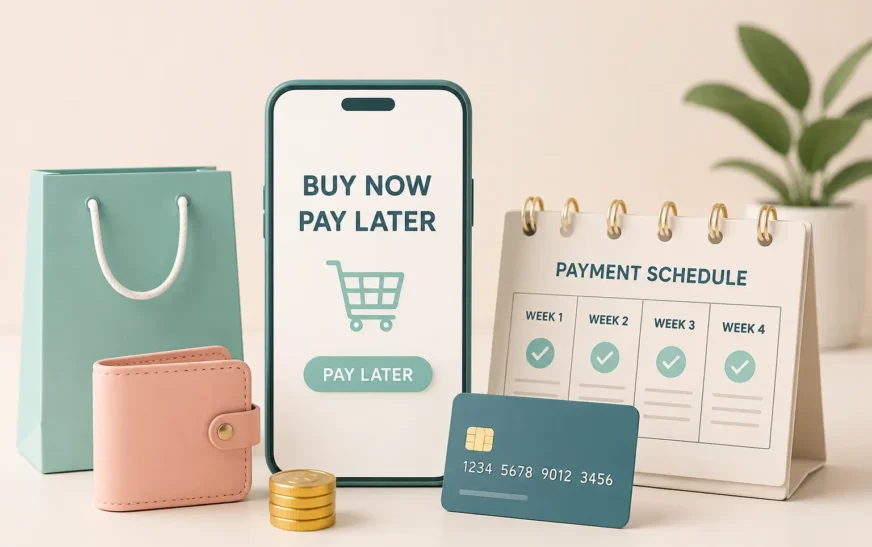
What Is Buy Now Pay Later in Singapore?
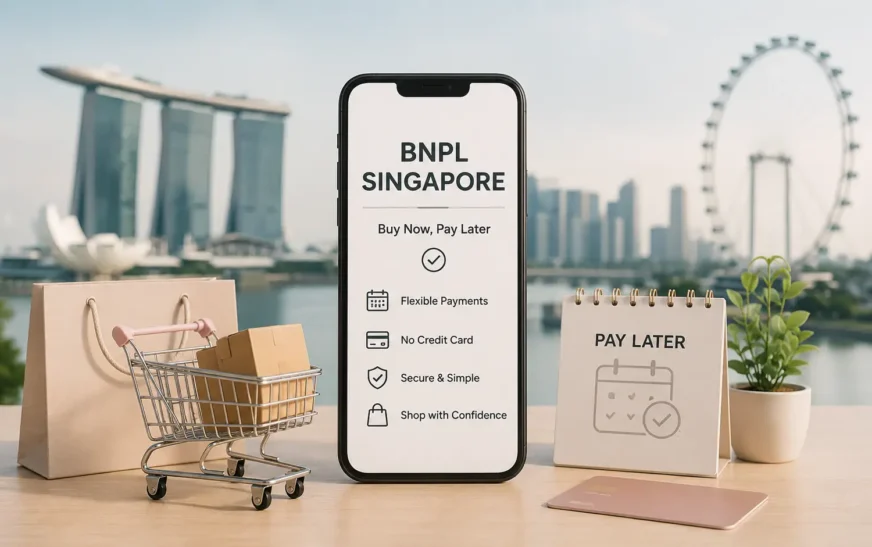
Buy now pay later (BNPL) in Singapore lets shoppers purchase goods or services immediately and split the cost into scheduled payments instead of paying the entire amount upfront. Many BNPL plans are interest-free when payments are made on time, although some longer instalment options or specific services can involve processing or other fees.
Popular BNPL services available in Singapore include Atome, Grab PayLater, ShopBack PayLater and SPayLater, although availability, eligibility, payment periods and fees differ between providers and merchants. Singapore’s BNPL industry also operates under a voluntary industry Code of Conduct developed under the guidance of the Monetary Authority of Singapore (MAS).
For shoppers, the important point is simple: BNPL can make a purchase easier to manage, but it does not make the purchase cheaper. You still have to repay the full amount according to the agreed schedule.
How BNPL Works
The process is usually simple:
- Choose a participating retailer.
- Select a BNPL provider at checkout.
- Complete the provider’s eligibility or approval process.
- Pay the required initial amount, if applicable.
- Make the remaining payments according to the schedule.
- Keep the account funded so scheduled payments can be collected on time.
The exact structure depends on the provider. For example, Atome currently advertises three interest-free payments, while also offering longer payment options with a fee at selected brand partners.
Grab PayLater currently allows eligible users to pay the following month or use 4-, 8- or 12-instalment options. Grab states that a processing fee applies to the 8- and 12-instalment choices.
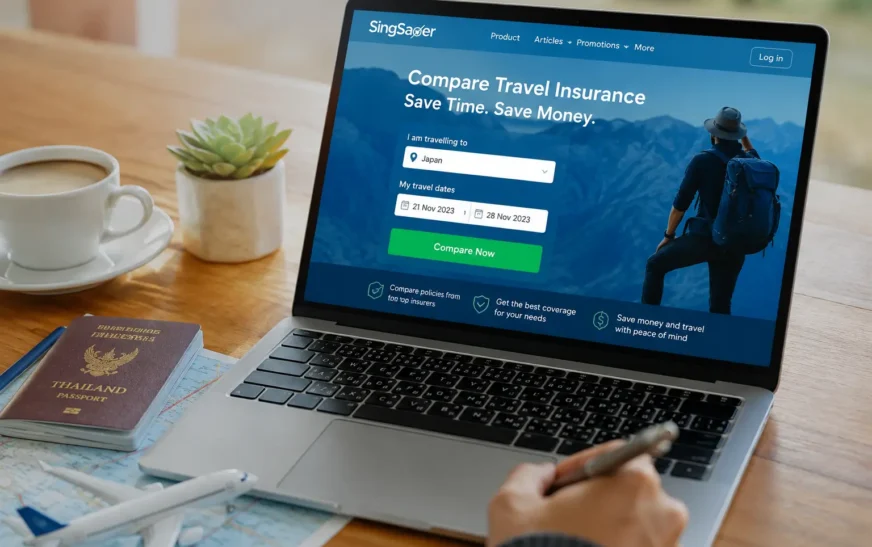
This difference is important when comparing BNPL services. “Pay later” does not always mean that every repayment option is completely fee-free. Read more : SingSaver Travel Insurance: Compare Plans, Coverage & Costs
Popular Buy Now Pay Later Options in Singapore
There is no single BNPL service that is best for everyone. The most suitable option depends on where you shop, how much you need to spend, how quickly you can repay the balance and whether the plan has fees.
| Provider | Typical payment structure | Key point |
|---|---|---|
| Atome | 3 payments; longer options may be available | 3-payment option is advertised as interest-free |
| Grab PayLater | Pay next month or 4, 8 or 12 instalments | Longer instalment options can involve processing fees |
| ShopBack PayLater | Depends on the current service and merchant | Integrated with ShopBack’s shopping ecosystem |
| SPayLater | Payment options depend on the transaction and current terms | Primarily associated with the Shopee ecosystem |
Provider offerings can change, so this table should be treated as a practical overview rather than a fixed list of terms.
Atome
Atome is one of the established BNPL services in Singapore. Its official Singapore website currently promotes splitting purchases into three payments with 0% interest and says customers can shop at thousands of retailers online and in-store. It also offers longer payment periods with a small fee at selected brand partners.
Atome states that customers can track payments through its mobile application. Its merchant pages also explain that missed payments can result in account suspension and a S$15 administration cost to reactivate the account.
Grab PayLater
Grab PayLater is integrated into the Grab ecosystem and can be used for eligible Grab services and participating online and offline merchants. Grab currently offers a choice between paying the following month and spreading payments over 4, 8 or 12 instalments.
Grab states that eligible users must be at least 18, have an existing Grab account for at least six months and have a fully verified account. Approval remains subject to Grab’s internal review.
Grab also states that missed payments result in temporary suspension and a S$15 administration fee to reactivate the service.
ShopBack PayLater
ShopBack has also been part of Singapore’s BNPL ecosystem. Its service is particularly relevant to shoppers already using the ShopBack platform and participating merchants.
However, consumers should check the current payment options and terms shown at checkout because BNPL products, merchant availability and promotional conditions can change.
SPayLater
SPayLater is associated with the Shopee ecosystem and can provide instalment-style payment options for eligible transactions.
The exact repayment periods, fees and eligibility conditions should be checked directly in the Shopee app or official service terms before confirming a purchase.
Singapore’s BNPL Rules and Consumer Safeguards
Singapore introduced an industry BNPL Code of Conduct in November 2022. The code was developed by the Singapore FinTech Association and participating BNPL providers under MAS guidance. It is an industry-led framework rather than the same type of statutory regulation that applies to banks and other MAS-regulated financial institutions.
One of the best-known safeguards is the S$2,000 outstanding-payment threshold per BNPL provider. Under the code, a provider generally should not allow a customer to accumulate more than S$2,000 in outstanding payments unless an additional creditworthiness assessment is conducted.
Other safeguards include:
- BNPL services are for customers aged 18 and above.
- Providers should suspend access when a customer fails to meet payment obligations.
- Fees must be disclosed clearly.
- Fees and interest should not be compounded.
- Customers should be able to make full repayment without an early repayment fee.
- Providers should provide information about outstanding balances.
- Marketing should follow applicable ethical advertising standards.
These measures are designed to reduce the risk of consumers accumulating unaffordable BNPL commitments.
Is BNPL Regulated by MAS?
This point can be confusing.
BNPL providers in Singapore have committed to the industry Code of Conduct developed under MAS guidance, but BNPL itself is not regulated by MAS in the same way as traditional bank lending or credit-card facilities.
Grab’s current PayLater information, for example, explicitly states that its BNPL service is not regulated by MAS and is provided under the Singapore BNPL Code of Conduct framework.
That distinction matters. Consumers should not assume that a BNPL service has exactly the same regulatory framework, protections or legal structure as a bank-issued credit card simply because both allow payment to be made later.
How Much Can You Spend With BNPL?
The industry code provides a key safeguard around outstanding payments.
A customer generally cannot accumulate more than S$2,000 in outstanding BNPL payments with an individual provider without going through an additional creditworthiness assessment.
But the S$2,000 figure should not be interpreted as a recommended spending limit.
For example, having access to S$2,000 does not mean you should spend S$2,000. Your personal limit should be based on what you can comfortably repay after rent, bills, food, transport, savings and other financial commitments.
There is also a broader risk: using multiple providers can create several separate repayment schedules. The industry safeguards reduce certain risks, but they do not eliminate the possibility of consumers taking on commitments across different platforms.
Does Buy Now Pay Later Cost Money?
It can, depending on the provider and payment option.
Some BNPL plans are advertised as interest-free if payments are made according to the agreed schedule. But this does not mean every BNPL arrangement has zero costs.
Potential costs can include:
- Processing fees
- Instalment-plan fees
- Late or administrative fees
- Reactivation fees after missed payments
- Other charges specified in the provider’s terms
For example, Grab currently states that a processing fee applies to its 8- and 12-instalment options, while its current terms also state that a S$15 administration fee applies after a missed payment.
Atome similarly states that its three-payment option is interest-free, while longer payment periods can involve a small fee at selected brand partners. Its merchant information also describes a S$15 administration cost for reactivation after a missed payment.
Always check the checkout screen and provider’s current terms before accepting a payment plan.
BNPL vs Credit Card Instalments
BNPL and credit-card instalment plans can look similar, but they are not identical.
| Factor | BNPL | Credit-card instalment |
| Upfront payment | Depends on provider | Depends on card/plan |
| Interest | Often 0% for qualifying plans | Depends on the instalment plan |
| Provider type | BNPL platform | Bank/card issuer |
| Credit card required | Usually no | Yes |
| Payment schedule | Usually fixed | Usually fixed |
| Fees | Can apply depending on provider/plan | Can apply depending on card/plan |
| Main risk | Multiple small commitments can accumulate | Interest or fees if terms are misunderstood or balances are not managed properly |
The right choice depends on the specific terms rather than the payment method’s name.
A 0% BNPL plan can be cheaper than a credit-card balance that incurs interest, but a BNPL plan with fees may not be the cheapest way to finance a purchase.
Advantages of Buy Now Pay Later
Used carefully, BNPL can be convenient.
Easier Short-Term Cash Flow
Splitting a S$300 purchase into several scheduled payments can make cash flow easier than paying S$300 immediately.
No Credit Card Required
Many BNPL services allow customers to use instalment payments without having a traditional credit card.
Transparent Repayment Schedule
Most services show upcoming instalments inside their apps, making it possible to see when money will be deducted.
Useful for Planned Purchases
BNPL can be practical when you already have the money available in your regular budget but prefer to spread a purchase across several pay cycles.
The important distinction is that payment flexibility is not the same as affordability.
Risks of Buy Now Pay Later
The main danger is not necessarily the individual instalment. It is the possibility of taking on too many instalments at the same time.
Imagine someone has:
- S$80 due to Provider A this week
- S$120 due to Provider B next week
- S$150 due to Provider C later in the month
Each purchase might have looked affordable separately. Together, they create S$350 of additional obligations.
Research and commentary in Singapore have highlighted this overspending risk. CNA reported that BNPL can make purchases appear more affordable because consumers focus on smaller instalments rather than the total purchase price.
Other risks include:
- Buying things you would otherwise postpone
- Losing track of several payment dates
- Using BNPL for recurring everyday expenses
- Missing payments
- Paying administrative or processing fees
- Taking on commitments across multiple providers
- Reducing the amount of money available for essential expenses
Does BNPL Affect Your Credit Score?
There is no simple yes-or-no answer because BNPL and traditional credit reporting are not identical.
The Singapore BNPL framework includes credit-information sharing arrangements and additional creditworthiness assessments. Providers also use information to manage customers’ BNPL exposure.
Most importantly, consumers should not assume that using BNPL is a way to build a strong traditional credit history. Nor should they assume that a missed BNPL payment is harmless.
A default can affect your ability to obtain BNPL services and may have broader financial consequences depending on the provider and circumstances.
The safest approach is to treat every BNPL commitment as a real financial obligation and pay it on time.
Who Should Consider Using BNPL?
BNPL may be reasonable for someone who:
- Has stable income
- Has enough money in their budget for every instalment
- Understands the total purchase cost
- Uses only a manageable number of payment plans
- Has a clear reason for spreading the payment
- Can pay the balance without relying on another form of borrowing
For example, someone purchasing a S$240 appliance and dividing it into four S$60 payments may find the arrangement convenient if those four payments are already included in their household budget.
Who Should Avoid BNPL?
BNPL may be a poor choice if you:
- Need BNPL to afford basic necessities
- Already have several unpaid instalments
- Frequently miss payment dates
- Are using one BNPL service to repay another obligation
- Have unpredictable income
- Are buying something mainly because the instalment looks cheap
- Would struggle to pay the full purchase price if necessary
A useful test is simple: If the only reason you want the product is that the monthly instalment looks affordable, stop and reconsider the purchase.
How to Use Buy Now Pay Later Responsibly
Before choosing “Pay Later,” ask yourself five questions:
- Do I actually need this purchase?
- What is the total amount I will pay?
- How many BNPL instalments am I already committed to?
- Can I comfortably make every payment without borrowing more money?
- What happens if my income or expenses change next month?
You can also keep a simple monthly BNPL list showing:
| Information | Example |
| Purchase | Laptop |
| Total price | S$1,200 |
| Provider | BNPL provider |
| Instalments | 4 |
| Instalment amount | S$300 |
| Next payment | 15 September |
| Final payment | 15 December |
This takes only a few minutes but can prevent several small commitments from becoming difficult to track.
What Happens If You Miss a BNPL Payment?
The consequences depend on the provider.
Under Singapore’s BNPL Code of Conduct, providers are expected to suspend customers’ access when payment obligations are not met, with access restored after the customer becomes up to date and demonstrates appropriate payment ability.
Individual providers may also charge administrative or late-payment fees according to their terms.
Grab, for example, currently says a missed payment temporarily suspends the account and that a S$15 administration fee is required to reactivate it.
If you think you will miss a payment, contact the provider promptly rather than ignoring the account.
What Is the Best Buy Now Pay Later Option in Singapore?
There is no universally best BNPL provider.
A better way to compare services is to look at:
| What to compare | Why it matters |
| Number of instalments | Determines how long you remain committed |
| Total fees | Shows the actual cost |
| Late-payment policy | Important if you miss a payment |
| Merchant availability | Determines where you can use it |
| Spending limit | Controls how much you can commit |
| App and payment tracking | Helps manage due dates |
| Refund policy | Important when returning purchases |
| Eligibility | Determines whether you can use the service |
If two providers offer the same purchase for the same total cost, the more convenient payment schedule may be the deciding factor. If one charges a processing fee and the other does not, compare the total amount payable, not just the instalment amount.
Final Takeaway
Buy now pay later in Singapore can be a useful payment tool when it is used for planned purchases and the repayments comfortably fit within your budget. Services such as Atome, Grab PayLater, ShopBack PayLater and SPayLater offer different payment structures, merchant networks and terms.
Singapore’s BNPL Code of Conduct provides important safeguards, including an S$2,000 outstanding-payment threshold per provider unless additional credit assessment is completed, suspension after missed payments and clearer fee-disclosure requirements.
But these safeguards do not replace personal budgeting. Before using BNPL, compare the total cost, understand every fee, track all active instalments and make sure you can repay without taking on new debt.
FAQ
Is buy now pay later available in Singapore?
Yes. BNPL services are available through multiple providers and participating merchants in Singapore, including Atome, Grab PayLater and other platforms. Availability depends on the provider, merchant and customer eligibility.
What is the minimum age for BNPL in Singapore?
Under the Singapore BNPL Code of Conduct, BNPL services are available to customers aged 18 and above. Individual providers can have additional eligibility requirements.
Is BNPL interest-free in Singapore?
Some BNPL plans are interest-free, but not every payment option is necessarily free of fees. For example, Atome advertises three interest-free payments but says longer options may carry a small fee at selected partners. Grab says processing fees can apply to its longer instalment options.
What is the BNPL limit in Singapore?
The industry Code of Conduct sets a S$2,000 outstanding-payment threshold per provider unless the customer undergoes an additional creditworthiness assessment. This is a safeguard, not a recommended personal spending limit.
Can I use more than one BNPL provider?
It may be possible to use multiple providers if you meet their respective eligibility requirements. However, doing so can make it easier to accumulate several repayment commitments at the same time. Consumers should consider their total BNPL obligations rather than looking at each account separately.
What happens if I cannot pay my BNPL instalment?
Your provider’s terms determine the exact consequences. Under the industry code, providers are expected to suspend BNPL access when payment obligations are not met. Fees may also apply depending on the provider.