
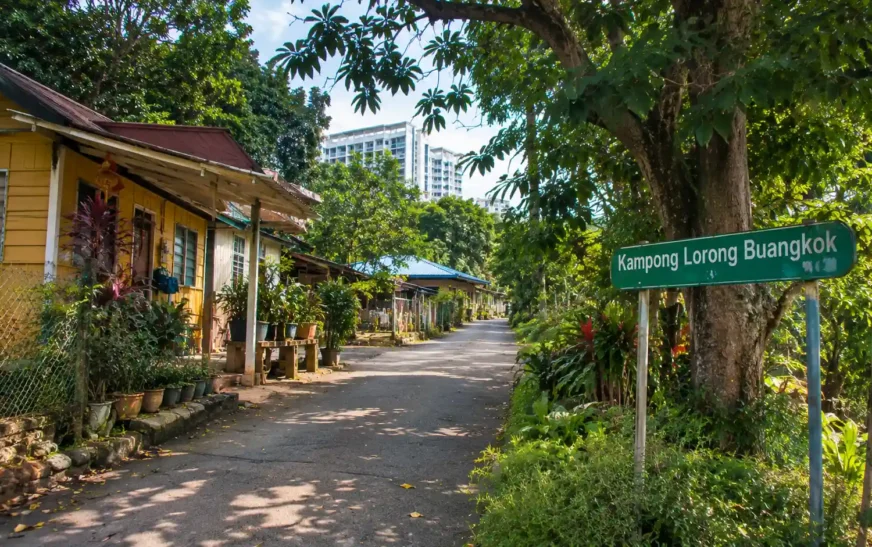
Kampong Lorong Buangkok is one of Singapore’s most fascinating historical places. It is widely recognised as the last surviving traditional village on mainland Singapore. Established in 1956, this small community offers a glimpse into a lifestyle that existed before modern housing transformed the country. Unlike Singapore’s busy residential neighbourhoods, the village features traditional houses, narrow pathways, gardens and a peaceful atmosphere. Chinese and Malay families have lived together here for generations, maintaining strong neighbourhood relationships. Today, Kampong Lorong Buangkok attracts visitors interested in Singapore’s cultural heritage, traditional architecture and the history of everyday village life.
Where Is Kampong Lorong Buangkok Located?
Kampong Lorong Buangkok is located in the Hougang area of northeastern Singapore, along Lorong Buangkok near Yio Chu Kang Road. The village sits within a modern urban environment surrounded by residential developments, roads and other community facilities. However, entering its narrow pathways reveals a completely different atmosphere. Traditional houses, green plants and simple outdoor spaces create a setting that feels different from nearby high-rise neighbourhoods. Its location makes the village particularly interesting because it preserves elements of older Singapore within a rapidly developing residential district.
The village is relatively accessible from different parts of Singapore using public transportation. Buangkok MRT station is one of the nearest major railway stations, although visitors should expect additional walking or a short connecting bus journey. Buses operating along Yio Chu Kang Road can also help visitors reach the surrounding area. The final approach involves following local roads towards Lorong Buangkok. Before travelling, check current public transport routes and walking directions. Understanding the location beforehand makes the visit easier and helps visitors avoid unnecessary confusion.
History and Origins of Kampong Lorong Buangkok
The history of Kampong Lorong Buangkok began in 1956 when Sng Teow Koon, a traditional Chinese medicine practitioner, acquired the land. At that time, the surrounding area included undeveloped and swampy ground. The property initially accommodated only a small number of families. Over time, more residents arrived and established their homes within the village. The landowner allowed families to occupy individual plots by paying rent. Gradually, the settlement developed into a close community where neighbours shared responsibilities and supported one another during everyday activities.
During its busiest period, Kampong Lorong Buangkok accommodated more than 40 households. Chinese and Malay families formed much of its population, creating a multicultural community. Residents developed their homes according to their needs and available resources. Electricity and running water eventually improved everyday living conditions. However, the village maintained its traditional character despite these changes. As Singapore expanded its public housing programmes, many similar settlements disappeared. This made Kampong Lorong Buangkok increasingly important as a surviving example of the country’s earlier residential history and traditional community life.
Why Is Kampong Lorong Buangkok Called Singapore’s Last Kampong?
A kampong is a traditional village, commonly associated with simple houses, close neighbourhood relationships and shared community activities. Before Singapore experienced rapid urban development, kampongs were common across the island. Many families lived in independent houses surrounded by gardens and open spaces. However, large-scale housing projects gradually replaced numerous traditional settlements. Today, Kampong Lorong Buangkok remains an important example of this older residential lifestyle on mainland Singapore. Its survival provides a valuable connection between the country’s historical communities and its modern urban environment.
The village is particularly significant because its traditional character has remained visible despite the development surrounding it. Residents continue living in individual houses rather than modern apartment blocks. Narrow lanes and familiar neighbourhood surroundings create a strong sense of community. However, the village is not an unchanged historical museum. Residents use modern facilities and participate in contemporary Singaporean society. Its importance comes from preserving an authentic living environment rather than recreating the past. This distinction makes Kampong Lorong Buangkok especially interesting for people studying Singapore’s social and architectural history.
Traditional Houses and Village Architecture
The houses in Kampong Lorong Buangkok offer an interesting look at traditional Singaporean residential architecture. Many properties are single-storey structures featuring wooden walls, simple layouts and corrugated zinc roofs. Their designs reflect practical building methods used by families during earlier decades. Some houses have small gardens, outdoor seating areas and spaces for household activities. Unlike modern residential buildings, these homes are arranged along narrow village pathways. Their appearance creates a distinctive atmosphere that reminds visitors of Singapore’s older neighbourhoods and traditional ways of living.
Another noticeable feature is the variety of colours, materials and individual house designs. Some homes have been maintained or modified over time to meet modern household needs. Small fences, potted plants and traditional outdoor spaces add character to the surroundings. The village also contains practical structures that support community activities. These features demonstrate how residential architecture develops according to people’s needs and available resources. Visitors interested in traditional buildings can observe these details while walking along accessible pathways. However, every house remains someone’s private property and deserves respect.
Kampong Spirit and Multicultural Community
One of the most important characteristics of Kampong Lorong Buangkok is its strong community spirit, commonly called kampong spirit. The expression describes neighbours helping one another and maintaining friendly relationships. Historically, residents shared responsibilities during important family events, illnesses and difficult situations. This cooperation helped create a supportive environment where people felt connected. The village became particularly meaningful because Chinese and Malay families lived together peacefully. Their relationships demonstrate how different cultural communities can build trust through everyday interaction and mutual understanding.
This spirit of cooperation also reflects the importance of community relationships in traditional Singapore. Residents developed familiarity through shared spaces, neighbourhood activities and everyday conversations. Children grew up around familiar families, while older residents maintained long-standing relationships with their neighbours. Although modern lifestyles have changed how people interact, the village continues to represent an important part of Singapore’s social heritage. Its history encourages visitors to think about the value of friendship, respect and cooperation. These qualities remain meaningful in modern cities, where busy schedules can sometimes reduce neighbourhood interaction.
Cultural and Religious Heritage of the Village
Kampong Lorong Buangkok reflects the cultural diversity that has shaped Singapore throughout its history. Chinese and Malay families have maintained their traditions while sharing the same neighbourhood. Their presence contributes to the village’s distinctive social identity. Cultural differences can be seen through everyday customs, family practices and religious activities. The community demonstrates how people from different backgrounds can maintain their identities while developing strong relationships. This combination of cultural traditions gives the village importance beyond its traditional houses and historical appearance.
An important religious feature within the village is Surau Al-Firdaus, a small Muslim prayer house serving the community. It was established during the village’s earlier years and rebuilt in 1999. The surau provides a place for prayer and religious learning. Its presence reflects the importance of religious facilities in supporting community life. Visitors should behave respectfully around this space, particularly during prayer activities. Understanding the cultural and religious background of the village helps people appreciate its identity. It also encourages responsible visits that respect residents’ beliefs and daily routines.
Things to See and Experience at Kampong Lorong Buangkok
Visitors interested in traditional Singapore can enjoy several interesting features while exploring Kampong Lorong Buangkok. Its peaceful surroundings offer a different experience from the city’s busy commercial districts. The traditional houses, small gardens and narrow pathways provide opportunities to observe older residential architecture. Visitors can also appreciate the contrast between village homes and modern buildings surrounding the settlement. These details make the location interesting for cultural exploration and photography. However, it is important to remember that the village is an active residential community rather than a public theme park.
Some of the most interesting things to notice include:
- Traditional houses: Observe the wooden structures and zinc roofing.
- Village pathways: Experience the simple layout of the residential lanes.
- Green surroundings: Notice the plants and small gardens around homes.
- Community atmosphere: Appreciate the peaceful neighbourhood environment.
- Religious heritage: Learn about the role of Surau Al-Firdaus.
- Cultural history: Understand the relationship between Chinese and Malay residents.
A respectful visit allows people to appreciate these features without disturbing everyday village life. Photography should always respect residents’ privacy.
Visiting Kampong Lorong Buangkok: Important Travel Tips
Planning a visit to Kampong Lorong Buangkok requires a little preparation. Because the settlement is a residential community, visitors should not expect facilities commonly found at tourist attractions. There are no conventional visitor services throughout the narrow village lanes. Wearing comfortable walking shoes is helpful, particularly during wet weather. Singapore’s tropical climate can also make outdoor exploration uncomfortable during hot afternoons. Carrying drinking water and checking the weather beforehand can improve the experience. Visiting during daylight hours is generally more suitable for observing the houses and surroundings.
Respectful behaviour is essential when exploring this historical village. Visitors should remain on accessible pathways and avoid entering private gardens or residential compounds. Open gates do not mean that a property is available for public access. Always ask permission before photographing residents or their homes. Keep conversations quiet and avoid disturbing people during religious activities. Large groups should also avoid blocking narrow pathways. These simple practices help protect the privacy of residents while allowing visitors to understand the village’s history and appreciate its traditional environment.
Future of Kampong Lorong Buangkok and Conservation
The future of Kampong Lorong Buangkok has attracted attention because Singapore continues to balance urban development with heritage protection. The surrounding region has experienced significant residential and infrastructure growth. This development creates questions about how traditional settlements can remain part of a modern city. Conservation discussions have included the possibility of protecting the village’s historical and cultural character. Preserving such a place requires consideration of residents’ interests, land ownership, community relationships and environmental planning. These factors make its future an important subject within Singapore’s wider heritage conversation.
The Sng family has played an important role in maintaining the village since its establishment. The land was originally acquired by Sng Teow Koon and later managed by his daughter, Sng Mui Hong. Residents own their houses while renting the land on which their homes stand. This arrangement has helped preserve the settlement’s distinctive character. However, its long-term future depends on decisions involving land use, conservation and community needs. Protecting Kampong Lorong Buangkok would help future generations understand an important part of Singapore’s history and traditional village lifestyle.
Frequently Asked Questions About Kampong Lorong Buangkok
1. What is Kampong Lorong Buangkok famous for?
Kampong Lorong Buangkok is famous for being the last surviving traditional village on mainland Singapore, preserving older houses and community traditions.
2. When was Kampong Lorong Buangkok established?
The village was established in 1956 when Sng Teow Koon acquired the land and began accommodating families.
3. Who owns Kampong Lorong Buangkok?
The land belongs to the Sng family, while residents own their individual houses and rent the land.
4. Can tourists visit Kampong Lorong Buangkok?
Visitors can explore accessible village pathways, but they must respect residents’ privacy and avoid entering private properties.
5. Why is Kampong Lorong Buangkok important?
It preserves traditional architecture, multicultural heritage and the community spirit associated with Singapore’s earlier village lifestyle.
Conclusion
Kampong Lorong Buangkok represents an important part of Singapore’s cultural and residential history. Established in 1956, it has survived decades of urban transformation while maintaining its traditional village character. Its wooden houses, multicultural community and familiar neighbourhood atmosphere provide a glimpse into an earlier way of life. The settlement also demonstrates the importance of cooperation, cultural understanding and community relationships. As Singapore continues developing, protecting its remaining heritage becomes increasingly meaningful. Learning about Kampong Lorong Buangkok helps visitors appreciate the country’s past and understand why traditional communities deserve recognition and respect.