
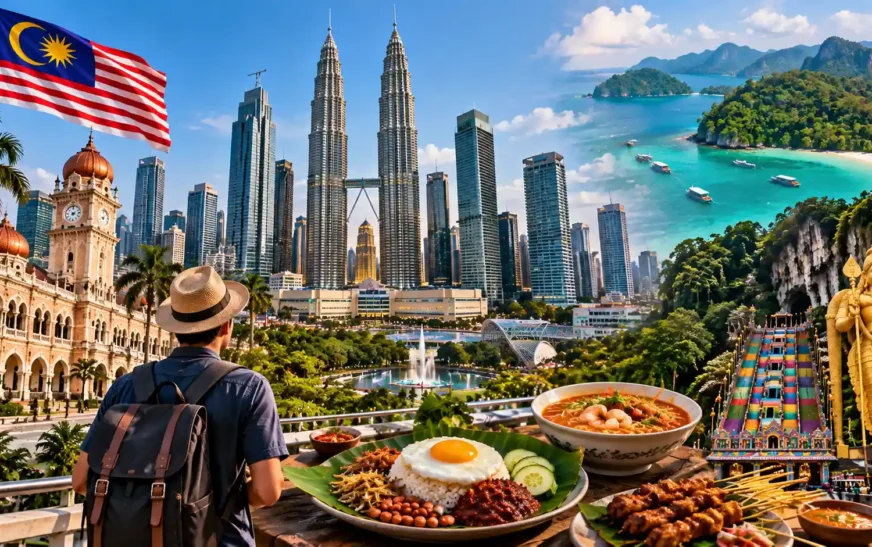
Malaysia is a fascinating country in Southeast Asia, known for its cultural diversity, beautiful landscapes, modern cities, and welcoming communities. From the famous skyline of Kuala Lumpur to peaceful tropical islands, Malaysia offers something for almost every visitor. The country combines traditional customs with modern lifestyles, creating a unique atmosphere for residents and travellers. Its delicious food, colourful festivals, historic buildings, and natural attractions make it an interesting destination to explore. Whether you want to learn about its history, discover local traditions, or plan a future holiday, understanding Malaysia helps you appreciate its many attractions and everyday experiences.
Malaysia: Location, Geography and Basic Facts
Malaysia is located in Southeast Asia and consists of two main geographical regions. Peninsular Malaysia lies south of Thailand and north of Singapore, while East Malaysia occupies part of the island of Borneo. The South China Sea separates these regions. Malaysia shares Borneo with Indonesia and Brunei, creating important connections with neighbouring countries. Its landscape includes mountains, rainforests, rivers, coastal plains, and tropical islands. This geographical diversity supports a wide range of plants and animals. It also provides opportunities for outdoor activities, nature tourism, agriculture, and coastal industries that contribute to the country’s development.
Malaysia has a tropical climate, with warm temperatures and high humidity throughout the year. Rainfall varies by region and season, partly because of changing monsoon patterns. The country has a constitutional monarchy and a parliamentary system of government. Kuala Lumpur is the national capital, while Putrajaya serves as the federal administrative centre. Malay, also known as Bahasa Malaysia, is the national language, and English is widely used in business and many urban settings. Malaysia uses the Malaysian ringgit as its currency. These basic facts help visitors understand the country’s geography, public institutions, language, and practical arrangements before travelling or studying its culture.
Kuala Lumpur and Other Major Cities in Malaysia
Kuala Lumpur is one of the most recognisable cities in Malaysia. Its skyline features the famous Petronas Twin Towers, modern shopping centres, hotels, and busy commercial districts. Visitors can also explore traditional markets, historic religious buildings, local restaurants, and green public spaces. The city offers a mix of contemporary entertainment and cultural experiences. Public transport connects many popular areas, making it easier to explore without driving everywhere. Kuala Lumpur is also an important centre for finance, education, tourism, and business. Its combination of modern infrastructure and traditional neighbourhoods makes it an interesting starting point for discovering Malaysia.
Other cities offer different experiences and lifestyles. George Town, on Penang Island, is known for its historic architecture, street art, and varied food culture. Johor Bahru attracts visitors interested in shopping, entertainment, and connections with Singapore. Malacca, also called Melaka, has a rich trading history and distinctive historic streets. Kota Kinabalu provides access to coastal attractions and the natural landscapes of Sabah, while Kuching offers cultural experiences in Sarawak. Each destination has its own character, attractions, and local traditions. Exploring different cities helps travellers understand how Malaysia combines regional identities with a shared national culture.
Malaysian Culture, Traditions and Festivals
Malaysia is known for its multicultural society, where Malay, Chinese, Indian, Indigenous, and other communities contribute to national life. These communities maintain different languages, customs, religious practices, and family traditions. Their cultural influences appear in architecture, clothing, music, food, and celebrations. Islam is the country’s official religion, while Buddhism, Christianity, Hinduism, and other beliefs are also practised. Respect for different traditions is an important part of social interaction. Visitors can learn about this diversity by exploring cultural neighbourhoods, visiting places of worship respectfully, and attending public celebrations that welcome community participation.
Festivals bring colour and excitement to everyday life in Malaysia. Hari Raya Aidilfitri marks the end of Ramadan and is celebrated with family visits, traditional clothing, and special meals. Chinese New Year features family gatherings, decorations, and festive activities. Deepavali is celebrated by many Hindu families with lights, prayers, and colourful decorations. Harvest celebrations, including Gawai and Kaamatan, recognise important Indigenous traditions in parts of Borneo. National Day also brings communities together through public events and displays of national pride. These celebrations offer visitors a deeper understanding of Malaysian customs, shared values, and the importance of family connections.
Malaysian Food: Popular Dishes and Local Flavours
Food is one of the most enjoyable ways to experience Malaysia. Its cuisine combines Malay, Chinese, Indian, and regional influences, creating a wide variety of flavours. Nasi lemak is a popular dish featuring coconut rice, sambal, anchovies, peanuts, and other accompaniments. Satay consists of grilled skewers served with a flavourful peanut sauce. Roti canai is a flaky flatbread often eaten with curry, while char kway teow features stir-fried rice noodles. These dishes are available in many restaurants and local food stalls. Regional ingredients and cooking methods give Malaysian food its distinctive character and make each meal an opportunity to explore local traditions.
Malaysian cuisine also includes refreshing drinks, sweet desserts, and regional specialities. Cendol combines shaved ice with ingredients such as green rice flour jelly, coconut milk, and palm sugar syrup. Teh tarik is a popular pulled milk tea known for its creamy texture. Penang is especially famous for its street food, while different areas of Borneo offer dishes influenced by Indigenous ingredients and traditions. Food preferences vary, so visitors should ask about ingredients, spice levels, and preparation methods when needed. Halal food is widely available, particularly in Muslim communities. Exploring local markets and food centres can reveal flavours that are difficult to find elsewhere.
Best Places to Visit in Malaysia
Malaysia offers a wide range of destinations for travellers who enjoy beaches, cities, history, and nature. Langkawi is known for its sandy shores, island scenery, and opportunities for boat trips. The Cameron Highlands attracts visitors with cool weather, tea plantations, and green hills. Mount Kinabalu in Sabah is a major attraction for mountain lovers and experienced hikers who follow local safety guidance. Penang offers historic streets, cultural attractions, and famous food markets. These destinations suit different travel styles, from relaxed beach holidays to outdoor adventures. Choosing places according to your interests, available time, and budget can make a trip more enjoyable.
History lovers can explore Malacca’s historic centre, where buildings and museums reflect centuries of regional trade and cultural exchange. Nature enthusiasts may prefer Taman Negara, known for its tropical rainforest and wildlife. The Perhentian Islands and other coastal destinations attract visitors interested in swimming, diving, and marine life. Meanwhile, Kuala Lumpur offers shopping, entertainment, and urban sightseeing. Travel conditions differ across the country, particularly between Peninsular Malaysia and Malaysian Borneo. Visitors should consider journey times, seasonal rainfall, and local transport when planning an itinerary. Exploring fewer places at a comfortable pace often provides a richer experience than rushing between destinations.
Malaysia’s Economy, Business and Career Opportunities
Malaysia has a diverse economy supported by manufacturing, services, international trade, agriculture, tourism, and technology. Important industries include electronics, electrical equipment, palm oil, medical products, and petroleum-related activities. Its location along major regional trade routes has helped develop connections with international markets. Kuala Lumpur is a major business centre, while other regions support manufacturing, logistics, and specialised industries. Malaysia also attracts visitors and businesses through its infrastructure, skilled workforce, and established commercial networks. Understanding these economic sectors helps explain the country’s role in Southeast Asia and its continuing efforts to strengthen productivity, investment, and long-term development.
Career opportunities in Malaysia vary by location, industry, qualifications, and experience. Technology, engineering, healthcare, education, hospitality, finance, and manufacturing can offer different employment paths. However, job availability and salary levels depend on market conditions and individual skills. Foreign nationals must also meet applicable immigration and work permit requirements before taking employment. People considering a move should research living expenses, workplace expectations, and local employment rules. Learning basic Malay can help with everyday communication, although English is useful in many professional settings. Careful preparation allows job seekers and businesses to assess opportunities realistically rather than relying on broad claims about the country’s employment market.
Education, Healthcare and Daily Life in Malaysia
Malaysia has a varied education system that includes government schools, private institutions, international schools, colleges, and universities. Students can pursue academic qualifications, technical training, and professional courses in different fields. Malay is widely used in public education, while English is also important in many institutions and programmes. International students should compare admission requirements, tuition costs, accommodation, and visa conditions before applying. Education options differ by institution, so checking course details is essential. Malaysia’s mix of local and international learning environments attracts students with different goals. Its universities and training centres also support the development of skills needed across the country’s changing economy.
Daily life in Malaysia combines modern conveniences with local customs and community traditions. Urban areas offer shopping centres, public transport, restaurants, healthcare facilities, and digital services, although access varies between locations. Healthcare is provided through public and private facilities, with costs and eligibility depending on a person’s circumstances. Housing options range from apartments in city centres to landed homes in suburban areas. Food, transport, rent, and utilities can vary significantly between regions. People planning to live in Malaysia should prepare a realistic monthly budget and understand local rules. Respecting cultural practices and learning everyday customs can also make settling into a new community easier.
Travel Tips for Visiting Malaysia
Planning ahead helps visitors enjoy Malaysia more comfortably. The best travel period depends on the region because monsoon conditions affect different coastlines at different times. Before booking, research expected rainfall, transport connections, and activities available during your visit. Lightweight clothing is generally suitable for the tropical climate, while modest dress is recommended when visiting religious sites. Comfortable footwear is useful for walking through cities, markets, and nature attractions. Visitors should also keep their travel documents secure and understand the entry requirements that apply to their nationality. Checking these details in advance reduces avoidable problems and helps travellers organise a practical itinerary.
Getting around Malaysia is relatively straightforward in many popular tourist areas. Kuala Lumpur has rail services, buses, taxis, and ride-hailing options, while intercity buses and trains connect selected destinations. Domestic flights can save time when travelling between Peninsular Malaysia and Borneo. However, transport availability varies by location, and remote attractions may require additional planning. Carry some Malaysian ringgit for small purchases, although card payments are accepted at many businesses. Keep personal belongings secure in crowded places and follow local safety advice during outdoor activities. For more planning ideas, explore a future guide to [Malaysia travel tips] or [Malaysian street food] to prepare for your visit.
Frequently Asked Questions About Malaysia
1. Where is Malaysia located?
Malaysia is in Southeast Asia, consisting of Peninsular Malaysia and East Malaysia on Borneo.
2. What is the capital of Malaysia?
Kuala Lumpur is Malaysia’s national capital, while Putrajaya is its federal administrative centre.
3. What language is spoken in Malaysia?
Malay is the national language, while English, Mandarin, Tamil, and other languages are also spoken.
4. What is Malaysia famous for?
Malaysia is famous for its multicultural heritage, tropical islands, rainforests, modern cities, and diverse cuisine.
5. What is the best time to visit Malaysia?
The best time depends on your destination, because rainfall and monsoon seasons vary across regions.
Conclusion
Malaysia is a diverse Southeast Asian country offering a fascinating combination of culture, nature, modern cities, and delicious food. From Kuala Lumpur’s impressive skyline to Langkawi’s beaches and Borneo’s rainforests, there are many experiences to discover. Its multicultural traditions, growing economy, and varied education opportunities also make it interesting beyond tourism. Whether you are planning a holiday, researching career options, or simply learning about the country, understanding its regions and customs provides useful context. Take time to explore different destinations, learn about local traditions, and plan according to your interests. Malaysia offers plenty to discover for curious readers and travellers alike.