
What Is Estate Buffet?
Estate buffet is a dining phrase that may refer to a buffet restaurant, an estate-themed dining experience, or a buffet service at a property called Estate. The exact meaning depends on where you saw the term. A buffet usually allows guests to choose food from several prepared dishes and serve themselves. Some buffets focus on breakfast, while others offer lunch, dinner, desserts, or special event menus. Estate buffet may also describe a dining arrangement at a hotel, banquet venue, or private estate. Understanding the location and menu is important before deciding what to expect from this dining experience.
The word estate often suggests a large property, hotel, resort, or elegant venue. When combined with buffet, it may create an image of relaxed dining in a spacious setting. However, the name alone does not confirm a restaurant’s menu, prices, opening hours, or location. Some businesses use distinctive names for their dining services, while others describe their buffet style through the property name. If you are searching for estate buffet online, check the official restaurant page, menu, and customer information. These details can help you identify the correct venue and avoid confusing it with another similarly named business.
How Estate Buffet Dining Works
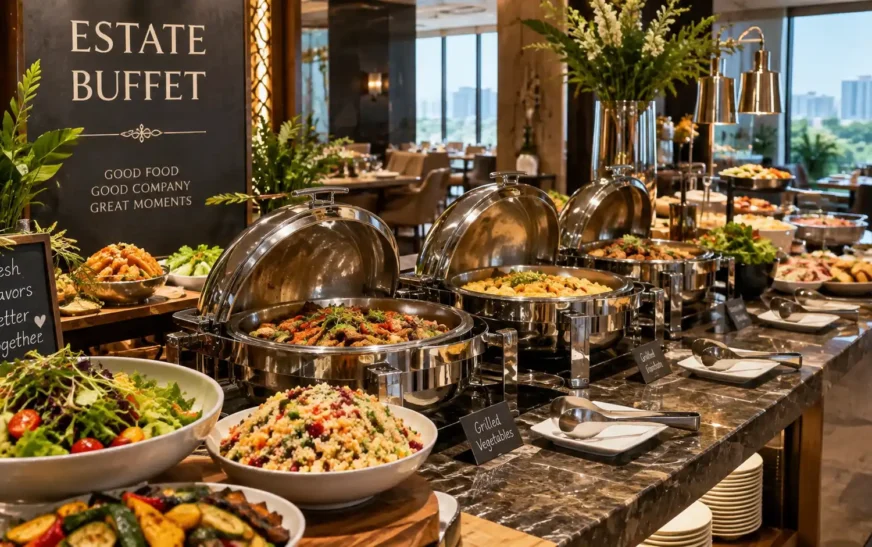
A typical buffet allows guests to select food from several serving stations. These stations may include salads, hot meals, bread, rice, vegetables, desserts, and drinks. Guests usually take a plate, choose their preferred dishes, and return to their table. Some buffets charge a fixed price, while others charge according to weight or selected items. Estate buffet may follow one of these arrangements, depending on the restaurant or venue. Before visiting, check whether the price includes drinks, desserts, service charges, or additional items. Clear information makes the dining experience easier and helps guests plan their spending.
Buffet dining is different from traditional table service because guests often choose food themselves. This arrangement gives diners more control over portion sizes and meal combinations. For example, one person may prefer a light salad, while another may choose rice, grilled meat, and vegetables. Families can also find buffets convenient because everyone can select food according to personal taste. However, some venues may have time limits or rules about food waste. Estate buffet guests should read the restaurant’s policies before serving themselves. A little planning can make the meal more comfortable and enjoyable for everyone. Read more : Natalie Ng
Estate Buffet Menu Options
The menu at an estate buffet depends on the venue, chef, and dining occasion. Breakfast buffets often include eggs, bread, fruit, cereals, tea, and coffee. Lunch and dinner buffets may offer rice, pasta, grilled dishes, soups, salads, and desserts. Some venues also feature local specialties or international cuisine. Estate buffet could refer to any of these formats, so it is important to confirm the actual menu before visiting. Restaurants may change their offerings during weekends, holidays, or special events. Checking current menu information helps guests understand the available choices and decide whether the dining experience suits their preferences.
Food quality is an important part of any buffet experience. Fresh ingredients, suitable serving temperatures, and clean food stations can influence customer satisfaction. A well-managed buffet should keep hot foods hot and cold foods properly chilled. Staff should also refill dishes regularly and maintain clean serving areas. These details matter because buffet food may remain available for longer periods than meals prepared for individual orders. When evaluating an estate buffet, look for clear food descriptions and information about allergens. Guests with dietary restrictions should ask staff about ingredients before selecting unfamiliar dishes or sauces.
Choosing the Right Estate Buffet
Choosing an estate buffet begins with identifying the type of meal you want. A breakfast buffet may suit travelers and families looking for a convenient morning meal. A dinner buffet may be better for celebrations, business gatherings, or relaxed evenings. Consider the menu, location, price, and available seating before making a decision. If you are planning a special occasion, ask whether the venue accepts group bookings. Some restaurants offer private dining areas or event packages. These services may be useful for birthdays, family gatherings, and corporate meals. Always confirm the details directly with the venue.
Reviews can provide useful information when comparing buffet restaurants. Look for comments about food variety, service, cleanliness, seating, and value for money. However, remember that individual experiences can differ. A restaurant may receive positive reviews for its breakfast but offer a different dinner experience. Recent reviews are often more helpful than older comments because menus and management can change. You can also compare the buffet with other dining options, such as à la carte restaurants or hotel dining rooms. For more useful planning advice, explore our internal guide to choosing the right restaurant for your occasion.
Estate Buffet for Families and Groups
Buffet dining can be a practical choice for families because it offers different food options in one place. Children may prefer simple dishes, while adults may want more varied meals. A buffet allows each person to choose according to appetite and taste. Families should check whether children receive discounted prices or special menus. Some venues also provide high chairs and family-friendly seating. Estate buffet may be suitable for these gatherings if the restaurant offers enough space and a menu that appeals to different age groups. Confirming these details before arrival can help avoid surprises during the meal.
Groups should also consider booking arrangements and seating capacity. A large party may need advance reservations, especially during weekends or public holidays. Some buffets offer group packages, while others use regular per-person pricing. Ask whether the restaurant can seat everyone together and whether separate payments are possible. It is also helpful to discuss dietary needs before the event. Vegetarian, vegan, halal, or allergy-friendly options may require special attention. A little preparation can make group dining smoother. For additional ideas, our guide to planning a family celebration can help you organize food, seating, and guest arrangements.
Estate Buffet Prices and Value
The price of an estate buffet depends on the venue, meal period, menu, and location. Breakfast buffets are often priced differently from lunch or dinner services. Premium buffets may include seafood, specialty meats, desserts, and beverages. Other venues offer simpler menus at lower prices. Estate buffet may have a fixed price or a different pricing system, so guests should check the current details before visiting. A listed price may also exclude taxes, service charges, or drinks. Understanding the full cost helps customers compare options fairly and choose a meal that fits their budget.
Value for money depends on more than the amount of food available. Quality, freshness, service, comfort, and menu variety also matter. A cheaper buffet may not offer the same experience as a premium venue. Likewise, an expensive buffet may not suit someone who prefers a small meal. Consider what you expect from the dining experience before paying. If you enjoy trying different dishes, a buffet may provide good value. If you prefer one carefully prepared meal, traditional table service could be a better choice. Comparing both options can help you make a practical dining decision.
Tips for a Better Buffet Experience
A few simple habits can improve your buffet visit. Start by looking at all available dishes before filling your plate. This helps you choose foods you genuinely want instead of taking too much at once. Try small portions of unfamiliar dishes, then return for more if you enjoy them. Use clean plates when returning to the serving stations. Also, follow the restaurant’s rules about food waste and serving utensils. Estate buffet guests can enjoy a wider variety of food by planning their meal carefully. These habits also help maintain a comfortable environment for other diners.
It is also wise to consider timing. Arriving early may provide better seating and access to freshly prepared dishes. During busy periods, some popular foods may take longer to refill. If you have allergies, speak with staff before selecting food. Ask about ingredients and possible cross-contact with other dishes. Keep children supervised near hot food stations and crowded areas. Finally, check the payment and reservation policies before leaving home. These practical steps can make your buffet visit easier, safer, and more enjoyable, whether you are dining alone or attending a special event.
Frequently Asked Questions
What does estate buffet mean?
Estate buffet usually refers to a buffet dining service associated with a venue or property called Estate, but the exact meaning depends on the business.
What food is served at an estate buffet?
The menu depends on the venue and may include breakfast items, hot meals, salads, desserts, drinks, and local or international dishes.
Is estate buffet suitable for families?
Yes, buffet dining can suit families because guests can choose different foods according to their preferences and appetites.
How much does an estate buffet cost?
Prices vary by location, meal period, menu, and venue. Check the restaurant’s current pricing before visiting.
Should I reserve an estate buffet table?
Reservations are useful for large groups, weekends, and special occasions, although requirements depend on the restaurant.
Conclusion
Estate buffet is a useful search term for anyone exploring buffet dining, hotel meals, or event food services. The exact meaning depends on the venue, so checking the restaurant’s official information is important. Buffet dining can offer variety, flexible portions, and convenient options for families and groups. However, food quality, cleanliness, pricing, and service should always guide your decision. Before visiting, review the menu, confirm the cost, and ask about dietary requirements. If you are planning a meal or celebration, compare suitable dining options and choose the experience that meets your needs. A little preparation can help you enjoy your buffet visit with confidence.